Lenghty answer to provide some scope, because I think just a "No" + justification is just too frustrating.
Only very partially.
The french revolution is at core linked to Louis XVI refusing to declare banqueroute of the state after his grandfather's (Louis XV, the previous king) passed away. France was the world's first economy back then, and It would have been the smarter move. Sadly, the nobles parlement was against it. -of course, a lot of these nobles were the very same that were lending to the state- The deep restructurations advocated by Louis XVI's ministers were blocked. Instead, the debt got financed by even more debt. Trying to pay the debt led to austerity measure, rather high taxation for not so much expenditures from the state, and some deregulation, like on wheat price. And back in time, there were no financial objects like calls or put that help regulate nowadays commodities.
If you look at the seven years war, and then the "events" that led to america's independance, they only amount to roughly a 10% increase of the debt for France.
England was also facing similair difficulties, and faced no revolution.
The cause of french revolution is state failure despite a wealthy economy. The spark was a year of bad harvest coupled with unregulated price on commodities, which led to a sharp rise in food price (which was the biggest part of people's budget back then).
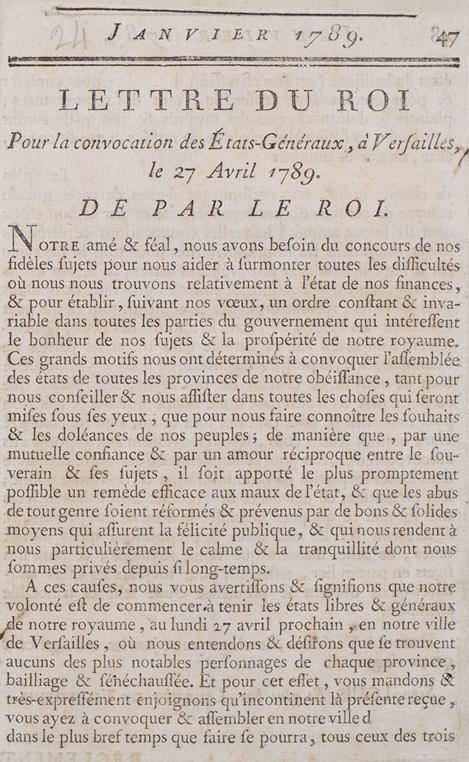
Louis XVI called the "Etats généraux" to solve the crisis, which set the revolution in motion. The revolution happenned only because Louis XVI was a good king listening to the involved party and thinking about the wealth and well being of it's subject before it's own. The "evilification" of the king only happenned much later, for propaganda reasons.
The early solution to solve the crisis was to nationalize church's belonging in France and sell them to recapitalize the state. Some place such as L'île barbe in Lyon are very good example of this.
If you can read french here is a short synthesis on France debt before the revolution.
Why the revolution was "humanist" is a different story. Of course at core the ideas are from the Enlightenment's philosopher, but it doesn't explain how these ideas got so popular.
Over the course of the last few centuries, nobles had evolved from warriors to adminstrative civil servants. Around the same era, also arose a strong and numerous educated bourgeoisie. Mostly made of wealthy entrepreuneurs and their families, they were very defiant to the central power and royal taxes that they felt were doing very little for them. The régions (kinda like states but much much less independants) were basically against Paris.
This, just above, is why human right was advocated during the revolution : contempt from the "lower class" of wealthy and educated individual toward the "inneficient, only got this job and privileges because of his birth or some trickery" -like all civil servants are- nobles.
This was even embedded further into French culture shortly after with Napoléon. Whith all the nobles dead or in exile, skilled commanders and engineers were needed fast. To this day, french education, "Grandes Ecoles" system and the basis of the laws (code Napoléon) are still in use. France is not so much the country of the human rights rather than it is the country of Meritocraty. (With the "American Dream" being one of it's offspring). And it was not out of good will or kindness from the government, it was an act of greed and survival.
Overall, the French revolution and it's "value" is one of the most commonly used tools for propaganda to serve various political agendas in France (Along with the "Republic"). Hence, there is a lot of misconception about it.
People often forget that a monarchy was reinstaured soon after the revolution, or that pillages and blind slaughter hapenned, or that political dissensions during the terror led to the serial execution of a lot of intellectuals, a waste than was unparalled until Mao.