I’m not a Viking expert but as an early medievalist there are PLENTY of things that frustrate me about Vikings. Don’t get me wrong, I will still watch that show whenever it’s on, but there are some major problems. I will talk mainly about how it condenses time and warps chronology.
The show likes to condense time and make characters either live well past their historical times or not even be present. The easiest way to show this is by using the two events that we more or less know the date it happened. The first is the sack of Lindisfarne in 793 (which is essentially what begins the show) and the siege of Paris, which in reality happened in 885. Obviously, Ragnar could not be at both and still look like he is in his 30s. Even if what is shown in the show was a different siege of Paris the Vikings had not approached Paris before roughly 840, so again Ragnar’s age is in serious question no matter what.
Further, in the show they had never even heard of Paris before, however as mentioned above, there had been previous raids on Paris and Francia before the siege in 885. So either, the show was written to make that siege more “decisive” or the show is representing the first siege of Paris before 885. This poses its own problems, which tie into how the Franks are represented.
First, if it was an earlier siege, it is impossible for Count Odo would be there seeing as he was count of Paris only after 882. Second, Charles the Bald would be the current king, which makes sense in that the show presents the Charles as the “grandson of Charlemagne.” However, Charles the Bald is not the king that is at the siege of Paris in 885, that is Charles the Fat. Further, since the show wanted to portray the Carolingian king as somewhat inept and setup the Odo storyline (presumably for season four), the king in question has to be Charles the Fat. However the Charles the Fat v. Odo thing is a more historiographical dispute so I won’t get into that. Therefore Charles the Fat’s continued insistence on being Charlemagne’s grandson is incorrect. Further, Charles the Fat was not inside the city during the siege of Paris in 885, but showed up with an army.
Obviously it’s a television show so it will not be 100% accurate, but my point is that the show plays pretty fast and loose with the timeline. Also as an added note Alfred the Great is an infant in the show, but in reality would have been king of Wessex already. I am not as familiar with culture or Viking specific info to give more information, but hopefully someone else can come along and add onto this.
EDIT: Most of this comes from Simon MacLean's Kingship and Politics in the Late Ninth Century
It's really a mixed bag, and there have been a number of related posts to this subreddit. There's even a section in the FAQ: How historically accurate is the History Channel's "Vikings"? I'd especially point you to these threads: 1, 2, 3, and 4. Thanks go to /u/Searocksandtrees for compiling the wiki.
My basic impression is that if you approach it as a fictional drama with some history slipped in, then they get a lot of fun stuff right. When they visit the temple in Uppsala, for example, they pull a lot right out of our primary source texts. Of course, historians are very skeptical that these texts—either written by churchmen advocating missionary work or by Icelanders centuries later—are accurate representations of how Scandinavians practiced their beliefs. If you'd like to know more, they're actually excavating Gamla Uppsala (Old Uppsala) right now, and as with most Scandinavian excavations, there's an excellent blog.
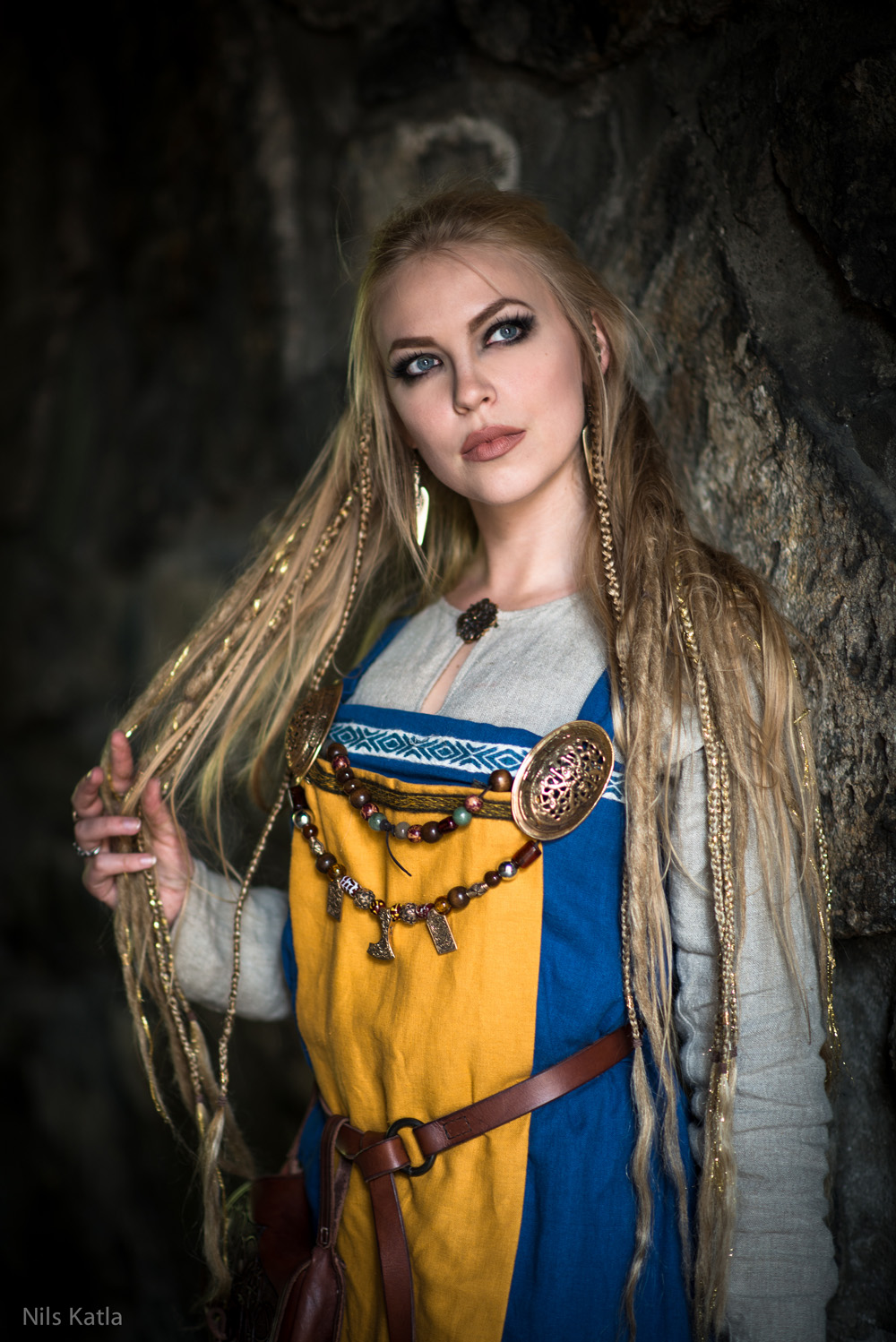
Regarding the material culture of the show, that's fun too. For example, they use period-appropriate brooches to dress up King Ælla, and brooches are one of the most common and important archaeological finds from the Viking Age. The problem is that the producers really wanted to bling him out, so although a man would've just worn one to pin his cloak to his shoulder (even the elites who appear on the Bayeux Tapestry), Ælla wears two across his chest. Of course, the only people who would have worn brooches like this were women, who would use them to pin a smock over their dress, something like this or this. As the first picture shows, they might also get used as a hefty anchor for chaining the house keys and all the minor things that we might find on a Swiss Army knife today. But unfortunately for the History Channel's Ælla, it seems the costume department decided to dress him in women's attire.
In some, they spice up a very good show with a lot of things pulled from both texts and archaeology. But if you're going to the History Channel for an accurate portrayal of the past, then unfortunately you've gone to the wrong place.