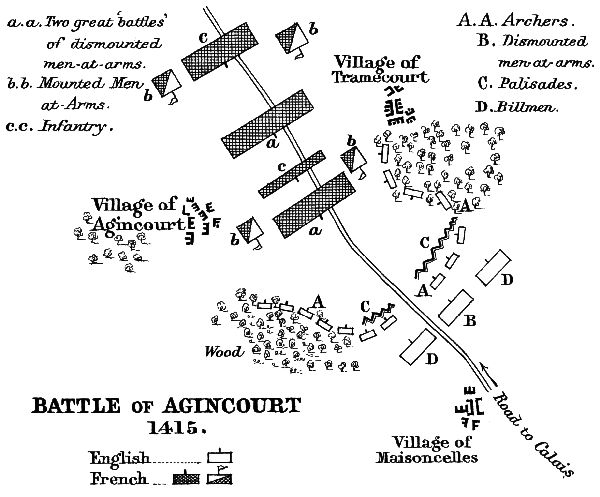
I have some understanding of ancient and medieval warfare, and it seems we know a lot more about the nitty gritty of an ancient or renaissance battle than we do a medieval one. There are of course numerous treatises on weapon use, but primarily for man-to-man duelling techniques, not massed formation combat, and very few for the real "battlefield" weapons like Bills, Pollaxes Halberds, Spears and later Pikes, etc etc.
The media often portrays medieval warfare to be an uttely chaotic, unformed mess, and while I don't believe this was the case at all, I don't have much evidence to back this up other than common sense and looking at other periods of history.The only examples I have seen of organised medieval massed weapon use and tactics have been speculative reconstructions by re-enactors, based on common sense and reverse engineered from the shape of the period weaponry.
With the decline of the earlier shield-wall model, would it be accurate to say mid-to-late medieval warfare inclined towards looser, wider spaced formations (with exceptions, of course), with the advent of advanced armour and the weapons needed to overcome it? (possibly contributing to the "orderless scrum" theory) Is there evidence of this or how period formations and manoeuvres would have been implemented? Where can I find out more about the details of massed combat and military thinking from the 13th-15 centuries (ish)
This answer is going to be focused specifically on the battle of Agincourt. I assume things may vary greatly between various battles. I should also mention that I am not a historian, merely a history enthusiast who is currently obsessed with learning about Agincourt.
I'm only half of the way through my first reading of Juliet Barker's excellent Agincourt: Henry V and the Battle That Made England, but she mentions the battle being described by numerous eyewitnesses in great detail. This includes terrain, troop layouts and the individual exploits of certain individuals.
This battle was clearly carefully orchestrated on both sides, although this documentary gives the impression that the French, confident in their superior numbers, overruled marshal Boucicaut and charged into battle rather rashly. I will admit that I haven't yet absorbed Barker's opinion on this.
The night prior to the battle, Barker describes a scene wherein the English troops kept up their battle orders until almost complete darkness due to fear of a sudden charge by the French. After formation broke, English king Henry V moved about the lines imploring his men to remain disciplined and silent (at threat of forfeiture of possessions or removal of ears) so that it would be easier to hear any French movements. There was actually a small amount of conflict in the night, and seven of Henry's archers were captured.
The day of the battle there is some conflicting information from eyewitnesses of exactly how Henry drew up his battle lines, but the eyewitness that Barker considers most logical (a Burgundian herald named Jean le Fevre) states "he only made one battle, and all the men-at-arms were in the middle of his battle, and all the banners were very close to each other. On both sides of the men-at-arms were the archers...". This has been interpreted as a very tight formation of men in heavy armor, many wielding polearms such as bills. (edit: This image shows the battle lines in a fashion similar to what le Fevre describes) The archers were ordered to pound in stakes in front of their lines to deter cavalry charges. King Henry commanded the center mass of men personally, and delegated command of the rearguard and vanguard to trusted men. There was clear leadership in the smaller divisions of fighting men and a definite plan of battle on the English side.
The French had drawn up a battle plan at Rouen prior to even being anywhere near the field of battle. This plan was altered several days before the battle (this kind of foreword thinking was necessary to position troops correctly) and eventually abandoned to a head on charge the day of the battle, but the intention was always to go about things with more finesse. Specifically the French cavalry was supposed to outflank Henry and come at his archers from the sides and rear. This answer has gone on a little long, so I will abstain from discussing the way the French troops were positioned.
I will end with a brief note about smaller fighting units in the English army at the time of Agincourt, also from Barker.
One of the strengths of the English army was that everyone lived and fought within the company and under the leadership of the man who had raised the retinue. By the time it came to battle, they had bonded into tightly knit units, and there was a sense of esprit de corps that gave them a fighting edge. Every soldier knew his place within his own retinue and within the chain of command that led directly to the king himself.
The English troops who fought at Agincourt existed in the later half of over 100 years of near constant warfare. Standing armies were not a common thing during this time period (source: this excellent lecture) but the process of raising an army was well practiced and many of the men raised were veterans of other conflicts. Additionally the men were fighting alongside comrades they knew and this greatly increased unit cohesion.
This is concerning Early Middle Ages- as that is what I am reading
The reading I've done does not give the detailed accounts of Roman authors. Specifically I've been reading of the Battle of Tours between the Muslims and the Franks. According to later European accounts, a large force under the command of the Muslims most able commander were led into Francia with the sole intent to conquer the whole region. Muslim sources claim it was little more than a raid into enemy territory with the goal of acquiring booty. Actual details on the battle are scarce.
Probably the best account is from the so-called Chronicle of 754, which was composed in Arab controlled Spain by a Christian monk:
“For almost seven days the two armies watched one another, waiting anxiously the moment for joining the struggle. Finally they made ready for combat. And in the shock of battle the men of the North [the Franks] seemed like a sea that cannot be moved. Firmly they stood, one close to another, forming as it were a bulwark of ice; and with great blows of their swords they hewed down the Arabs. Drawn up in a band around their chief, the people of the Austrasians carried all before them. Their tireless hands drove their swords down to the breast [of the enemy.]”
[“Medieval Sourcebook: Arabs, Franks, and the Battle of Tours, 732: Three Accounts”] (http://www.fordham.edu/halsall/source/732tours.asp)