I hope the mods will allow this, I am not a historian, but I am a blacksmith who specifically trained in a renaissance style shop. The only concessions we made to modern practices were the use of coal / coke instead of charcoal and we bought files because they are difficult to make well.
First, they are probably not quite as primitive as you may imagine, there were absolutely amazing things going on in many crafts at the time.
They did have screws, the screw is one of the original primitive machines and the use of large screws for example in the screw press or the Archimedes screw is documented back to antiquity. They had to be hand cut, but they were well known, cutting a screw and making a vise is not out of the realm of possibility for a skilled smith. I have seen one dated to the early 1500s, but google is failing me at the moment for a picture or a documented source.
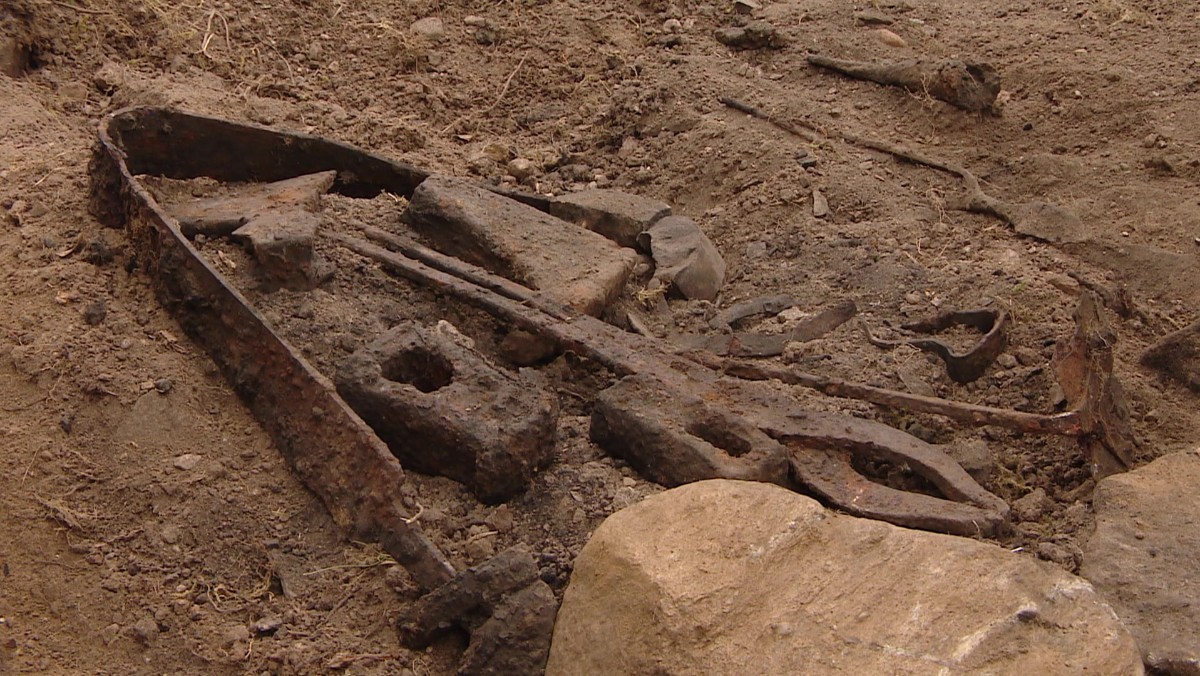
I found the following picture very interesting because the tools are so similar to what we use today. I made and use a pair of tongs virtually identical to the ones in the picture, there are a few hammer heads, I have tools similar to the one that looks like a pair of BBQ tongs, the piece that looks like an old boot is almost certainly a stump anvil or swage (will explain later).
http://www.thehistoryblog.com/wp-content/uploads/2014/10/Viking-blacksmiths-tongs-sword.jpg
As far as the tools, the first thing to understand is that the blacksmith was primarily a maker of tools. In our shop we were continually making and modifying our own tools to suit whatever purpose we needed. I'll list off some common ones and explain the ones that are less obvious.
First off and most obvious are the ones that are virtually symbolic of a blacksmith, the forge, bellows, hammer and anvil. The first three haven't changed much, anvils have evolved greatly and become specialized but the principle of a big, solid, heavy piece of metal stays the same. The anvil may not look like a modern one, but it's purpose is the same.
You would find a variety of hammers from small light ones to heavy sledges.
A grind stone likely, foot powered or possibly powered from a water wheel.
A variety of tongs.
Punches, chisels, gouges.
Swage blocks: These are large heavy metal blocks with a variety of shapes preformed in them by various means. An example may be a spoon bowl shape so all the smith has to do is take a flattened piece of metal and hammer it in to the swage block to make a spoon bowl. They often have various sized grooves cut in the edges to aid in rounding a metal bar.
Drifts: A drift is a solid tapered cylinder that is used for rounding a hole split or punched in to the metal. The technique of forming the part of an axe or hammer head where the wooden handle is inserted is called drifting.
Fullers: Fullers used to press (as opposed to cut) put a U shaped grove in the steel. This is often done to spread the metal out or lighten the overall piece. You'll see this in some swords where there is a groove down the center line, sometimes erroneously called a blood groove.
I'm going to cut this off here, the mods would be well justified in deleting this because of my lack of academic credentials and this is getting long. If it sticks around a while, or a mod gives me permission, I'd love to continue.
One final thing, just an illustration that they were perhaps more advanced than many suspect.
This is not dated, I don't know how old it is beyond it being cited as several hundred years old which potentially puts it within the period that you are asking about.
https://www.youtube.com/watch?v=OVmF6Nsf77Q
The technology to build this water powered drop hammer was certainly available during the renaissance.
I'm not familiar with any contemporary writing on blacksmith shops. There are a handful of illuminated manuscripts depicting blacksmiths and armorsmiths working, which shows a number of tools.
Such as this one from the early 15th century.
One of my favorite pieces comes from the early 16th century, which features an [armor shop of Maximilian I.] (https://classconnection.s3.amazonaws.com/203/flashcards/4641203/png/10-143FF86501E2C1B2720.png) It's like a Where's Waldo for tools. The same artist, i'm not familiar with whom that may be, made woodcuts of several different trades as well, such as tanners and moniers. It's worth a casual google search if you're interested in such.
I don't know about vices. Screws did, in fact, exist in the early medieval period, but I've never seen evidence of something like a legged vice that modern blacksmiths use. Check out this woodworker from a woodcut contemporary with the above armor workshop. See the bench vice on the left side of the table? Replace the wooden jaws of the vice with iron and I think you have reasonable suspicion to expect a wealthy iron worker to have something similar. Of course, that's all speculation.
Another source you may be interested in is The Mästermyr Find. Its a collection of tools from, presumably, a traveling blacksmith on the island of Gotland, in the Baltic Sea. It dates back to around the 10th century. In it are all sorts of well preserved tools, including a number of files. There's a number of publications available on the subject. I think this one is a free PDF and includes tons of photos of the originals.
As to how files were made? Well, I can't say for certain how they made files, but I can tell you how i've made files from simple tools. It involves a bar of high quality steel, the type from which tools are made, a chisel, and a bunch of parallel strikes. If you see the Mastermyr files, you will see that they are rudimentary tools by our standards.