Since the byzantines inherited much of the roman culture one would expect the art to have sustained the realistic depictions of known ancient artwork.
Since the byzantines inherited much of the roman culture one would expect the art to have sustained the realistic depictions of known ancient artwork.
Why? There are a lot of assumptions packed into your question. Roman portraiture, especially imperial portraits, were not realistic. It was strongly idealized to present an Emperor as semi-divine. Now there was a period where hyperrealistic sculpture was popular during Republican times, maybe an art historian can elaborate. And it resulted in images like this with "warts and all" in vogue. But all the depictions of Caesar Augustus we have, who died at 75 after a 40 year reign, look like this. He became emperor in his mid 30s, he probably didn't look so youthful even then. And behold the sainted Constantine with his huge doe eyes gazing placidly up to heaven.
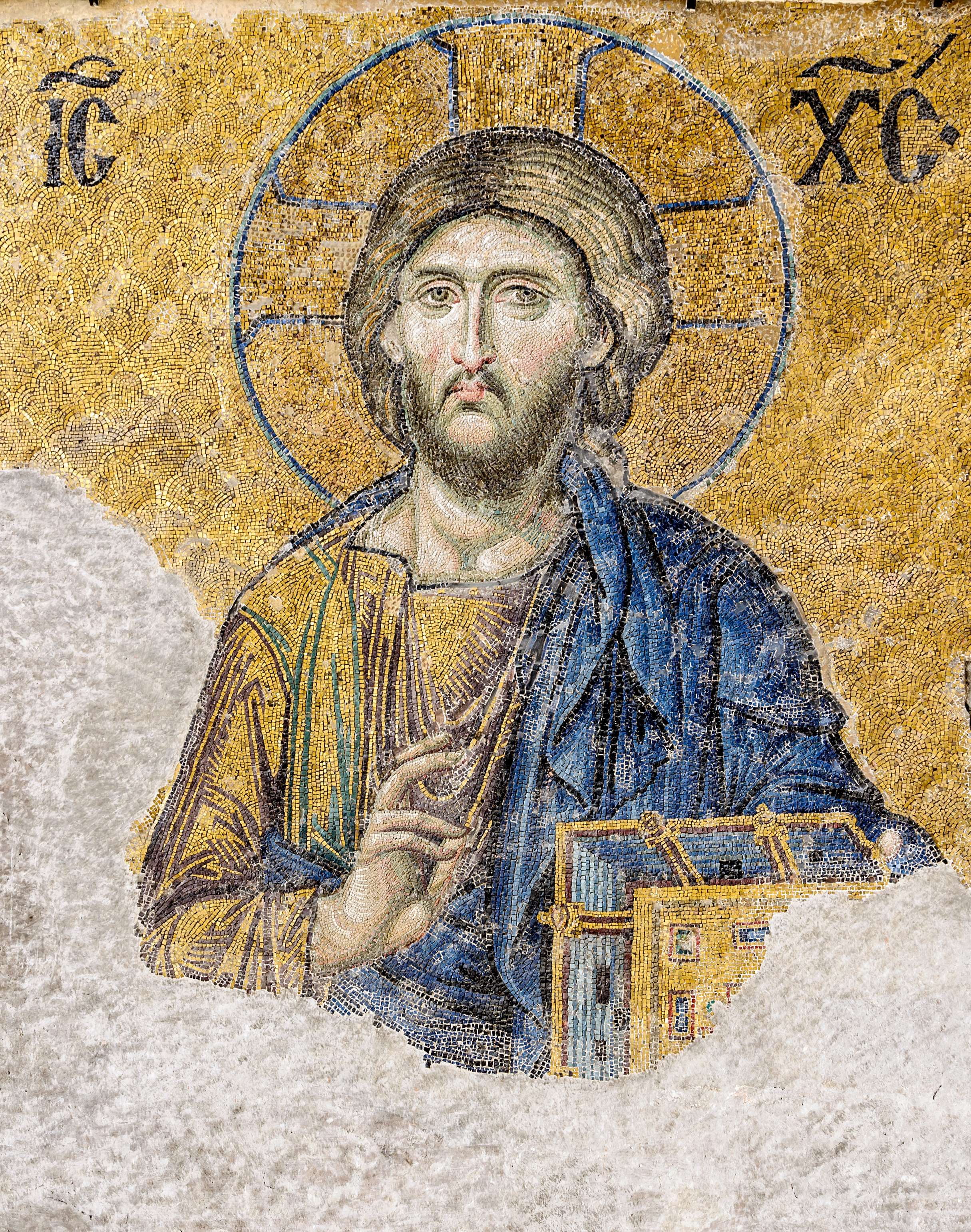
It's not like Byzantine artists weren't capable of producing reasonably realistic depictions. Look at this illumination of an 11th century emperor, this 12th century mosaic of Mary and an imperial couple, or this 13th century mosaic of Christ.
Western art today hardly puts a premium on realism despite descending from Rome, too. This is the highest-selling piece of western art of all time. The Western movie isn't an accurate historical depiction of the West, it's a highly stylized and stereotyped mythology of what was in reality a nasty colonization campaign. And one of the most universal touchstones of our culture is a story of telekinetic space-knights who defy all the laws of physics and astronomy to fight a star war like World War II dogfighters.