This is a very broad question, but due to this somewhat obscure topic (the medieval Jewish identity) I'd welcome any examples possible. To set some parameters, I'm interested in the Jewish communities of Western Europe, Eastern Europe, the Middle East, and North Africa, really from the fall of the Western Roman Empire to the 16th century and the Protestant Revolution. Any examples whatsoever would be welcome.
Jewish "otherness" is a very old notion, seemingly present in every polity in which Jewish people resided. This notion of course facilitated the dehumanization, murder, and expulsion of Jewish people all over the world, particularly in Christendom. A post on 4chan (of all places) mentioned that the American Jewish experience was unique in that people were not Jews in America, but Americans who were Jewish. Despite this obviously completely non-credible source, I realized that this reflects what may be the implicit message of much media coverage about Jewish people. I was reminded of an interview with a person in Belgium, after last year's horrific attacks. They insisted that unlike most of their relatives, they did not identify as Jewish before they identified as Belgian. This surprised me, given that I don't think any Jewish people I know would identify as "Jewish first, American after". And one friend of mine, who was born in Britain and is Jewish, definitely considers his British birthplace to be the defining factor of his identity.
As a non-Jewish person, I can't really say how Jewish Americans, as a whole, identify. But this got me wondering about the medieval Jewish experience. Were Jews always seen as complete foreigners, even if their families had lived in a kingdom for centuries. Were Jews in 12th century France viewed as inherently distinct from the French people? What about in Poland or (to a lesser degree) Bohemia, where the Jews were not as persecuted? In pre-Reconquista Andalusia, post-Reconquista Algeria, and essentially the entirety of Egyptian and Mesopotamian history, Jewish communities flourished culturally, and some Jews were involved in government. In these four Arab Muslim nations, were Arab-speaking Jews seen considered to be not Arab? Were they considered more foreign than Arab Christians?
Lastly, how foreign were Conversos (and any other Christians of Jewish descent) treated? In the modern era, it seems that Christians of Jewish descent are almost universally seem as Jews. I don't think that most Jewish Americans would reject Bob Dylan, and despite coming from a Lutheran family Karl Marx is widely described as Jewish (often, quite horribly, by Neo-Nazis swearing to the immutable Jewish nature of communism). Was this true of medieval Jewish converts as well? Were Spanish individuals whose grandparents had been Jewish considered to be non-Castilian or non-Leonese?
Lastly, how did the Jews themselves identify? Maimonides seemed to view his religious brethren as a single culture scattered across two planes (the Kingdom of Yeshu and the Ishmaelites), but do his views represent those of everyday Jewish people? In 1200, would a Jewish person in London really feel more kinship to a Jewish person in Austria (or even in Egypt) than they would for a Christian person living in their own city? Are there any records of how Spanish Jews felt about their friends or relatives who converted to Catholicism rather than leave Iberia?
Okay, wow. I'm scared to answer this because there's like 50 questions there.
My qualifications on this are tricky and scattered. I grew up in Germany as an American. and didn't live in the US until high school. Then there's that one class on the history of antisemitism I took that one time in college (I hope someone else comes in here soon ;) ) ..and then I compiled my own curiosity on the topic over the decades and put it all here, in a 45 minute podcast episode: http://en.historyofgermanypodcast.com/?p=107 where I think probably have half of your questions are at least superficially addressed in an easy-to-digest format.
Sources are: (edited by, it has like 10 authors) Roth & Berenbaum Holocaust 1989
Katz, Jacob From Prejudice to Destruction - Antisemitism 1700-1933
...and then all kinds of others over the years but I want to get to answerin'
But let me break bits and pieces down, and hopefully others can come in and correct me or fill in gaps.
Your 4chan thing about Jewish American being Americans first and Jews second.
...that really depends on the individual. I'd say (and that's the best I can do on this one, sorry) is that that's largely a post-WWII/holocaust/Israel-existing phenomena or trend (but again, that's a huge oversimplification) to some degree. But this wasn't at the heart of your question, so let's get to it:
Were Jews always seen as complete foreigners, even if their families had lived in a kingdom for centuries. Were Jews in 12th century France viewed as inherently distinct from the French people?
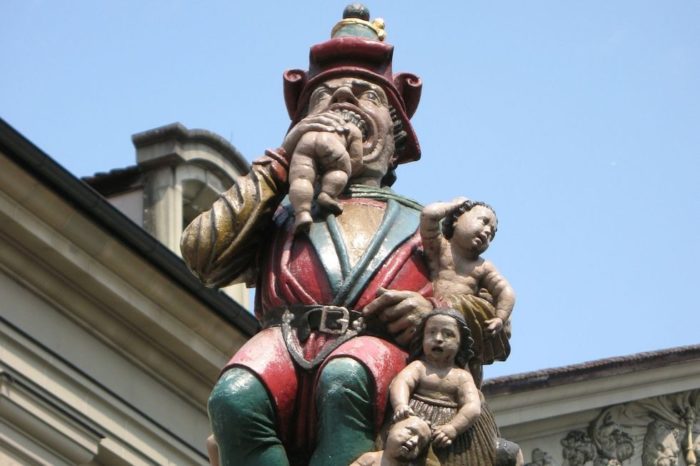
YES!!! Throughout medieval Europe they often had to wear an identifying mark. Red hats, robes, star-of-david patch, sometimes even a yellow star (sound familiar?) Like this guy in Switzerland: http://strangesounds.org/wp-content/uploads/2014/11/Kindlifresserbrunnen-Kindlifresser-Child-Eater.jpg
Is still around today. That's a Jew eating babies.
Look up blood libel, for instance (or it's all in my episodes)
Jews were particularly set even lower than pagans because they followed an Abrahamic religion. Jesus was a Jew. So why didn't they know better? Pagans were just ignorant. Jews were active heretics. God-killers (Theocide: for killing Jesus)... that sort of vein.
Anytime a plague hit, the jews were the first to be blamed. Ghettos. The word "ghetto" comes from the part of town in Venice where they made Jews live. It's the very definition of "inherently distinct"
What about in Poland or (to a lesser degree) Bohemia, where the Jews were not as persecuted?
More broadly speaking Jews were always welcome to a degree. Some German cities (for instance) had quotas on how many Jews could live there. Prussia later did the same. But they were needed because Christians weren't allowed to practice usury in the middle ages, and someone needed to lend capital (all the way up to the king or emperor, or even pope) ...and so that had to be a Jew. But it was more give than take. If Jews got too wealthy, a pogrom was not far behind.
In pre-Reconquista Andalusia, post-Reconquista Algeria, and essentially the entirety of Egyptian and Mesopotamian history, Jewish communities flourished culturally, and some Jews were involved in government. In these four Arab Muslim nations, were Arab-speaking Jews seen considered to be not Arab? Were they considered more foreign than Arab Christians?
Muslims see Christians and Jews as "religions of the Book" i.e. Abrahamic. There are special rules regarding how to treat other Abrahamic followers. So generally yes, Jews were much better off, but it still really depends on the time and place. But in general, you're right. Christendom was pretty much the worst possible place to be for a Jew.
Lastly, how foreign were Conversos (and any other Christians of Jewish descent) treated? In the modern era, it seems that Christians of Jewish descent are almost universally seem as Jews.
This is the time of the inquisition. Not a good time to be a Converso, particularly, because they were suspected of having converted merely to get the church off their backs. They were often treated harsher, and held to a higher/double standard than regular Catholics, and even other Jews.
I don't think that most Jewish Americans would reject Bob Dylan, and despite coming from a Lutheran family Karl Marx is widely described as Jewish
See answer from 1.
(often, quite horribly, by Neo-Nazis swearing to the immutable Jewish nature of communism). Was this true of medieval Jewish converts as well? Were Spanish individuals whose grandparents had been Jewish considered to be non-Castilian or non-Leonese?
I guess it kinda depended on your last name, skin tone, etc, and just basically how obvious it was? But no, comparing it anything like Nazi Germany would be a mistake.
Lastly, how did the Jews themselves identify? Maimonides seemed to view his religious brethren as a single culture scattered across two planes (the Kingdom of Yeshu and the Ishmaelites), but do his views represent those of everyday Jewish people? In 1200, would a Jewish person in London really feel more kinship to a Jewish person in Austria (or even in Egypt) than they would for a Christian person living in their own city? Are there any records of how Spanish Jews felt about their friends or relatives who converted to Catholicism rather than leave Iberia?
Not being a Jew, you finally got me on this one :) I wouldn't presume to answer this one. but honestly, I think this one really depends on the individuals more than any of your other questions, and I just don't think an accurate answer is possible. I do hope someone can shed more insight than this though.
Edit: I gave this last one a bit more thought: I still can't answer definitively, but Jews were indeed so segregated that they developed their own dialect of German (Yiddish) and kept that for centuries in places like Russia, Bohemia, Poland, the US, etc. So that alone shows that yes, there was clearly a certain sense of shared identity and culture at the least. Jews traveled more in the middle ages than most Christians. As tax-collectors, merchants, and often as refugees. Therefore they would have had a better sense as a whole as to what lays beyond the county line. But I'd only feel confident answering this as a sort of bell-curve. "Yes, Jews would have felt closer to other Jews half a world away, then maybe some other groups would. Maybe on average -- maybe." I think when you're actively being persecuted in London, you'd feel a stronger kin to a fellow Jewish community in Austria, than the guy trying to find very creative ways to get rid of you, who lives next door. Don't you think?
If you want to narrow down your questions (or have questions after listening to that excellent podcast episode ;) ) I'll be happy to give it my best.
I can speak about Poland.
First of all - identifying with nation, and the whole concept of nation - it's XIXth century invention. In middle ages countries were a business of nobles, and maybe clergy. The rest of population wasn't identifying themselves as "Polish", or "German" first. They were "citizens of city X", "peasants", "Catholics" first. Then there were language divisions (not the same as nations - there were tons of small states, vassals etc, sharing language). Nations in modern sense weren't even invented yet.
And yes - Jews were a distinct class, they had different rights (usury, but also the way they paid taxes, and the whole Jewish local administration). But so were peasants/clergy/nobles/city dwellers. Laws had different punishments for killing a Jew, a peasant, a noble, a clergyman, etc. Peasants were worse of than Jews in many respects (depends on the year - after serfdom was introduced and peasants were almost a slaves).
Jews were in sort of alliance with nobles - nobles protected them from the lower classes, in exchange for money and administration of nobles' properties. For example it was very common, to the point of being a cliche - that Jews were administrating nobles' inns. And inns were very important - it was one of the biggest moneymakers, basicaly a hidden taxation of lower classes. There was a monopoly of course.
So - commoners usually had debts towards Jews, and they were prevented from settling them by violence by nobles and laws. When these stopped working - pogroms happened. Clergy was competing for influences on nobles, and had a way to incite peasants against Jews. It was complex social dynamics, with many groups that were identifying mostly with other members of the group, and not "the nation".