I know he cared about the French people, but it may have been more because they were 'his'. I ask the question because I was told he actually fought against the French to defend his home on Corsica, is this correct?
If so, another question: why would the French allow him to join their army after he fought AGAINST them? Doesn't that seem kind of stupid?
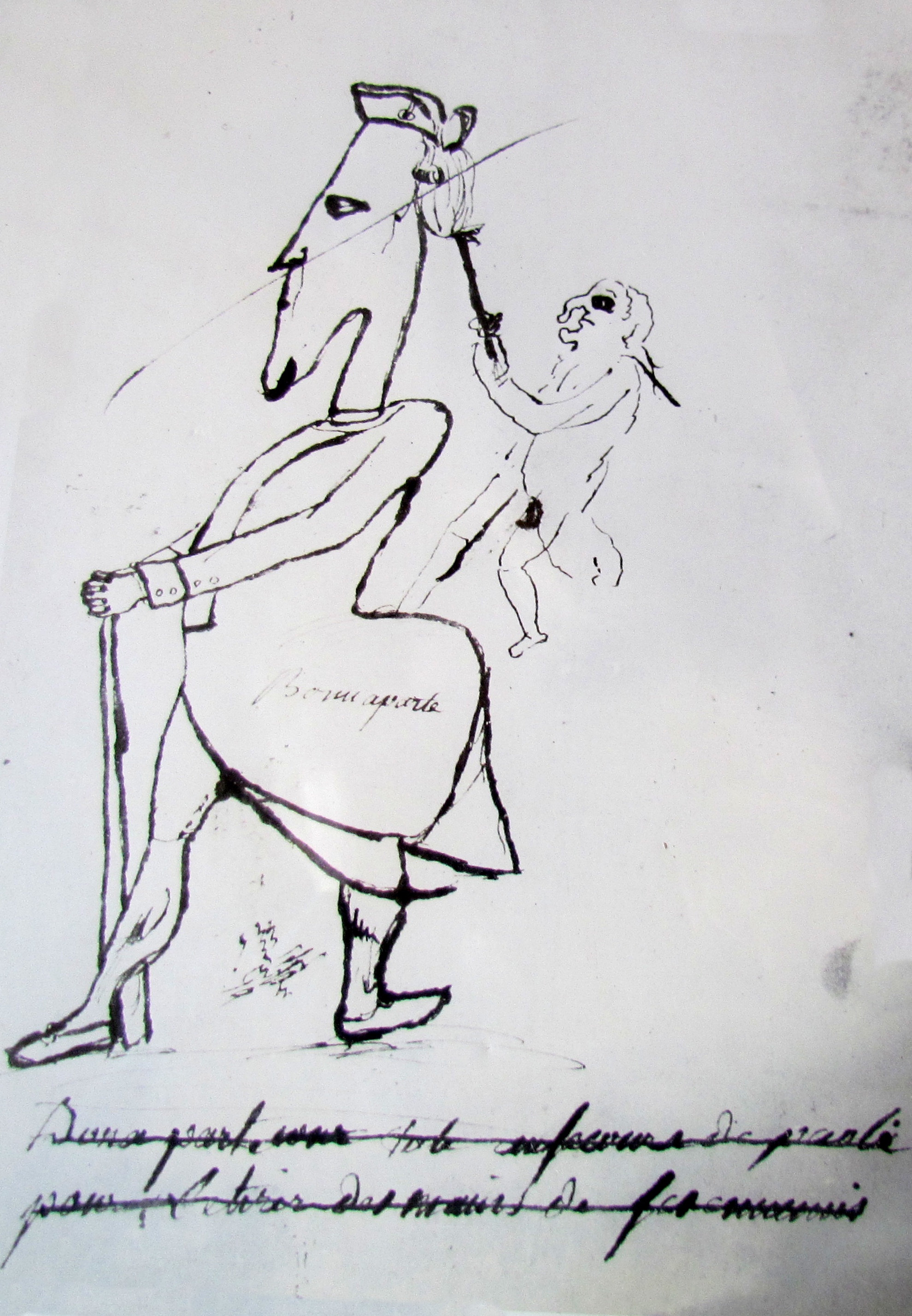
The period of time where Napoleon most closely identified being a Corsican was during his time at the military academy at Brienne. Although the young Napoleon showed academic promise, he adapted the persona of a Corsican patriot. There are surviving essays written by him where he lionizes the Corsican patriot Pasquale Paoli, who resisted the French occupation. He would periodically claim that he was going to learn the military arts to liberate Corsica from French rule and aid the exiled Paoli. One of Napoleon's classmates drew a cartoon that survived in an atlas mocking Napoleon's pretensions as a Corsican patriot. There is one apocryphal tale from another classmate that Napoleon wrote a poem in which a female Corsica appears to the narrator in a cave and hands him a dagger to avenge her.
The confusing early days of the Revolution found Napoleon back in Corsica and dealing with the return of his hero Paoli. The experience in Corsican politics soured Napoleon on Corsican nationalism. Part of this disenchantment with Corsica was due to his new political relationship with Paoli. Although the Revolutionaries in Paris initially supported Paoli's cause, the Corsican patriot began to attack the new regime's exporting of the Revolution and felt that Paris would not honor any commitment to Corsican independence. Napoleon backed the local Jacobin party in Corsica and found himself increasingly at odds with Paoli. In 1792, When Napoleon led the Corsican National Guard in an abortive attempt to seize Ajaccio's citadel from regular French troops as part of the larger campaign to break up monasteries and other symbols of the old order, Paoli sided with the fortress's commander. Napoleon's actions against the French army was a relatively minor affair and it is difficult to tell whether it was an attempt to force the issue of Corsica's independence or cement Corsica to the new Revolutionary political order. Napoleon's commitment to the Revolution and Paoli's determination to achieve Corsican independence led to a final break between the two men. The ascendency of the Paoli faction in Corsica led to the exile of the Bonaparte clan in June 1793.
Napoleon's actions in Corsica were not detrimental to his overall career while exiled to France. He managed to forge political connections with Jacobins like Salicetti that served him well in the future. The fact that his family fled because they supported France added to his Revolutionary credentials. His experience with the National Guard was too slight and confusing to permanently damage his career. But most importantly, the Revolutionary government needed experienced and capable officers in the wars it now found itself in.
After this exile, Napoleon shed a lot of his Corsican identity. The reasons for his self-fashioning as a Corsican patriot are uncertain, but there are a number of plausible hypotheses. Firstly, this Corsican phase could have been a genuine example of youthful rebellion. His adulation of Paoli could have been an idealized father-figure for an age of youthful rebellion. Unlike Paoli, Carlo Bonaparte collaborated with the new French regime and this careerism was the source of much local gossip and scandal. Napoleon's mother was quite close to the French governor, leading to rumors of the parentage of a number of her children. It is also possible that Napoleon, being relatively socially isolated at Brienne adapted the persona of a Corsican patriot as a way to assert himself in an alien environment. Finally, like his father, Napoleon's Corsican interlude could represent a degree of situational social climbing. When Paoli's star seemed to rise, he hitched his star to him, but when Paoli turned against France, Napoleon turned upon his former idol. Napoleon did tell his brother Joseph shortly after the affair at Ajaccio, he had established himself as a political figure in France.
The main impact of Napoleon's Corsican phase arguably was his attitude towards French citizenship. Napoleon had a very functional approach to identity within the young Napoleon which he then would apply to his style of imperial rule. Napoleon's Civil Code favored the concept of jus soli (citizenship based upon land of birth) over jus sanguinis (citizenship based upon parent's nationality). This was something that Napoleon had to fight against some elements within the French imperial government when he pushed for jus soli. Napoleon believed that by creating French-led cultural and state institutions (much like Brienne), he could assimilate large sections of Europe into French culture and they would (and probably more importantly in Napoleon's calculations) discharge their responsibilities to the nation by paying taxes and serving in the army.
During the end of the Ancien Regime and the early years of the Revolution, there was a glut of officers that served in the French army. Due to demands of the nobility and large amounts of families claim various regimental positions as their birth right, there was too many officers in the French service. As a result, the French Crown was more than willing to let most officers claim time off, which would allow the Crown to give half pay, to help ease the burden of the cost of paying officers. This little loop hole gave Napoleon the time to go home several times, both for legitimate reasons, such as the death of his father, and illegitimate, claiming to need to help his family but really going to help spark a revolution on Corsica. This continued during the early years of the Revolution due to the extreme upheaval since more attention was given to the Revolution and the King than a sous-lieutenant. This would change when war popping up everywhere, causing the French administration clamp down on unnecessary leaves of absence, which suited Napoleon as his Corsican adventure had already started to end.
Now, Napoleon did end up calling himself French after his falling out with the Corsican Nationalist, Pasquale Paoli. Initially his hero, he would slowly turn towards the British and more Royalist than the Republican Napoleon would want. Things would come to a head when Paoli banished Napoleon and his family from Corsica, causing it to be the last time he'd ever see his native homeland.