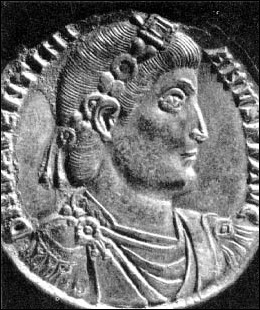
I know it's a difficult question, and I guess it's sometimes hard to discern a straight, simple development of artistic quality of Roman coins, but after a wikipedia binge on Roman emperors, it struck me that the coins often used as examples in the articles gradually got less "realistic", and it's difficult putting my finger on where the development starts. Whether or not it's just my prejudice (linking it to the 3rd century crisis), or a valid observation, the change seems to start somewhere in the 3rd century.
Coins that come to mind are coins from the reigns of Commodus (r. 177 AD – 192 AD) and Elagabalus (r. 218 AD - 222 AD) and comparing those with post-3rd c. crisis coins of Diocletian (r. 284 AD - 305 AD) and Valentinian (r. 364 AD - 375 AD).
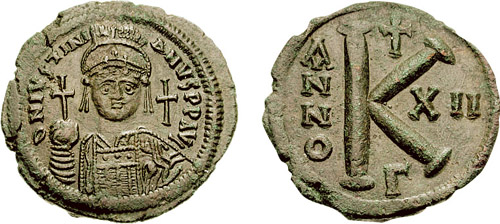
As for the time beyond the fall of Western Rome, I allow myself to use some Eastern Roman coins to further illustrate what I mean:
Justinian the Great (r. AD 527 – AD 565)
Justinian II (r. AD 685-695)
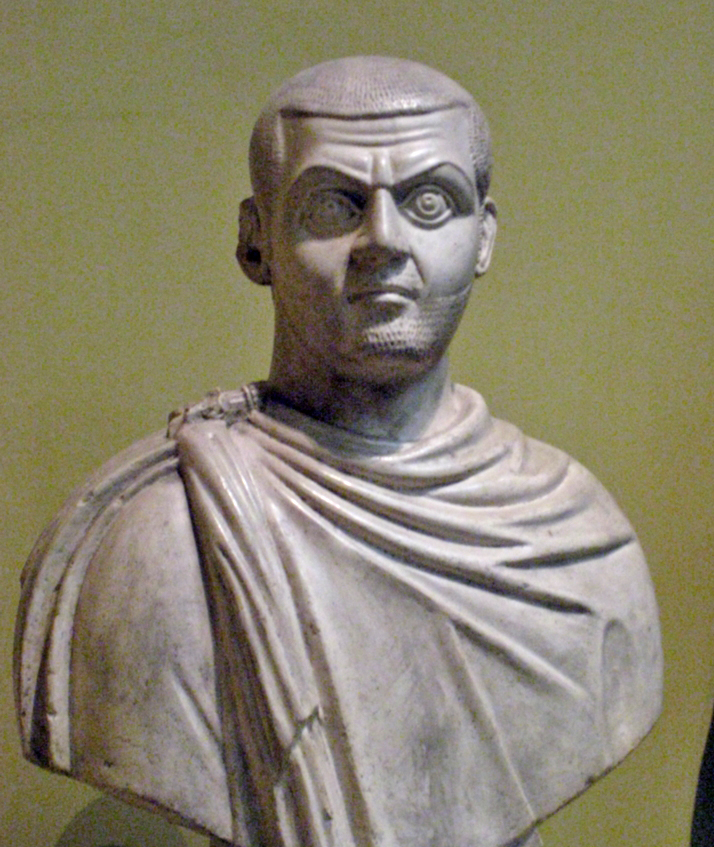
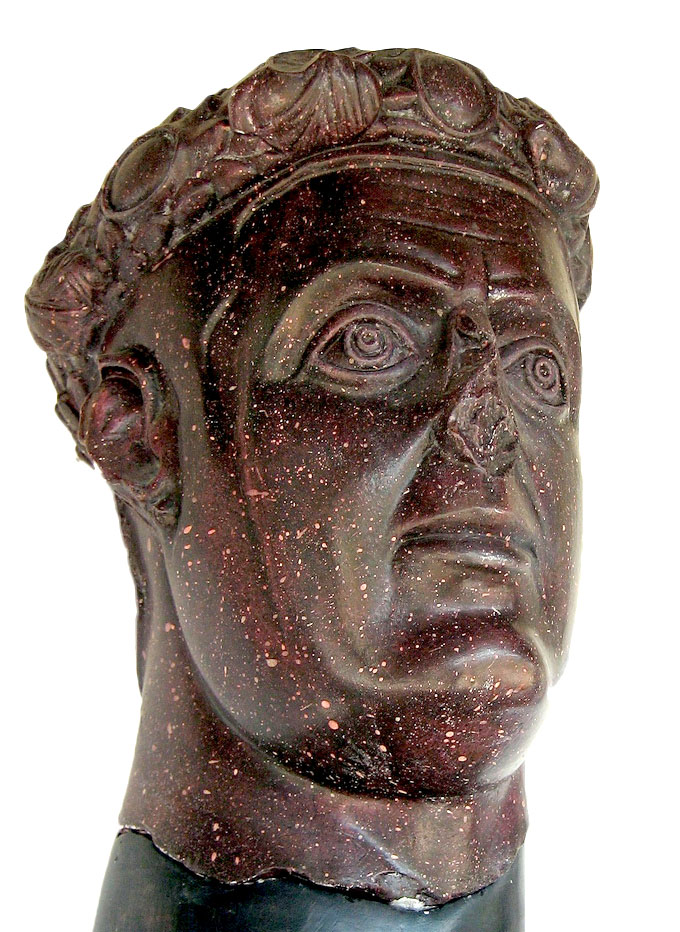
Is there anything to be said surrounding this shift? Is it a change in artistic taste (As some say started around the introduction of the Dominate and the Tetrarchy and can be seen in some imperial portraits from that era, examples 1, 2, 3 ), a change in economy and thus the use, quantity and quality of coins or maybe a combination of both?
I actually asked a similar question of Robin Pierson, creator of the excellent "History of Byzantium" podcast, in his "Questions II" podcast (the question begins at 5:03), and I can at least share his thoughts on the stark differences between the 6th/7th century coins and their earlier counterparts. According to Robin, the shift in coinage is due to a combination of stylistic changes, and not necessarily to a decline in material culture. The most obvious change in style is the transition from portraits in profile to a forward-facing view of the emperor, first depicted in the coins of the emperor Licinius (a contemporary and rival of Constantine) and cemented as the new standard style of coinage by Justinian. According to Robin, this perspective made depicting the depth of various facial features significantly more difficult, and contributed greatly to the extreme abstractness seen in coins such as the two Eastern ones that you included above.
Another stylistic change that Robin describes is the shift from using coinage to depict the emperor as an individual to depicting the imperial office itself. In depicting themselves in a highly stylized manner, emperors during the Byzantine period were seeking to link themselves to their predecessors in the minds of the people, and thus portray themselves as the embodiment of "emperor-ship" and improve the perceived legitimacy of their rule. I cannot speak to the idea of this trend affecting coinage during the early Dominate, but it seems to be fairly consistent from Justinian forward.