In 1414 CE? Probably would not have a lot to say. The Mexica were still a subordinate group to the Tepanecs at that time, who were busy expanding their own proto-empire around the Basin of Mexico. Not the most outwardly focused time.
We also do not have specific statements about Maya groups from Aztec writings. The Maya were largely outside the Aztec sphere of dominance and conflict, so while we have comments in Sahagún on Otomies and Tlahuica, we do not have equivalent statements on Maya groups.
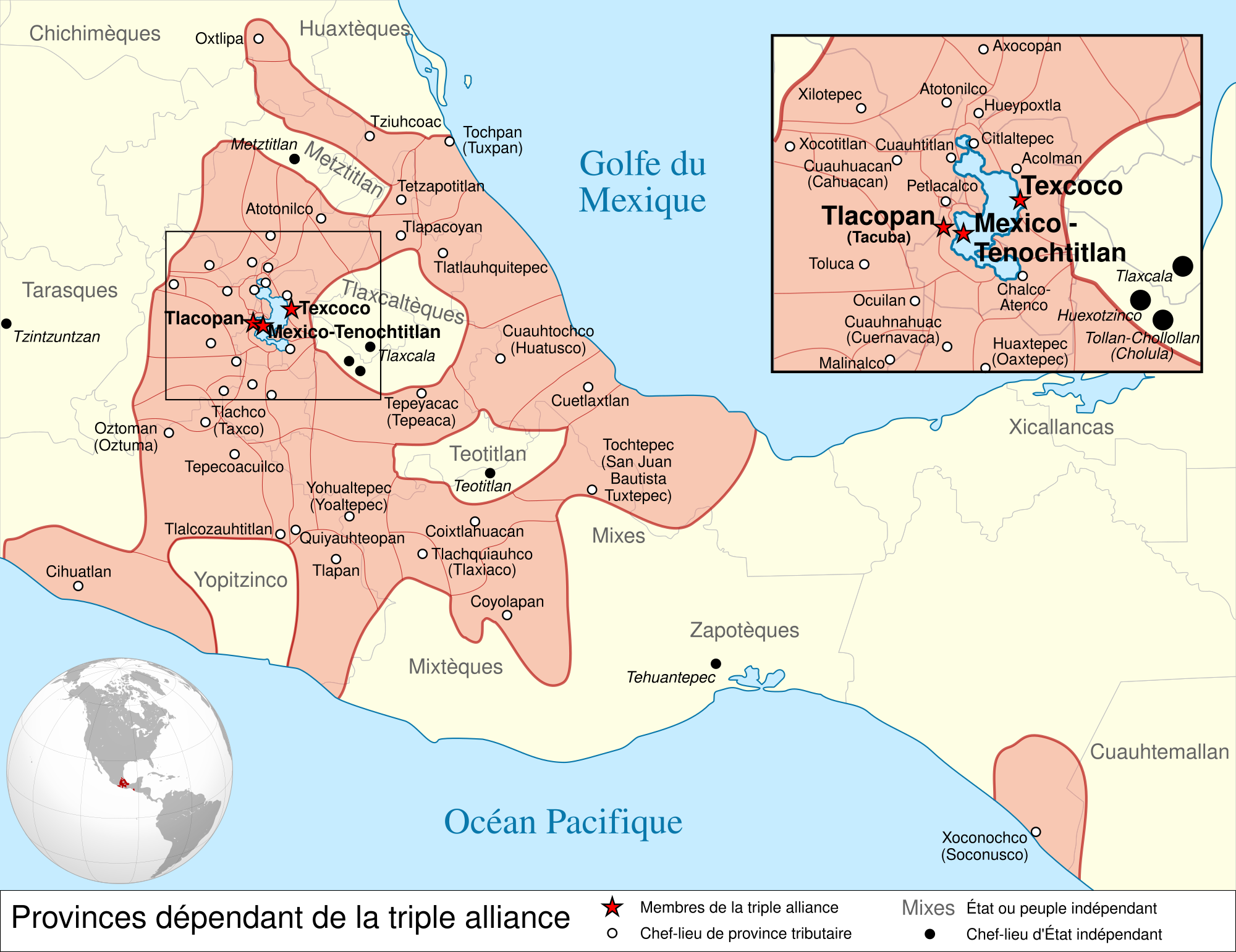
Perhaps the closest we get is commentary on the "Olmeca, Uixtoti, and Mixteca," which is a broad group, but can be interpreted as talking about peoples in the modern states of southern Veracruz and Tabasco. It was here that the Mexica and their allied groups would have had the most interaction with Maya peoples. Not only was this a mixed area of Nahuatl and Mayan speakers (the infamous and bilingual Malinche was from this general area), but the Tochtepec region in south-central Veracruz was an early target for Aztec expansion once they started looking outside the Basin.
In Sahagún, these groups are noted for their wealth, the abundance of the land, and their artistic skill. In particular, their richness in cacao, feathers, and rubber are noted. They are also posited to be the a branch of the Toltecs. This has two shades of meaning, the first being that great artistry is inextricably tied to the Toltecs (whose name means artists). The second is that there were historical intrusions of Nahuas into the Gulf Coast/Western Yucatán region, most notably Toltec influence at Chicen Itza. This influence continues with Mayapan and the prevalence of Nahuatl named individuals in the history of that polity. Again though, this passage is talking about several groups on the boundary of Aztec and Maya interaction, not Maya groups specifically.
Mayapan may be the most interesting case for this question, as it was the last great, overarching Maya state before the arrival of the Spanish; the end tail of the Postclassic resurgence. According to De Landa, and somewhat supported by archaeological evidence, Nahuatl-speakers were involved the struggles between the Xiu and Cocom which ultimately led to the downfall of the city. De Landa specifically says that "the garrison kept by the Kings of Mexico in Tabasco and Xicalango" were involved in Cocom dominance. The timeline for when this might have happened though, is difficult, as we would have to assume this either occurred later than we have evidence of the Cocom-Xiu conflict, or that the Aztecs moved into the Southern Gulf region earlier than we have evidence for. It's probably better to assume that these were local Nahuas called into the conflict, and that the association with the Aztecs came later, particularly since neither Tabasco nor Xicalango ever fell under Aztec domination.
All of this is skirting around the question though, mainly because, again, there is not a clearly sourced answer for the question. We have inferences from the discussion of riches in the area where Aztec and Maya intersected, which makes sense given we know that Maya trade routes were extensive. They stretched across the Yucatán into the Petén and beyond, as well as incorporating robust coastal trade from Veracruz down to Honduras, at least. We have the early expansion of the Aztecs to the southern Gulf to capitalize on this wealth; Tochtepec provides a bonanza of tribute in the Codex Mendoza. The conquest of the Xoconocho region, was similarly an economically advantageous acquisition. Possibly related to that, in the Annals of the Cakchiquels, an account of Aztec emissaries to that group in the Highland Guatemala near Xoconocho, indicating political contact. Scholes and Roy (1968) note that that Xicalango (a west Yucatán port city) was essentially an Aztec client state, with some vague indications that it may have been a nexus for future expansion. Furthermore, Aztec emissaries in the southern Gulf sent news of early Spanish expeditions back to Tenochtitlan prior to formal contact.
All of this shows a political engagement between the Aztecs and the Maya, but does not really speak to the social connotations, biases, and stereotypes that might have been held by the former regarding the latter. Our detail on sources is unfortunately not great in this area, and is not helped by the fact that Maya groups, while not outside the Aztec sphere of influence, were outside of Aztec domination.
Well, to begin with, they Nahuas (Aztecs) would not have understood what you meant by Maya. Let us assume that the pochteca, or merchant class, would be the most well informed of the social structure as they not only contributed to the Mexica economy but also relayed information on outside groups and allies to the Tlatoani, or emperor. They almost certainly would not know of the Classic Maya that existed in the highlands to the south, as those groups had mostly migrated out of the area 700 years earlier. See Demarest's Ancient Maya for his interpretation of how the Classic Maya fell apart. I would also recommend Lucero's Water and Ritual and Braswell's The Maya and Teotihuacan. However, if you made yourself more specific and asked about the people that lived in what is the Yucatan Lowlands, then yes, they would not only be aware of that region, but be able to highlight some important cultural connections between that area and the Valley of Mexico.
Remember: many civilizations that developed and evolved in the Valley of Mexico utilized the same religious/cultural traditions, adding to old ones as time passed and new civilizations took the place or melded into others. One of the more common religious stories was that of a god, in this case the Mexica Quetzalcoatl, leaving the Valley of Mexico for a land in the east. Archeological evidence in many of the major Post-Classic Maya sites suggests that the artistic traditions, building planning, and other elements found in early Valley of Mexico sites such as Teotihuacan can be found in later Yucatan sites. There was a connection. Perhaps groups from that area of the Valley made their way south over time.
Now to your main question: What would the Nahua say about the Yucatec Maya? I don't know. The pochteca traded with Yucatec Maya merchants, or groups from the Gulf Coast who more easily moved south to the Maya settlements, but they did not actively encroach on their territory. The Mexica empire did not extend that far southeast, but they regularly made contact, exchanged information and resources (and slaves if we remember Malinche). I would argue that the Mexica would have considered the Maya rather primitive by that time, their Classic era innovations long forgotten or watered down through the centuries. It would be more strategically sound to focus Mexica political and military power on the Tlaxcalans and the Chichimecas to the north, rather than spend anytime worrying about the smaller, distant populations in the city-state Yucatec world.