It seem through out history different countries after a war were split up and handed to different people, yet after both wars Germany was still around?
Could they not give half to Poland and France? Was there something in treaties stopping this ?
Same with Japan?
There were talks early on about breaking up Germany but it quickly became clear that wasn't feasible. Fact is is that the wealthiest part of France, industrially at least, was occupied and sacked for four years. Belgium as a whole was destroyed. They needed a central, standing German government with its industry and wealth in tact to pay reparations. The British in particular, who would go from the largest creditor to largest debtor nation in those four years, full on relied upon German industry to rebuild.
Even as it happened now Bavaria was able to secede as a Soviet Republic for a couple of months. Freikorps and revolutionaries would fight in the streets for years. Berlin was being sacked by radical socialists and communists. The more they let the situation go out of control the more likely Germany was to fracture at the seams. That was not beneficial to anyone.
Ultimately the war goals of the Allies were simple. Push the Germans out of the lands they occupied and maybe seize Alsace-Lorraine back. Use German reparations to rebuild the damage. Neuter their military so that they may not do what they did again. Break them up enough so that they are contained but not so much that the economy of the world falls into pieces (Germany was the #3 GDP in the world). Lastly enforce a democracy so that the aristocracy may not start shit again.
All of that was achieved. The German leadership realized they were lost. The aristocracy across the nation stepped down including the Kaiser and Emperor. The armies completely surrendered. Polish nationalist groups especially were up in arms and would secede along with the lands given to them thus creating an Eastern contender. Reparations would be put in action and the German army was not to exceed 100,000 men. Now obviously the reparations would hardly be enforced and the restriction on the army was de jure but not de facto but that's not on the men fighting and the men who put in place the terms but those who were there to enforce it after.
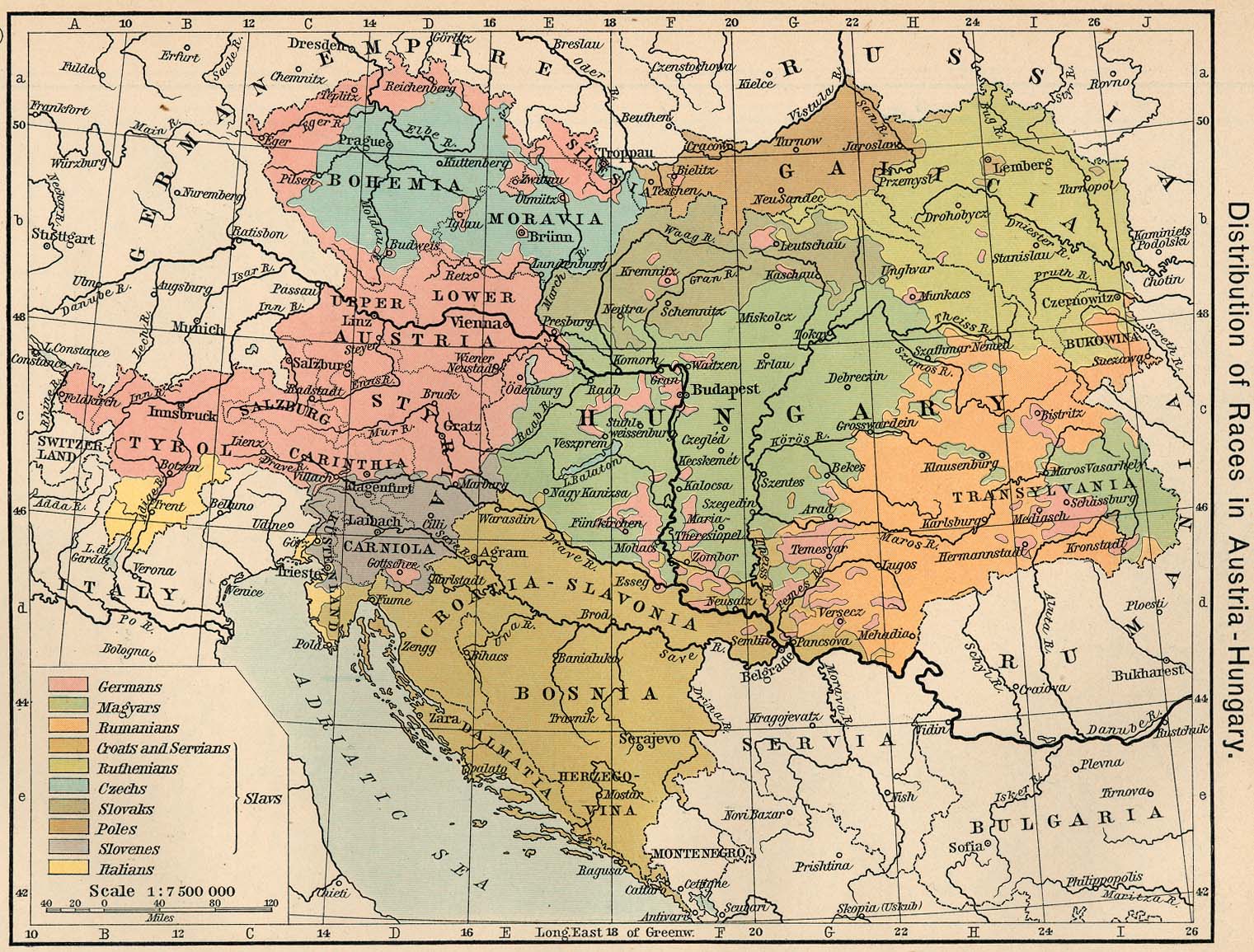
The ethno national argument also comes up, let's contrast with Austria Hungary. Just look at this rough ethnic map and see just what kind of situation this was. The Brown and Grey in the south (Slovenes/Bosnians/Serbs/Croats)? The Poles, Ruthenians, and Rumanians in the North/East? The Czechs in the North? Slovakians just East of the Czechs? That is a giant powder keg of people who do not want to be inside of that empire; people who feel a strong ethnic/cultural/linguistic/historical bond to each other who are being ruled by a German or Magyar elite in a land far, far away.
A common phrase is WWI was redrawing Europe around ethnicity and WWII was moving around ethnic groups to fit preplanned borders. That is precisely what happened. The green lands (bar the Saarland) were given a vote whether to join Germany or Poland as it was a tossup of demographics but in the general ethnic groups got their ethnic lands. Romanians got a huge chunk of Hungary (seriously...look at the before), Yugoslavia was created for that dreamed pan-Slavic state, the perpetually oppressed Poles who were split amongst three Empires (Russo, Prussian, Hungarian) for a hundred years were finally given their own autonomy, and the Austrians/Hungarians were (roughly) reduced to territory where they had ethnic majorities. Ultimately the Germans weren't split up because the German state was, pretty overwhelmingly, ethnically and nationally homogenous in their own minds.
Ultimately real life is not a video game. You don't just annex tens of millions of people. A state is one with a monopoly on the legitimate use of force on the people in a set geographic region. A large part of that is the people itself recognizing said states authority. If that authority is not recognized it leads to many issues.
Germany was split up after WWII.
Large chunks of Eastern Germany were annexed by Poland and Russia.
The rest of Germany was split into two countries, East Germany and West Germany, and remained split until German reunification in 1990.
Nobody wanted to annex Germany (that's 70 million people who didn't really want to be ruled from Paris or Warsaw): it was just too big, even half of it. Poland gained a substantial territory, France made a bid for an enlarged Saar, but the remainder was beyond anyone's capacity to incorporate or rule in perpetuity. Treaties are what you write and get someone to sign: the hard part is implementing them.
Much the same goes for Japan, with a strong national identity: overwhelming and murderous brute force would be required to overcome that, and it just wasn't necessary - just rule nominally through the Emperor (that had been done centuries before), democratise government and do away with militarism (we'll see how that turns out), that's all that was needed.