Was everyone given an equal share? Was it used only by the governing body at first? I'm curious about the transition from bartering to the use of currency and whether introducing currency disrupted the class systems of the time.
Currency has been around since the earliest civilizations like Mesopotamia. It appears it was first used by the Syrians and Mesopotamians as a common currency for trade. It was adopted during the Islamic conquests around 633 CE. There aren't a lot of records of how it was used, but it is suspected that the rulers were in charge of the distribution of currency.
But, there is no evidence that currency was used on a large scale. Rather, it was mostly used during foreign trade or larger transactions. We can confirm that they were used in large trades as evident by surviving trade contracts.
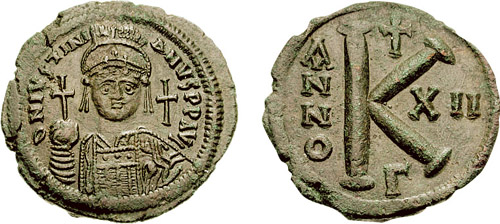
The Byzantine gold solidus was the first time we saw it used in taxation, and is most likely about the time it was adopted by more people. "Taxes were levied in gold solidi, which were carried to the treasury in Constantinople. In order to control the quality of the tax-money, all coins were melted down to ingots. For government expenses the gold was reminted into new coins."
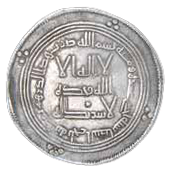
The Gold Dinar was introduced by Abd al-Malik in 696 following the Silver Dinar. It was fairly used throughout north Africa and Transoxiana and marks the first time two coins were used in circulation.
The earliest usage of paper money was during the Song Dynasty and you can still see it today! Though, the one in that picture is from the Ming Dynasty. It's huge - larger than a standard 8x11 piece of paper.
References:
Heidemann, Stefan. "The merger of two currency zones in early Islam. The Byzantine and Sasanian impact on the circulation in former Byzantine Syria and Northern Mesopotamia." Iran (1998).
Leemans, Wilhelmus François. Foreign Trade in the Old Babylonian Period as revealed by texts from southern Mesopotamia. Vol. 6. Brill Archive, 1960.
We don't seem to have answered the question. I imagine it as the culmination of a gradual process: people had started by trading things of immediate practical use - grain, fabric, pots, amber - whatever was available and wanted. Then came more exotic tokens - metals in our area, shells elsewhere, etc. The final step was to replace those small lumps of metal with royal coin: if sufficient metal was in private hands for trading needs, it could be exchanged for finished coin, less 5% or so for the king/emperor, and a cash economy initiated, provided there was sufficient agreement on what the new trinkets were actually worth: my guess is that decreed prices came very early, perhaps becoming less needed as values were established.
That probably leaves lots of people without any of the shiny stuff, but in this respect they were really no worse off than before, and barter doubtless continued - indeed it had to for most until low-denomination coin was commonplace.
As for effects on the social order, that's difficult to estimate. Much business doubtless carried on as before. But amassing great wealth presumably became easier, along with very large transactions. So the impact may have been to widen inequality. That said, the benefit to trade presumably impacted favourably on incomes and living standards across the board.