If they did, what were their reasons for doing so?
Yes, they did. The destruction of monuments, artwork,etc. by the Nazis took two different forms. Either they were doing it to humiliate/culturally destroy an occupied people, or they were destroying German monuments/artwork/etc. to prevent them from falling into enemy hands. Its also worth noting that the Nazis destroyed art works and cultural monuments that felt they were dangerous/subversive/or degenerate; so works from Jews, works depicting nudity, not properly playing up to Aryan ideals could all be destroyed by the Nazis; but that was mostly related to artwork and music.
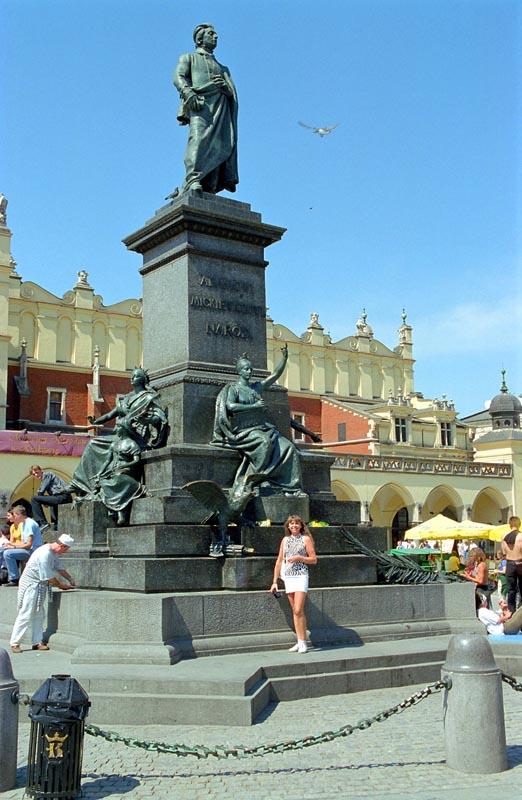
In occupied Poland, Polish musicians and artists were suppressed; as well Polish monuments were destroyed, such as the famous Polish monument to poet Adam Mickiewicz in Krakow. Here is a picture of the recreated statue and here is the picture of the Nazis pulling it down.
During the Warsaw uprising a number of Polish cultural and historical buildings were burned. Including the Palace of the Four Winds, The Brühl Palace, Sigismund's column a monument dedicated to one of the Vasa kings (same dynasty as Gustavus Adolphus), and Church of the Visitation of the Most Blessed Virgin Mary which had stood since the early 1400s, although it was reconstructed by the Polish government after the war. There were more monuments destroyed during Germany's planned destruction of Warsaw and these were just a few that stood out.
When the Nazis invaded France, the only culturally signifcant building they destroyed as far as I know was the Glade of the Armistice which depicted the triumph of France over Germany in WWI. Naturally Hitler had it destroyed, and the rail car in which the armistice was signed was brought back to Germany (although not before Hitler had the French sign a new armistice in the rail car).
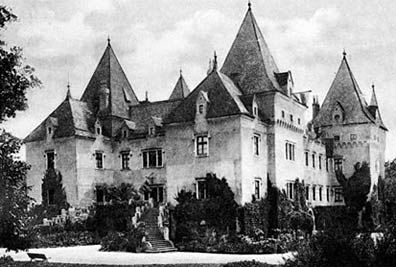
Now we move onto the monuments destroyed by the Nazis as Germany was retreating. A giant bronze statue of Paul von Hindenburg located Hohenstein (modern day Poland) was destroyed by the Germans; as was the Tannenberg memorial where Hindenburg's remains were kept was also partially demolished. Likewise in Austria, the Nazis set fire to several old monuments and buildings, a good example being the Schloss Immendorf castle, which was burned by the SS in 1945.
As the Nazis retreated from Florence during the Italian campaign, they destroyed around 1/3 of the old Medieval city. Including many old bridges, houses, buildings, etc. Here's a picture of British officers viewing parts of the damage
I don't know that you can necessarily compare the Nazi destruction to ISIS', but certainly the Nazis weren't exactly the best caretakers when it came to monuments and buildings, although it seems more strategically motivated than ISIS' which seems largely religious.
When the Nazis pulled out of Paris, they wanted to destroy it, burn it to the ground, and set explosive charges all over the city. It was sour grapes--if the Nazis couldn't have Paris, no one could. And it was also revenge--the Nazis hated the French due to their humiliating defeat at French hands in World War I. It was a huge vindication that the Nazis defeated the French so easily in World War II. But having again lost, the Germans wanted to humiliate and destroy the French again. So why is Paris still there, its beauty intact? Because the Nazi commander of Paris, Dietrich von Choltitz, disobeyed Hitler's direct order and instead of destroying Paris, surrendered it to the Free French Forces. He could not bear to destroy it, and he didn't want to go down in history as the man who destroyed Paris.
A fascinating work that examines the Nazis' relationship with cultural artifacts and art as well as those trying to rescue it from them is Monuments Men. I believe there's also a movie out (same name) but I can only speak for the book.
The Germans destroyed an Australian memorial in France. It seems that they took offense to the memorial as it showed an Australian soldier bayonetting a German eagle.
This is mentioned in the book "Digger". Off the top of my head I can't recall the author except that he was an Australian soldier during the Second World War.