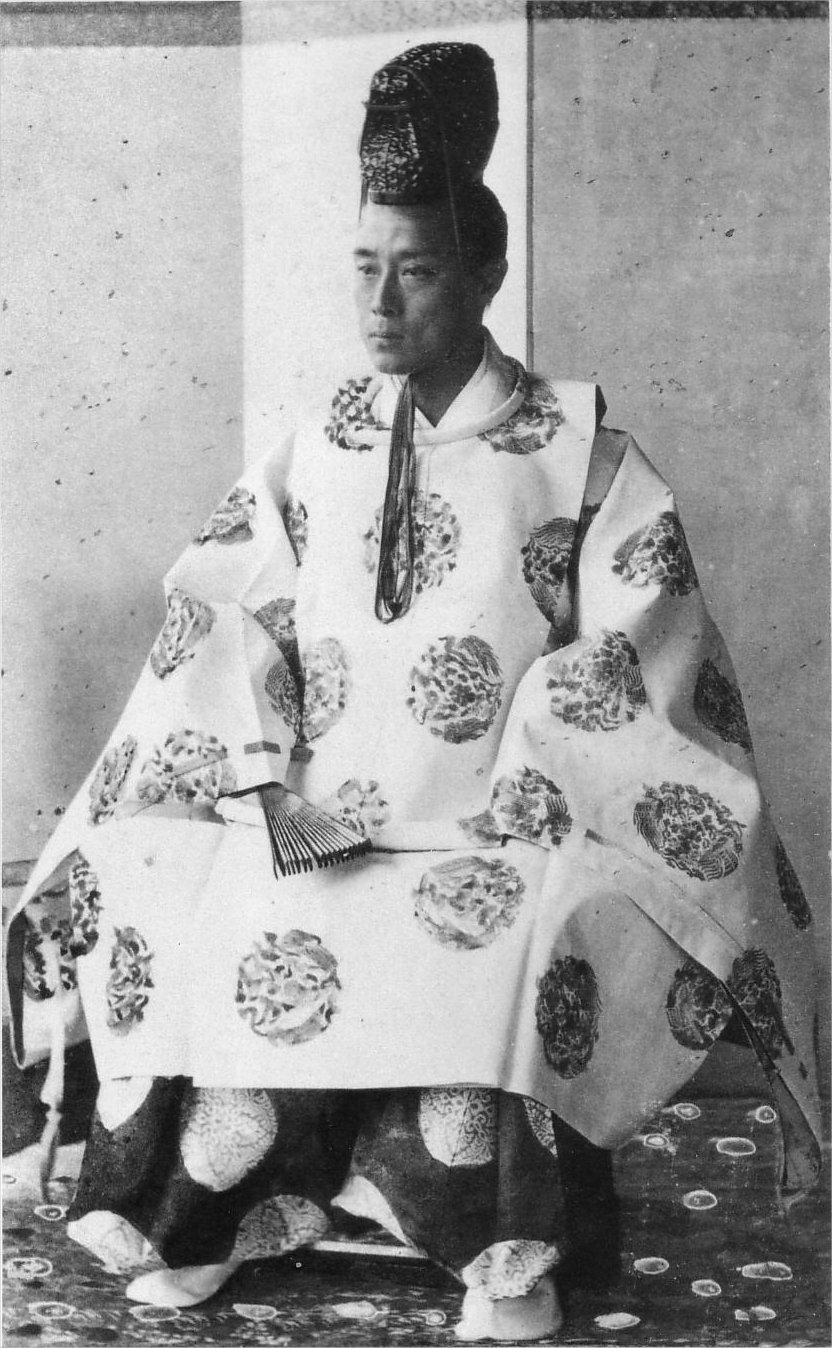
Examples: the [last Shogun,] (https://upload.wikimedia.org/wikipedia/commons/3/31/1867_Osaka_Yoshinobu_Tokugawa.jpg) and [emperor Komei.] (http://www-tc.pbs.org/wnet/need-to-know/files/2011/03/Emperor-Komei.jpg)
What do vertical boxes and wooden containers tied to the head signify? I don't imagine they contain anything, so why were they significant? Traditional Japanese headwear do contain all the other styles of material and rough shapes that Europe had too, such as hats made from fabric, reed, and metal. So, why the upright boxes?
Those "boxes" and "wooden containers" are actually a silk headpiece called the kammuri. Kammuri were typically worn by male nobility after the noble male children reached their coming of age ceremony. This included emperors, shoguns, and some daimyo. A similar garment is worn by senior Shinto priests as well. The "stick" decoration is actually one of several means to identify seniority of a person-decorations, such as a chrysanthemum seal, would indicate the seniority of a nobleman.