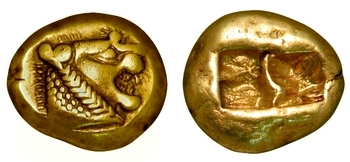
Lydia was the first nation to issue currency, it did so around 650-600 BC. Lydian coins were bean like and stamped with the head of a lion.
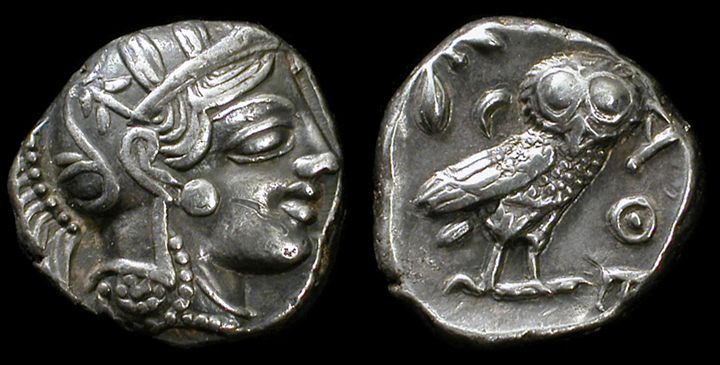
Later in Ancient Greece around 570 b.c. the City of Aeneia was believed to be the first to issue a coin featuring a head on the obverse (unfortunately, I could not find any pictures of it online). From the Lydia stater until another Greek coin from 480 BC, coins would usually feature either the stamp of the ruler (like Lydia's lion) or a city's mark of praising for god or some other aspect of Greek mythology. Like the many Greek coins before it, the tetradrachm from Athens was to praise the cities goddess, Athena. However, unlike the many coins before it an image of Athena's head was placed on the obverse. Today, Athena's Owl as the coin is known, named of of the owl on the reverse, is the most famous ancient coin. The silver tetradrachm became the preferred coin of trade around the Mediterranean world and beyond.
Many other Greek cities then issued their coins were with the heads of their gods and goddess. Although there are exceptions, by far more coins had deity heads than human heads. After the death of Alexander the Great this began to change and Greek rulers began placing their own images instead of the gods'.
Early Roman Republic coins featured Gods and a very wide variety of Gods were represented on coins. However by the time of Roman Empire it was common practice to have the Emperor's head on a coin, probably 99% of emperors had their head on some denomination. Augustus was on at least 20 different coins and Nero had reached at least 14. Later emperors only accomplishment might have been lasting long enough to get the head on a coin, these are known as the coin emperors.