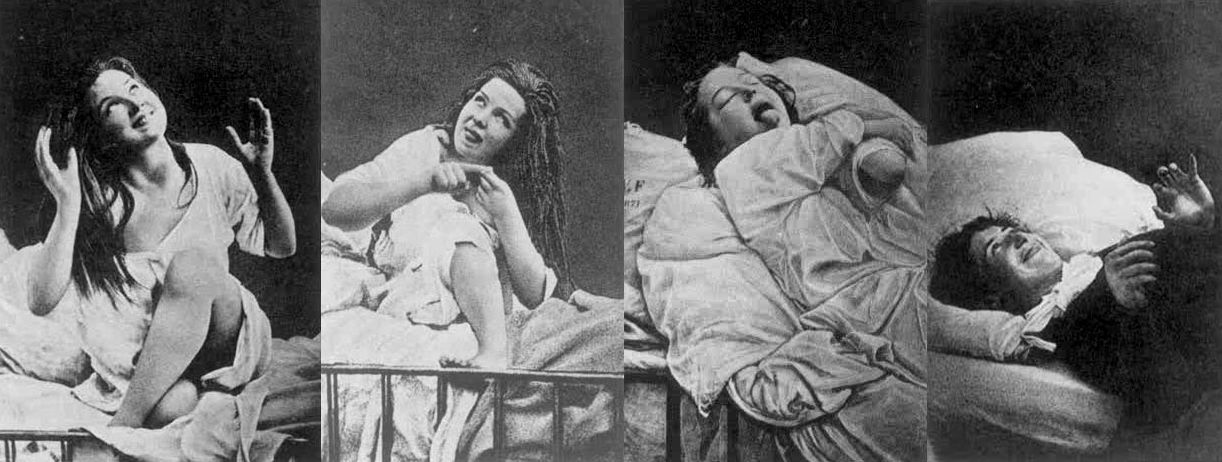
I just watched the movie Hysteria, and I know it's largely fictional, but it raised some questions I've had difficulty answering on my own.
I'm having a difficult time believing that Drs practising "pelvic massages" were unaware that their patients were receiving sexual pleasure from their treatments.
And I find it very far fetched to believe that the patients didn't realize they were experiencing sexual stimulation.
Did patients and doctors share a "nod and wink" type of relationship? Did women keep their pleasure a secret from their doctors (and medical science)? Or did both genuinely not know?
Thanks /r/askhistorians!
And special thanks to /u/caffarelli for assistance with my title.
Additionally, is this just an urban legend? If not, what was the view of the people of the practice? Did they see it as a guise to have sex? Did they see any medical merit to it?
I answered á similar question just over a week ago, which may be of interest :) I'll post the relevant sections below:
"Female hysteria" was seen as a catch-all term for a variety of different mental illnesses today (Clinical depression, Bipolar, Schziophrenia etc). It was thought that hysteria was caused by the uterus detaching itself & floating around the body causing women to react in an odd fashion. There were even adverts in newspapers showcasing the vibrator.
[...]
Until Alfred Kinsey's reports in the late 40's & early 50's, certain people still thought the woman's purpose during sex was to please their husband. They never considered that women might also get enjoyment from sex. Even if they said well women experience "orgasms" it would've only been mainly to treat their hysteria. Female orgasms weren't a thing that was really considered in the 19th century. They weren't even called "orgasms" they were known as "hysterical paroxysms of relief".
[...]
Kinsey's Sexual behaviour in the Human Male (1948) & Sexual behaviour in the Human Female (1953) were eye-opening (especially the latter) in how we understand sex. Instead of using three categories (homosexual, heterosexual & bisexual) to describe men & women, Kinsey devised the "Kinsey Scale" as he thought that sexual desire was fluid; 0 - Exclusively heterosexual, 1 - Predominantly heterosexual only incidentally homosexual, 2 - Predominantly heterosexual, but more than incidentally homosexual, 3 - Equally heterosexual & homosexual, 4 - Predominantly homosexual, but more than incidentally heterosexual, 5 - Predominantly homosexual, only incidentally heterosexual, 6 - Exclusively homosexual & X - No socio-sexual contacts or reactions (what can be thought now as "Asexual" &/or "Aromantic").
However what's really interesting is the results;
Men:
11.6% of White males aged between 20-35 scored a rating of "3" throughout their lifetimes
50% of all married males had some extramarital experience at some time during their married lives.
Sadomasochistic responses (this is anything from biting to more extreme forms of S/M)
[...]
So that was the male results let's look at the all important female results, 19th Century Psychologists & Sexologists if they were to look at hypothesize the female results they'd probably put it at around 0. However they were wrong;
Women:
7% of single females aged 20–35 and 4% of previously married females aged 20–35 were given a rating of 3
2 to 6% of females, aged 20–35, were given a rating of 5
1 to 3% of unmarried females aged 20–35 were rated as 6
The average frequency of marital sex reported by women was 2.8 times a week in the late teens, 2.2 times a week by age 30.
1.0 times a week by age 50
26% of females had extramarital sex by their forties. Between 1 in 6 and 1 in 10 females from age 26 to 50 were engaged in extramarital sex.
Sadomasochistic responses;
A bit more info on biting, erotic responses & women:
Definite/Frequent ~ 26% Some response occasionally ~ 29% Never ~ 45%
Number of Cases ~ 2,200
[I then go on to talk about things we need to consider when looking at Kinsey's Research]
Things to consider about Kinsey & these studies: Kinsey classified couples who'd lived together (whether they were legally married or not) for a minimum of a year as "married". This classification obviously affected the outcome of results somewhat. Also I think Kinsey only surveyed men & women who were born as their biological sex & not TransMen, TransWomen or those who identified as a different "gender identity" to their "sexual identity".
Kinsey also tried to challenged & IIRC supported some of Freud's theories on infantile sexuality & Psychosexual development. Evidence that supports this is the fact that Kinsey collected information on pre-adolescent orgasms (children aged 5 months & 14 years), Kinsey states that he collected the data through adult's childhood memories & adult or teacher observation. Kinsey also interviewed paedophiles who had sexual encounters with children who gave information on how they thought the children responded.
[That was just the relevant bits of my original answer which also (I hope) managed to answer this question, I'll post the relevant sources that correspond to the sources]
Sources & Further Reading:
The Technology of Orgasm: "Hysteria," the Vibrator, and Women's Sexual Satisfaction ~ Rachel P Maines
Kinsey el al 1948, 1953
Sexual Behaviour in the Human Male & Sexual Behaviour in the Human Female ~ Alfred Kinsey
Here are the best links I found on the subject:
https://www.reddit.com/r/AskHistorians/comments/3lw8j3/did_victorian_edwardian_doctors_actually/[1] }
https://www.reddit.com/r/AskHistorians/comments/25m7et/was_hysteria_limited_to_women_of_a_certain_social/
I also replied to another comment in this thread but the parent comment was downvoted below the threshold.
According to The Technology of Orgasm, the source for much of the material in Hysteria, it’s likely that physicians didn’t consider masturbating their patients to be sexual because there was no penetration:
The role of the clitoris in arousal to orgasm was systematically misunderstood by many physicians, since its function contradicted the androcentric principle that only an erect penis could provide sexual satisfaction to a healthy, normal adult female. That this principle relegated the experience of two-thirds to three-quarters of the female population to a pathological condition was not perceived as a problem.
This androcentric focus, in fact, in many cases effectively camouflaged the sexual character of medical massage treatments. Since no penetration was involved, believers in the hypothesis that only penetration was sexually gratifying to women could argue that nothing sexual could be occurring when their patients experienced the hysterical paroxysm during treatment. Even the nineteenth-century physicians who excoriated the speculum for its allegedly stimulating effects and questioned internal manual massage saw nothing immoral or unethical in external massage of the vulva and clitoris with a jet of water or with mechanical or electromechanical apparatus.¹
Beyond the fact that vulval massage was external, it’s also plausible that many physicians had simply never seen a woman orgasm, their wives included.² After all, even in this century, plenty of women simulate coital climax because penetration simply isn’t physically sufficient to bring them to orgasm.³ As for the women’s thoughts, keep in mind that they were paying good money to have disinterested doctors jerk them off (most of whom one would assume were not as attractive as Mr. Hugh Darcy); if they had understood what was going on in the sense we do, it seems more likely they would stay home and do themselves.
I’m only a couple chapters into the book, but it’s an excellent read so far. If you find this sort of thing intriguing, you should check it out.
___