Was thinking, during wartime, rationing means that a safety net which might not have existed for those very poorly off now comes into being. While the consumption for the average person is probably going down due to the restriction, this possibly has the converse effect of providing a guarantee for those who were well below average!
So during World War II, was there any noticeable effect on this front? Was it particularly more pronounced in one particular power than another?
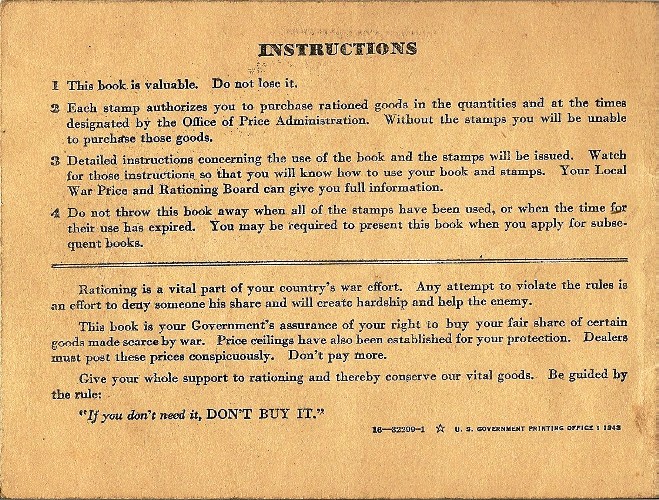
I think you misunderstood how rationing worked. It was not a coupon that could be exchanged for goods. It was a permission slip that allowed you to buy those goods.
As Instruction No. 2 on this Office of Price Administration ration book explains:
"Each stamp authorizes you to purchase rationed goods in the quantities and at the times designated by the Office of Price Administration. Without the stamps, you will be unable to purchase those goods."
That said, wartime unemployment in the United States was effectively zero, and there were few people who could not afford to buy. Demand for labor vastly outstripped demand, and unqualified workers were frequently offered astonishing wages to perform tasks for which they were grossly unprepared. Notably, the Hanford Works of the Manhattan Project had to operate recruiting offices across the country in order to find sufficient workers, and even then, those that were found were frequently riotous, alcoholic and unskilled.