I am specifically looking for what part of the arm would have to be damaged in order to warrant its removal? Also what would the case in an arm wound where it would not have to be removed? Thanks for your time!
In the case of the Civil War, it's not so much a matter of location on the body as it is a quirk of the weaponry. Where the wound was mattered less than the sort of wound it (often) was.
The standard rifled musket of the era fired a bullet called a Minié ball. This is a much more powerful projectile than the actual round ball used by earlier smoothbore muskets. It's more accurate, more stable in flight, and has a higher velocity, but for all of that, the Minié ball was still (by modern standards) a very large, slow, heavy round made of very soft lead.
So, a small tangent. A smoothbore musket ball took what you might call the "path of least resistance" through the body, winding and often lodging in the body if it were moving slowly enough when it struck someone, and a modern, small-caliber, high-velocity jacketed round will usually travel right through an unarmored body. If it hits a bone, it will often break "cleanly," at least as clean as a gunshot wound can be. The Minie ball falls somewhere in-between.
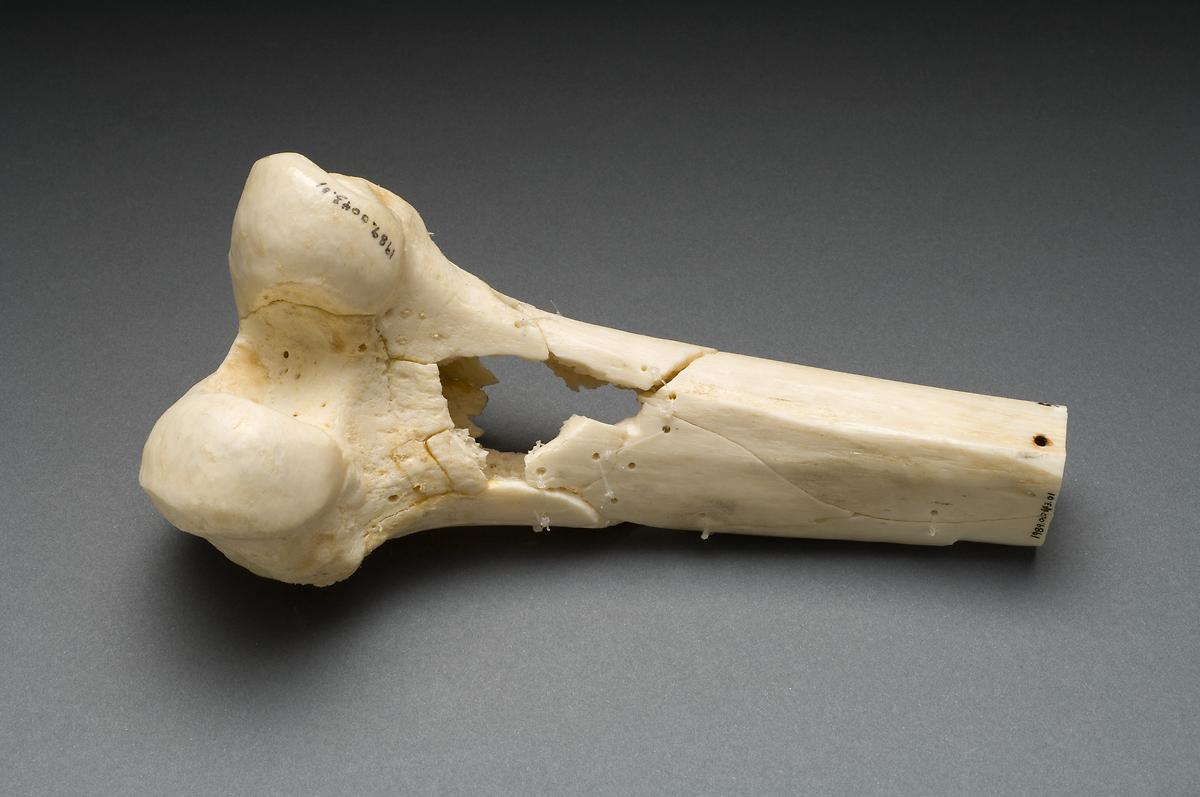
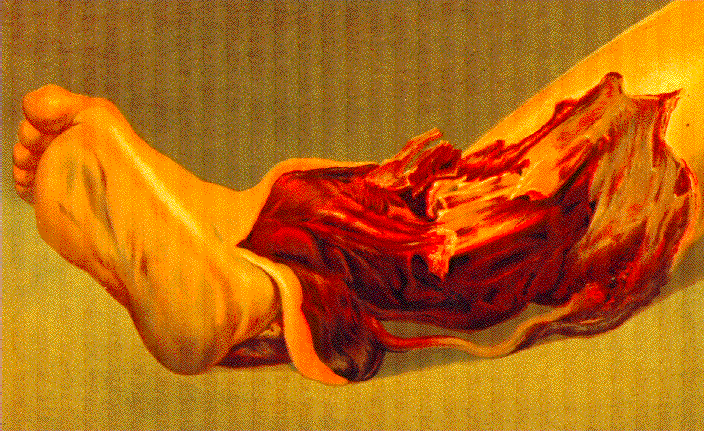
A Minié ball moved fast enough to put a hole clean through you, to be a little crude, but it's a big, soft chunk of lead. If it hits a bone, it deforms, flattens out, like so. This shreds soft tissue, while the bone itself shatters or... splinters, I suppose. This is a femur. You can see the huge number of fractures if you look close. Here's a contemporary sketch of a lower leg wound. You can see the lovely things that sort of splintering does to soft tissue.
This sort of wound is a challenge even for modern medicine. During the Civil War, for an under-equipped surgeon who had to perform dozens or even hundreds of these operations a day? Even if the limb wasn't ruined beyond repair, amputation was really the only option to keep infection and gangrene from killing the patient.
Edit: Formatting fix
It wasn't the wound itself. It was the infection that would set in shortly thereafter. There were no anti-biotics to combat these infections. While it was known you had to keep a wound clean and change the bandages often, after a major battle the number of wounded sometimes overwhelmed the medical staff. If gangrene set in, the only way to save the soldier's life was to amputate the wounded limb. Failure to do that would infect more vital organs, leading to problems like sepsis, that could shut a person's liver down.