♥ looks nothing like a real human heart.
Yeesh. Thanks, mods, for clearing this thread, there were a lot of flat-out wrong answers here.
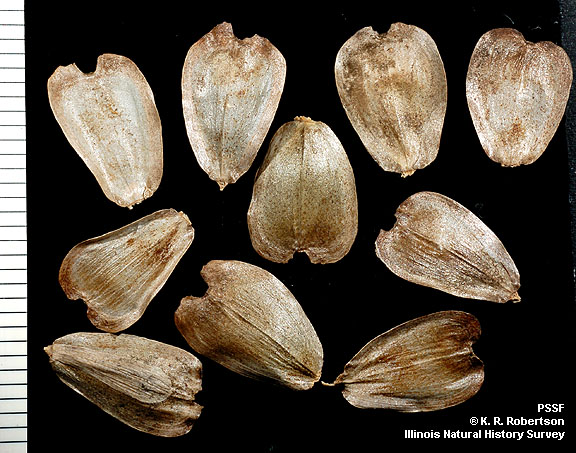
Normally when you ask this question on the internet (or google it) you get the answer that the heart symbol has been associated with love since Roman times, when the seed of the silphium plant (which is sort of heart-shaped) was sometimes used as a contraceptive. But this answer is incorrect; there's no evidence that the Romans used the silphium plant as a symbol for the heart, much less as a symbol for love, and a lot of the vaguely heart-shaped symbols that crop up in Roman art and architecture are actually stylized ivy leaves.
According to Pierre Vinken's book The Shape of the Heart:
Ornamental "heart"-shaped figures were common in antiquity. They were used decoratively and consist of (ivy) leaves, sometimes with tendrils, or a bunch of grapes. These leaves are often depicted with a stalk, which makes them look like the suit of spades in playing cards. Archaeologists refer to this ornamental leaf as the folium hederae, spade leaf, or ivy. They also occur regularly as a graphic decoration in Roman inscriptions in stone or applied to the walls of catacombs.... These leave ornaments are sometimes interpreted as heart figures. [but this is an] inaccurate "heart" interpretation.
It's very unlikely that any of the "heart shaped" images that we can find before 1300 were actually designed or intended to depict a heart. Even though some of them look a lot like the "heart shape" we know, that's not what they signified - and the people who call these "hearts" (or assume that they stood for love) are projecting their own modern assumptions about the shape and its meaning backwards in time, when there's actually no evidence to support that interpretation. According to Vinken:
There is no representation of the heart prior to that date in which a dent or fold appears in the base. Figures in the form of a Saint Valentine's heart predating 1300 do not represent a heart.
So where does the heart originate? And, why, as you quite correctly note, does it look nothing like a heart? Well, historian Martin Kemp has an answer for you in his book From Christ to Coke: How Image Becomes Icon. According to Kemp, the origins of the heart symbol lie in a written, rather than a symbolic or artistic tradition - specifically, in Aristotle and Galen's written descriptions of the heart as having a fovea - a depression or cavity - between the two main chambers. According to Kemp:
It is this written tradition that results in the earliest of the heart-shaped images that are definitely intended to represent the heart as a human organ.
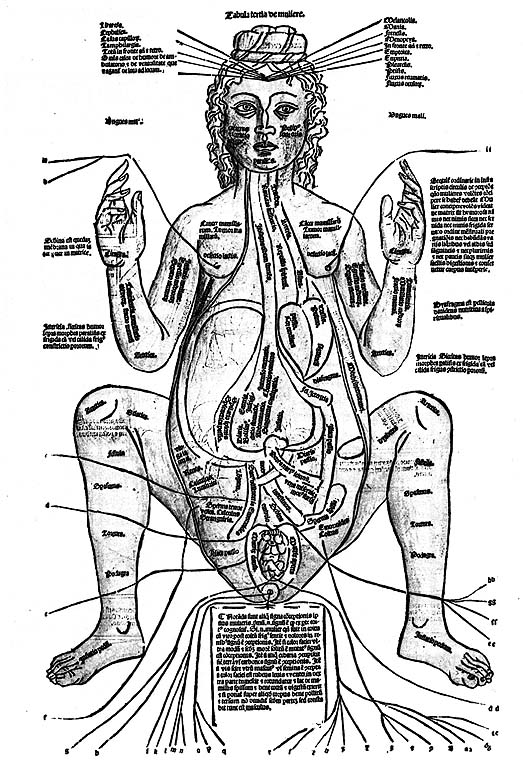
In other words, the heart shape as we know it first originated when artists tried to draw the heart as it had been described (in words/writing) by Aristotle and Galen. Kemp points to two early examples of anatomical illustrations of the heart that seem to have been influenced by Aristotle and Galen's descriptions as evidence - Guido da Vigevano's Anathomia (1345, see the second figure from the right) and Johannes de Ketham's Fasciculus medicinae (1491), both of which display the heart in a way that is quite similar to our modern-day "heart shape." It's also during the fourteenth century that we see the first artistic and symbolic uses of something resembling the heart symbol - as exemplified by Donatello's Miracle of the Miser's Heart (which dates from the 1440s) - it's hard to see in that image, but the heart is in the box off to the right.
Vinken more or less agrees with this interpretation:
From the earliest Greek texts to the anatomical treatises of the present day, the heart has always been described as an organ with a conical or pyramidal shape with a round base and a point.... In the first half of the fourteenth century, in pictures of the heart, a dent appears in its base.
Even once it had begun to represent an actual heart, though, the "heart" symbol as we know it wasn't used in quite the same sense that we use it today. From the 14th-century on, we do see it occasionally used as a symbol for love, and Kemp says that depictions of young lovers physically giving their hearts (represented by the "heart shape" that we know) was an increasingly common motif. But by far the most common use of the symbol was to represent a sacred heart in religious iconography, and Kemp notes that it wasn't until the eighteenth century that it started being used in love letters like this one.
Sources:
Martin Kemp, From Christ to Coke: How Image Becomes Icon
Pierre Vinken, The Shape of the Heart
Hello everyone,
Unfortunately, we have already had to remove a number of poor quality responses in this thread. There have been a large number of incorrect, speculative, or otherwise disallowed comments, and as such, they were removed by the mod-team. Please, before you attempt answer the question, keep in mind our rules concerning in-depth and comprehensive responses. Answers that do not meet the standards we ask for will be removed.