Welcome to another floating feature! It's been nearly a year since we had one, and so it's time for another. This one comes to us courtesy of u/centerflag982, and the question is:
What common historical misconception do you find most irritating?
Just curious what pet peeves the professionals have.
As a bonus question, where did the misconception come from (if its roots can be traced)?
What is this “Floating feature” thing?
Readers here tend to like the open discussion threads and questions that allow a multitude of possible answers from people of all sorts of backgrounds and levels of expertise. The most popular thread in this subreddit's history, for example, was about questions you dread being asked at parties -- over 2000 comments, and most of them were very interesting! So, we do want to make questions like this a more regular feature, but we also don't want to make them TOO common -- /r/AskHistorians is, and will remain, a subreddit dedicated to educated experts answering specific user-submitted questions. General discussion is good, but it isn't the primary point of the place. With this in mind, from time to time, one of the moderators will post an open-ended question of this sort. It will be distinguished by the "Feature" flair to set it off from regular submissions, and the same relaxed moderation rules that prevail in the daily project posts will apply. We expect that anyone who wishes to contribute will do so politely and in good faith, but there is far more scope for general chat than there would be in a usual thread.
One of my biggest peeves, which will set me spinning off in a rage even at its mention, is the anti-Stratfordian conspiracy theory. This so-called "theory" is that Shakespeare either didn't exist, or was merely a front for some other "real" author.
This load of tripe was conceived in the 19th century by a bunch of classists and intellectual elitists who insisted that works of quality like Shakespeare's couldn't possibly be produced by somebody from the lower classes and of humble background, so therefore they clearly must have been written by a noble or an aristocratic person who was simply too modest to take credit.
It demonstrates complete ignorance of how theatres, playwrights, and actors operated in the period, makes up absurd tests of validity that would be failed by 99% of all people ever born, and is rooted firmly in the belief that there was somehow a nationwide conspiracy by all levels of society up to and including the royal court to invent, adore, criticize, eulogize, pay, and grant arms to, a fake author that there is not one ounce of evidence to support.
That textiles before mass production were all rough and chunky.
Heck no! Our modern textiles are what medieval and early modern folks would call "coarse."
There's this chemise/smock/camicia documented in Patterns of Fashion 4. In the nice zoomed in photo, you can see that there are 8 threads running horizontally in the 1/8" binding strip. In modern "handkerchief weight" linen (3.5oz, the finest you can usually find, though I now have a source for 2.5oz that has a proper thread count rather than being like cheesecloth), you typically have 8-10 strands in 1/4". The 16th century stuff has threads twice as fine as the modern. (Ok, really, there are several of this article of clothing in that book where the fineness of the fabric is obvious. This is not a one-off.)
What the Industrial Revolution did was it made thread and fabric faster, not better.
For a different textile example, knitting. In this case, machine knitting can nearly rival 16th century knitting (though it was a long hard road to get to that point). Modern hand knitting, though? It's common to knit socks today at 8-10 stitches per inch. The "coarse knit" socks found on the Gunnister man were in that range. To knit at a gauge similar to silk reliquary pouches or Eleonora di Toledo's stockings, you'd want to use two strands of 60/2 silk (about the thickness of sewing thread) held together--hardly the modern knitter's idea of yarn at all.
So many to choose from, but in the end, probably the argument that slavery wasn't the cause of the American Civil War, or at best, merely an incidental one. Plenty of other stuff I get annoyed about, but this one is particularly common, and indicative of the travesty that is Civil War "Conventional Wisdom", being so infected with "Lost Cause" historiography. I once wrote a little thing about it,, but it can be summed up with this macro.
"Native Americans were just nomadic hunter-gatherers."
Bothers me for a multiple reason. Here are the highlights:
that the American War of Independence was won by a plucky band of guerrillas, and the insidious influence of The Patriot. I see the allure of this image but don't understand why Americans wouldn't rather propagate how hard Washington fought to create a competent army and beat the British at their own game
There are a few that come from my field:
No, no they were not; they were criminals who stole from mostly poor merchants, raped people to death, burned and tortured people for no particular reason, and burned towns and churches.
Not at all; the daily ration of rum in the British navy was a half pint a day, served at a quarter pint twice daily; there was certainly an illicit spirits trade and men could get quite drunk if they wanted to, but it's horrendously dangerous to be drunk and working aloft. The rum ration was mixed 1:3 with water (1 part rum to 3 water) and in the latter part of the Napoleonic period, with lime juice. So if all sailors drank was their spirits ration, they'd be drinking two pints of grog a day, which is not nearly enough for hard, active labor. A scuttlebutt of fresh water was provided for sailors. (Also, rum was initially only served on overseas service in the Americas; in home waters, sailors got beer, and in the Mediterranean wine.) I wrote about beer, wine and rum here.
Although impressment was a major way of filling the Navy's manning needs during major wars, an efficient ship's company would have a core of professional sailors that had enlisted voluntarily. Also, impressment was technically only meant to apply to sailors (or at least men who had had "use of the sea"); it wasn't impossible for a hot press to sweep up anyone found near the shore, but the common image of insane asylums being emptied straight into ships is overblown. I wrote some stuff about impressment here.
In short, basically everything to do with this and the garbage it tends to inspire. The Finns were all superhuman snowy death snipers. The Finns were literally Gallia from Valkyrie Chronicles. Simo Häyhä was some kind of unbelievable killing machine who scythed down battalions of Soviet troops.
Unfortunately, outside of /r/Askhistorians, the above sorts of snippets and claims comprise most of Reddit's exposure to the Winter War, and represent the extent of its understanding. Pictures like the above, or of this truly appalling piece of garbage about Simo Häyhä, are easily consumable and sound exciting, while understanding the realities of the Winter War and contextualizing it actually require a modicum of time and effort. Reddit loves tasty little morsels of information, and as the age old saying first quipped by Charlemagne himself goes, "A lie can travel halfway around the world while the truth is still putting on its shoes."
Of course, the curious distortions of the Winter War, and the appalling perceptions we see of it date back further than false numbers on Wikipedia and made-up tales about Finnish troops. Indeed, the story of the English language historiography of the Winter War is a truly fascinating topic which I take a lot of interest in. From western journalists producing glowing - and often woefully embellished - accounts of the conflict while it was still raging (for consumption in the English speaking world) and their pro-communist contemporaries like London's A.S Hooper, through to exhaustive and professional studies like Allen F Chew's 'The White Death,' the Winter War has undergone a historiographical transformation over time.
Tragically, a by-product of this transformation, due in large part to the far-from-exhaustive academic English-language coverage of the conflict, is that there remains an abundance of truly appalling English-language sources. Many of these would ultimately give rise to some of the absurd online distortions we see today.
I'm hoping to work alongside /u/Holokyn-kolokyn to create a /r/badhistory write-up concerning the above-linked article on Simo Häyhä, which is astoundingly wrong, and also extremely heavily upvoted. I've also been sitting on a small write-up on Winter War historiography for a little while, which I might trot out some time!
Oh God, there are a couple:
1.) Clean Wehrmacht
This one is not as common as it used to be but it does come up. The Wehrmacht leadership was complicit in some of the most heinous crimes of the Nazi state. From the treatment of Soviet POWs to killing scores of civilians during Partisan warfare to the Holocaust. And while a differentiated discussion of the role that ordinary soldiers played in all of this, in general, a lot of the rank and file were complicit in many a sense in these crimes.
2.) Civ Tech Tree Progress of modernity.
The idea of the historical process steaming towards the Western ideal of "progress" like a big choo-choo train with the supposed "Dark Ages" leaving a whole so big that if it hadn't happened we'd be on the moon right now is just the Internet's version of Whig History.
3.) Auschwitz as the iconic symbol for the Holocaust
While a lot of people were killed in Auschwitz, the majority of murders during the Holocaust either took place in one of the Reinhard camps and in Soviet Russia with the Einsatzgruppen. Choosing Auschwitz excludes a lot of Eastern European Jewry and also paints the Holocaust as this rational killing machinery which it wasn't. It was messy, horrible, bloody and many things more but not a smooth machine.
4.) The Library of Alexandria
As anybody in BH will tell you, there is far too much importance placed on the Library of Alexandria and it getting burnt down by pretty much everyone but especially by New Atheists^TM
5.) Jesus didn't exist
No serious academic refutes the existence of historical Jesus and most perpetrators of this misconception tend to not understand how Historians work.
Armour myths are like some ugly, obnoxious children of mine. I can't pick between the unsightly buggers to pick out which snot-nosed false factoid is my favorite.
But if you're making me pick one, I would go with:
Armour was made by village blacksmiths. No, it wasn't. Armour was made by armourers, and they were specialized. The mail-makers had their own guild, the plate armourers had another. Armourers didn't operate in villages, they operated in cities like Liege and London and Milan and Augsburg and Nurnberg and Koln and Innsbruck. Armourers were extremely skilled and highly valued craftsman - the best of them were on par with the artists of their day, even marrying their daughters to the sons of famous etchers. In several cases armourers bought or were granted titles of nobility! Certainly many armourers were journeymen making ends meet, or masters of small shops, but they were still highly skilled and specialized.
There was a massive, Europe-spanning trade in arms and armour from the high middle ages onwards. Also, Armourers often didn't make their own steel - sometimes they didn't even flatten it into sheets, instead buying flat sheet steel from a hammer mill. Sometimes when they did it was because they had a massive, vertically integrated operation, like the Missaglias of Milan. Other times they imported foreign steel to make better armour, as when the English Royal armour workshop at Greenwich imported steel from Styria in southern Austria.
Runners up:
-Swords could penetrate armour
-Longbow arrows could easily penetrate plate armour
-armour was impossibly heavy
-armoured knights were obsolete from the 14th century onwards
That Columbus uniquely knew the earth was round, and everybody else from his time thought it was flat.
This has been discussed many times, such as here and here, which discusses the origins of this myth. Quoting /u/Enrico_dandolo
Nobody in Europe thought the earth was flat. That was an anti-Catholic myth from much later. The Greeks knew it was a sphere based on the shadow cast on the Moon and later people continued to understand this. The globular Earth is referenced in the first book of Ovid (widely read in the Middle Ages). Adelard of Bath's (1080-1152) Questions on Nature even questions the nature of gravity (although he didn't know of the force itself, but rather the nature of the power holding us to this earth) by questioning what would happen if the spherical earth had holes in it like cheese?
All that plays into an even bigger and maybe even more common misconception that the Middle Ages was an especially Dark set of Ages, when humanity appears to regress back to pre-civilization levels of comprehension. And that is another topic in and by itself.
The Galileo affair:
Other people had already had heliocentric theories, such as Copernicus. And indeed, his theories were used when reforming the calendar in the 1500s. But science hadn't advanced enough to prove it, so it was nothing more than a mathematical convenience. Eventually, we had proof that Venus orbited the Sun, so Brahe suggested a geo-heliocentric model. The other planets orbit the Sun, but the Sun orbits the Earth. The objection to the Earth orbiting the Sun was both religious and because Aristotelian physics didn't allow for such a massive body as the Earth to actually be moving. Then came Galileo who had decent mathematical arguments. But because they weren't the best, he decided to turn to theology as well. He argued that just as we already acknowledged that not everything in the Bible is absolutely literal, that it didn't mean the Earth had to be stationary. It could just be stationary from the reference point of the authors. This latter part is what irritated the Cardinals. Cardinal Bellarmine agreed that Galileo had argued quite well for the heliocentric universe as a mathematical convenience, but merely objected to its teaching as fact, because he didn't agree with Galileo's theological arguments. The Inquisition let him off with a warning, but forbade him from teaching it as fact and to only teach it as a convenience. He didn't, and eventually wound up under house arrest. Books on heliocentrism were banned, but certain ones were still allowed as reference for the models. Eventually, in the mid 1700s, this decision was recanted when science had advanced enough to say "No, seriously, this is more than a theory".
Funnily enough, the inquisition actually accused Galileo of not being scientific enough, as his theory was unable to account for stellar parallax.
As for where? The heroic theory of science and science teachers trying to be history teachers.
also not a professional yet but im a semester away from my degree.
This guy explained it better than I ever could.
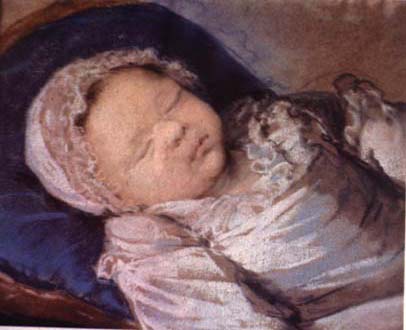
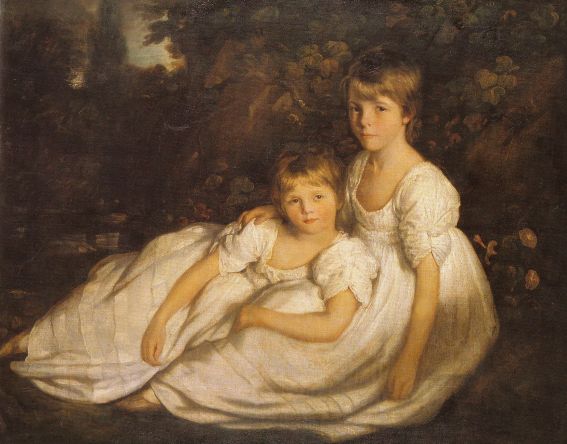
In the western world children were dressed in mostly white for a very long time. For example for the 1700's here's Marie Antoinette's youngest daughter Sophie Beatrice and youngest son Louis XVII. Here are two girls in white in the early 1800's. Whatever appropriate colors for each gender any books proclaimed were in no way universal. There is no consensus on the appropriate color for each gender until around and after WWII. In 1948 the then Princess Elizabeth set up the nursery with blue ribbons for the future Prince Charles. Supposedly at this time people began to buy more and more ready-made baby products and manufacturers began to push for gender-specify merchandise to boost sale.
Then why did Madame DuBarry's diamond necklace became such a big deal?
Learning history is just remembering when certain events happens, and who were those important people that were involved in such events. Or that historians are just trivia spurting machines, ready to bore your mind with random historic tidbits of the day.
That MLK Jr. and Malcolm X were the end all, be all of the American Civil Rights Movement.
That the Gulf of Tonkin incident in 1964 did not happen and was a "false flag". Me and /u/ThinMountainAir discuss this in this thread.
Another one is the idea that the "United States won every engagement in the Vietnam War" and were thus superior in warfare over the Vietnamese (and should have won, had it not been for those backstabbers back home!). This is what I like to call the Lost Cause myth of the Vietnam War. I discuss these particular claims in length in this post.
That Rome fell in 476 and that the Byzantines were a bunch of Greeks pretending to be Romans.
That--unlike the way we usually talk about every other subject in school--having a bad history teacher doesn't mean you had a bad teacher, it means history is boring.
The use of the descriptor "tribe" or "tribal" for any non-western European society lacking some kind of central hierarchy. I commonly hear medieval Ireland described as "tribal" (even by non-medievalist academics!) which I find unsatisfactory for several reasons: firstly, the term has an inherently derogatory connotation outside of a specific anthropological context, and more importantly; it's often used in such a vague and meaningless way that when employed, it either provides no actual interpretive insight or worse, it actually conflates distinct social and political groupings like the tuath (a small political unit) and fine (extended family group).
As well, describing medieval Ireland as "tribal" imposes a set of assumptions that hinders our ability to understand that society in its own terms. For example, I've often seen and heard people describe the rulers of Irish polities in the early medieval period as "chieftains" or "clan leaders" or something else along those lines. Again, this conflates social and political groupings together as "tribal" and has a sort of gross colonialist streak to it. The rulers of Irish polities, big and small, called themselves rí - king, and thought of themselves as kings equal to their neighbours in Britain and the continent. By imposing a "tribal" framework on medieval Irish society and politics we denigrate that very society by implication, after all, tribes don't have kings do they? This kind of thinking leads us to colonialist logic like this: "tribes have chieftains and chieftains are a less sophisticated kind of ruler than kings. Therefore Irish society was less sophisticated than contemporary societies in England and the continent."
Oh, I have a couple. The biggest is, of course, the related ideas that corsets deformed women and pushed their organs into weird places and that satirical or moralistic complaints about women tightlacing reflected reality. Tightlacing is incredibly overestimated in general. Yes, the waist measurements on extant clothing are tiny. So are the bust measurements. Most extant clothing is pretty small. A 21" waist sounds very small because the average woman today has a waist of around 30"-35", and so we imagine lacing down 10+ inches ... when the dresses that have these 21" waists also have ~25" busts. Dresses with larger bust, shoulder, arm, etc. measurements also have larger waists.
The roots can be traced to a few different places - those historical satires that are so popular, doctors trying to figure out why certain ailments were more common in women than men, moral standards that praised women for being beautiful but put them down for trying to be beautiful (not one we've totally gotten away from), and the post-Edwardian culture that looked down on the Victorian era as an unenlightened and quaint time.
The misconception that there was some huge revolution in women's clothing after or during WWI is something I like to bore people with as well. I don't even know where to start. The hourglass figure stopped being a big deal around 1909-1911. Simpler styles were being worn at that time, and fussier ones were still worn in the early 1920s. Foundation garments were still very often worn for stability and for looks all the way through the 1950s and early 1960s. Were there changes? Yeah, but they came at the same rate as earlier and later ones. Nothing very dramatic happened at the time, and Chanel didn't have much to do with it either. (You don't want to start me off about Chanel.)
The general concept of "Island Hopping."
At its core, island hopping is a relatively sound tactic-the essence of "hit 'em where they ain't." However, it was a very complicated strategy that required a very precise strategic situation in order for the Allies to be able to execute. Typically, most people tend to brush off the Pacific War ground combat campaigns as just "island hopping," in a sort of congratulatory gesture of sound strategy. However, the main reason that is given for why it was useful-namely, to avoid having to invade the heavier defended islands-is... questionable. If that were the only reason, it would surely be logical to simply invade Japan proper (perhaps through the Kuriles, or Hokkaido), thus bypassing the entire Southern Area Army.
The entire reason for the island campaign was all about air superiority. Each island could be turned into an airbase, and the Japanese had in fact turned many of their strongest points into a ring of mutually supporting air bases. In order for any potential sustained Allied campaign against Japan to be successful, the Allies must maintain naval and air superiority. The problem was that in order to capture islands that would be within range to support a US campaign against the Home Islands, they would need to neutralize the other Japanese air bases in the area. And the only way they were going to be able to reliably do that was with the presence of a sustained land-based aircraft capacity. Which in turn would require the capture of islands further down the island chain... until one got to the point where Allied air bases already existed.
After the hard fighting at Guadalcanal to capture a Japanese airbase, the Allies were wary of having to risk similar losses attacking even more strongly held Japanese positions. Indeed, it would be easier for Allied engineers to construct their own airfield than it would be to capture one of the large Japanese ones. Because of Allied naval superiority, they were able to send in bombardment forces to shell the Japanese airfields at night, in combination with high-altitude, long-range heavy bombers shutting down Japanese air operations. Because of these unique tactical advantages, the US was able to completely nullify the threat of each of these airbases to the nascent unguarded ones being constructed. Once finished, the Allied air campaigns could continue, making any Japanese attempt at logistics extremely difficult. The Japanese certainly tried-the so-called "Tokyo Express" supply runs being an example-but it got to the point where supplying these forward bases was proving too taxing to the Japanese Navy (as in the Battle of Vella Gulf).
Had the Japanese fleet not been shattered at Midway and the attritional battles in the Solomon Islands, and had the Japanese maintained their air strength, island hopping would simply be playing into the Japanese strategy, as it would require substantial, sustained commitment of US naval assets to shut down an island air base, during which they would be vulnerable to a Japanese counterattack. This would not have prevented an Allied victory to be sure-American industry was simply that much stronger than the Japanese war machine-but it would have made "island hopping" extremely unattractive.
That the Treaty of Versailles was so terrible and so punitive that it almost singlehandedly caused WW2.
That you can simply cut through chain mail with a arming sword. If you could cut right through it no one would wear it.
That late antiquity has yet to become the 'default' way of thinking about the 'dark ages' amongst the public. I mean, Peter Brown kickstarted this whole late-antique thing in 1971 and parts of it go back much further, yet people still go around citing Edward Gibbon's Decline and Fall of the Roman Empire from the eighteenth century as the authority on this period. Instead of using the heavily loaded term of 'decline' to describe events from the fourth century onwards, we should instead think about how culture was instead transformed. Even the apparently less 'developed' west produced brilliant authors such as Gregory the Great, Isidore of Seville, and the Venerable Bede, the architecturally impressive churches and mausoleum of Theodoric the Great in Italy, the Romanesque monasteries of St Wilfrid in Northumbria, and the illustrated manuscripts from Ireland. By all means take into account economic fragmentation and political instability, but culture obviously still existed, albeit in a different form. So what if it was different to what came before? Instead we should look at them independently and see them as evidence for the vibrancy of a new age, when what being Roman meant transformed into something different. Some might see it also as a time of war and misery, but we should not forget that 'classical civilisation' was equally violent and morally reprehensible from modern perspectives.
I also don't have a high opinion of those who argue that civilisation continued in 'Byzantium'/the Arab world/China, since to do so seems to devalue the lives of those who lived in less centralised and less wealthy regions. I would much prefer to acknowledge their experiences and discard the idea that we have to quantify their utility by measuring their 'achievements'. I know plenty of historians who will disagree with this, but those who interpret this period as a 'catastrophe' miss out on how crises often led to opportunities. In the wake of a collapsing empire, many people found a new place for themselves in an unstable but equally interesting world. Their stories need to be told as well, which contributes to the picture of a diverse and stimulating world of late antiquity, rather than a 'dark age' of intellectual decline.
Vikings are completely misunderstood. They did not have horned helmets and they did not spend the entirety of their period looting and pillaging. Many Vikings were traders and developed great trade routes which spread from Iceland (and potentially North America) to parts of Asia. Their ships, I grant you, were awesome.
Mostly the idea that the Middle Ages were a pile of dung that only halted the "advancement" of Europe, and everything that goes with that idea:
-Peasants and even some nobles were constantly filthy with mud and presumably fouler stuff.
-There were no martial arts at all. Combat was about bashing eachother brutally.
-All lords were evil bastards who exerted themselves on exploiting everyone for the sake of it.
-Everyone was dirt poor, there were no cities, no commerce, no nothing but mud.
-The church halted all advancement of knowledge and destroyed every last bit of the legacy of the ancients.
-The very few remnants of civilisation were limited to the Byzantine Empire and Southern Spain, where only the greatness and enlightenment of the "sarracens" managed to instill some sophistication and knowledge.
-That nothing ever changed in the Middle Ages in the roughly 1000 years that it lasted.
I think that all in all, the Middle Ages are probably the most misunderstood and misjudged period of European history.
That Rasputin was "evil" or crazy.
He was just a gifted con-man sort of guy, think of modern televangelists, who got a raw deal historically-wise just because he appeared so "creepy"
That the Conferderacy in the American Civil War was fighting for "states rights" and not for slavery. This myth was created over the course of the decades following the Civil War by the Lost Cause Movement. All you have to do is look at the Southern supported Fugitive Slave Act to see they were all for subverting states rights in favor of slavery and to look at the Declaration of Independence of really any state that joined the CSA (if you'd like to read one I'd recommend Mississippi's because it's the shortest and most blunt about it).
If anybody would like me to present sources or go into more detail, let me know. I'd be more than happy to explain in more depth.
That soldiers and generals of the linear warfare era were somehow 'idiots' for marching in their dense lines, and bright uniforms, or--more generally--people in the past were 'dumb' because they didn't use a method/idea we have developed with hindsight, and may not have been entirely applicable or useful in the actual historical situation.
My pet peeve is hearing that people were shorter in the past. The height of people at any period and local throughout time is entirely dependent upon 1) genetics and 2) overall nutrition and disease. The more agrarian a society was, the greater the potential for the people to reach their full genetic potentials. So for instance, in the period of the early American Republic, most Caucasian Americans, had a pretty good shot of reaching or approaching their full genetic potential. George Washington and Thomas Jefferson were 6'2"/6.4" (depending upon the source and their age at the time). And based upon a number of stories about Henry Knox's relationship with George Washington, we suspect he was even taller. At the time of the American Revolution, the average American was about 3 inches taller than their British contemporaries. I think it is because people want to feel superior to our ancestors.
That "Duck and Cover" was a hoax designed to lull children into thinking nuclear war was survivable as long as you hid under your desk.
Obviously, it wouldn't save you if you were close to the blast. But if you were a bit further away, your immediate concern would be the shockwave that could collapse your building. In that case, ducking and covering could save your life.
This one is especially annoying because it comes up in The Iron Giant, otherwise one of my favorite movies.
Privacy is a inalienable and a common human right.
No, in fact it is not, and our ideas of privacy are very historically constructed. In a city such as London or Paris in the 1500s or even the 1600s you could see sex on the street or what we'd call nonpenatrative sex in the equivalent of a singles bar, a Cock and Hen tavern. You would have grown up sharing one bed for the entire family and you would have been aware how your parents or your siblings and their spouses made babies.
Not sure how much this is talked about in the rest of the world but pretty much everything about Scottish history and the Jacobite rebellion particularly irks me.
Nasty imperialist English vs freedom loving noble savage Scots. Brave and clever but outgunned and outnumbered. Etc etc etc... (There's some similarity to the narrative around the Confederacy)
Also lumping everyone into Scottish and English even when it's totally ahistorical. A story of a bunch of protestant and Catholic noble families fueding isn't as romantic i guess.
Also a special fuck you to Braveheart.
I don't claim to be a professional by any stretch of the imagination, but ...
The popular version of WW1. British soldiers would live in the same front-line trench 24 hours a day, 7 days a week, 365 days a year until either the war ended or - more likely - the bungling generals sent them "over the top" to walk slowly into machine-gun bullets for no good reason. The British occupied literally the same trenches with the same soldiers from 1914 to 1918. The Germans never attacked, just waited for the poor gallant British Tommies to come to them, led by their upper-class twit officers. At the end of the war, every surviving soldier thought the whole thing was pointless and became a pacifist. And anyone who attempts to point out that this isn't really true is a jingoistic right-wing apologist for Butcher Haig and all his cronies, who thinks the trenches were like a holiday camp and the whole thing was a bally good lark.
Articles like this one which give the idea that historians consider the wrong type of stethoscope or a tank being 6 months out of date for when a film is grounds for dismissing a film as "inaccurate".
The stephensons are not the father of the modern railway and didn't invent the locomotive as teachers always insisted in school and even at university.
In 1803 Trevithick built and showed his pen-y-darren locomotive and it performed excellently in trials against a horse. It truly is the father of the railway.
That Byzantines never called themselves Byzantines. It's literally nerve wrecking jaw clenching bullshit.
Mine: "Why is X type of music so complicated?" Or "Why weren't they writing (specific modern style of music) back in (time period 100+ years ago)?"
It's like asking why there weren't helicopters in the Crimean war, or why the Romans were reading off tablets instead of Kindles. There's this misconception that music is somehow divorced completely from the evolution of technology, and that if just some musician in 18th century Vienna would have come up with Blues, we would have hundreds of years of Blues music.
Never mind the centuries of cultural influence, the slow evolution of musical tradition, the total lack of that style of harmony in Western music, Blues should have just sprang up from the ground, because the notes already existed. Yes, they did, but all the materials existed for the Mohawk to make Machine guns, so why didn't they just figure it out?!
That samurai were honorable gentlemen who only fought classy 1vs1 duels while a battle developed around them
I am not an expert historian, I'm not even on the same plane of knoweldge as most posters in this sub, but it annoys me greatly when people say that "only a few hundred Spaniards" took down the "Aztec empire" when there were more then hundreds and the Spanish had a great deal of help from other native groups.
That the pre-WWII Japanese were uniquely obsessed with "honor," and that a single, orientalist concept of "honor" (or "losing face") can conveniently explain any cultural dynamic we don't intuitively understand (seppuku, kamikaze, suicide weapons, emperor worship, etc.)
It bothers me how some people tend to use "honor" to describe the concept of social standing in Japanese (and other) societies as if it's some bizarre, inscrutable concept. Yes, the concept of social standing was and is very important, but that's also true of other societies (including our own) and saying "because honor" doesn't usually tell you anything useful or interesting about the actual cause of the thing you're trying to explain.
What it does do is promote a bizarre essentialist view of Japanese society, and gloss over a lot of important nuance. Seppuku wasn't done for just one reason, and it wasn't monolithic through all geography and history. You're much better off studying specific instances of it, or its repeated, standardized forms (like its use as a form of the death penalty), than viewing it as a single exotic phenomenon that can be explained away with a single exotic word.
I am irritated that so many believe the Confederate battle flag, at the center of so many controversies lately, was the flag of the CSA. Often, the same ones that spout the history and heritage arguments are not even aware of the true "Stars and Bars" flag of the Confederacy.
EASY, that America was founded in any way to be religious. This is obviously not true, yet so many people believe it.
The whole short Napoleon bit. It's not a big deal or anything, but I find it more irritating than anything else. The dude was 5' 7", above average for the time.
My students constantly refer to the Soviet Union (I'm a teaching assistant for a WWII course this semester) as Russia. We've explained the differences. They don't care.
For one of my main areas: WWII aviation. The myths that ball turret gunners would get squished regularly in damaged bombers.
There are actually no documented cases of this ever happening. Andy Rooney is the only person known of who ever described this happening, and his account does not correspond to any official records that could confirm it, either directly or indirectly.
In order for a ball turret gunner to be squished, a lot of things have to go wrong.
First off, the electrics must be shot out. The turret runs on electric power.
Second, the manual controls outside of the turret that external crewmembers could use had to be non-functioning.
Third, the internal cranks that could be operated in lieu of electronic controls had to be destroyed so that the actual gunner could not rotate it in any direction.
Fourth, the toothed rail frame the turret spins on must be damaged so that the turret cannot spin left-to-right (or right-to-left).
Fifth, the turret must be damaged so that it cannot be rotated vertically (so that it would be pointed up or down). The turret had a hatch on the back of it that the gunner would use to get in and out of.
Sixth, The hydraulics had to be destroyed on the plane. While the turret ran on electric power, the landing gear was lowered and raised using hydraulic power.
Seventh, the hand cranks to manually lower the landing gear had to be destroyed. Even without hydraulic power, the crew could still manually lower the landing gear using a crank. The internal components linking the crank to the landing gear assembly would have to be completely destroyed.
Simply put, there was so much that had to go wrong that if it all had gone wrong, the crew would either have bailed out already, or they would have been able to figure out some sort of work around to get him out.
Also, as an aside, probably 90% of the stories you hear about WWII aviation that are told to you secondhand (a family member relating the story that the actual veteran told them) are woefully false.
Hmm sooo many.
I think the most annoying one is the Khazarian Hypothesis. It's a theory that's gotten a lot of press over the past few years. Ham-fisted journalism often results in presenting it as one of a few competing hypotheses on the origin of Eastern European Jews. In reality, while there are real academics do support it, it is very much a peripheral theory, and not something most academics spend a lot of time thinking about.
To sum it up, the Khazars were a Turkic group who (may have, to some extent) converted to Judaism. It's been theorized that Eastern European Jews are their descendants. There really isn't any evidence for it, but there are still people who believe it. It's definitely not as widely believed or as solidly backed as normal historical accounts (that Eastern European Jews were once in Central Europe and migrated east).
The whole "We're smarter than the Romans/Ancient Greeks/Egyptians/insert historical peoples of your choice and that's why we don't sacrifice humans/send troops across No Man's Land/insert event in the past where hindsight makes it clear it wasn't a great idea"
I seriously have had several discussions with people who think humans in Imperial Rome were intellectually on par with children or pets of our current era
Spices do not disguise the taste of rotten meat, and they were far too expensive to use for such a purpose in the medieval period. Spices were bought as a status symbol and luxury good, much like caviar is today. I actually had to correct a professor on this point several weeks ago. I think this idea comes from the fact that spices are often lumped together with salt, which does work as a preservative. Furthermore, fresh meat was far cheaper than any spice until well into the modern period. So next time a schoolteacher tries to tell you that spices were used to disguise the taste of rotten meat, slap them.
Paul Freedman's book Out of the East: Spices and the Medieval Imagination provides a good overview of the reasons medieval people loved spices, and why they paid so much for them.
When someone says "dark ages" my skin crawls. I also can't stand how people talk about the Renaissance and the Late Middle Ages as if they were two completely unrelated time periods. You can't just throw all the bad shit in the LMA pile and all the pretty happy things into the Renaissance pile. Much of it happened at the same bloody time and was highly influenced by eachother.
Anything dealing with public knowledge of armored warfare, especially WW2 era. Ronsons, 5 Shermans for 1 Tiger, McNair the Traitor, or anything any slapwit let drool out of their mouth about the Eastern Front. People blame Belton Cooper's 2-ply memoir for a lot of the misinformation, but it all goes back to at least the early '80s when guys like George Fourty were just willing to take all veterans on their word in order to increase page counts and drama.
Also, just for effect, the Garand "helmet ping" myth is one that makes me want to stop giving a museum tour and just start braining the smarmy twit who decides to share it. It's damned near weekly at this point.
Medieval Weapons and Armor being heavy and clumsy, being only used back in the day because "people were stronger."
The Black Book of Communism, and that the Holodomor was a purposefully engineered famine and a genocide. This is one of the most disturbing cases of historical revisionism and has more to do with anti-communist propaganda than truth. You will have people on the one hand completely ignore every attempt by the Soviet government to alleviate the situation in Ukraine and put an end to the famines which had been endemic since well before the revolution, and on the other those same people will ignore willfully engineered famines in India and Ireland that are the result of deliberate choices to export foods and destroy agricultural traditions for cash crops instead of use them to save the people that grew them.
I'd have to put in the "Canadian history is soooo boring and clean" trope. Canada's history is pocked with brutality - the coast-to-coast railway was built on massive corruption and horribly-treated Chinese labor. The removal of Inuit names and their replacement with disc numbers, the sexual slavery found in residential schools, the slaughter of the Inuit sledding dog, the massive operations behind suppressing the Winnipeg General Strike and the enactment of Section 98 of the Criminal Code (which basically made assembly illegal in Canada until 1936)...there's a shit-ton of history here.
Also, the idea that the indigenous were largely passive and living away from the rest of Canada irks me. 33 (maybe 35 - we don't know) Mohawk welders working on the first Pont du Quebec died when that bridge collapsed. Pitikwahanapiwiyin, Anglicized to Poundmaker, was instrumental at the Battle of Cut Knife. Tecumseh was an essential part of the Southern Ontario theater during the War of 1812. In each of these cases, other people - generic workers, Louis Riel, and "Canadians" (a concept which if extant meant nothing like what it does today) are credited with these pivotal moments in Canadian history.
John Ralston Saul is right - Canada's is a Metis (here meaning "both white and indigenous") history.
My father in law repeatedly claims that an ignored and suppressed piece of history is that slaves had labor unions and came to the US voluntarily. I have no F'ing clue what he's talking about, but it is quite irritating.
Whenever I'm watching a documentary on WWI, if they cover Jutland they'll typically also say that the German High Seas Fleet never set sail afterwards.
This is false. While they never directly engaged the Royal Navy, they did leave port a few times. It's a piece of trivia that obliterates credibility when I see it wrongly addressed.
1- That Japanese steel was/is the best in the world. Japan has pretty limited iron and they were able to make it into passable steel through a complicated process of refinement and selective forging. The strength we attribute to Japanese blades has more to do with their carefully laminated structure and physical shape than the quality of the steel. Here is a great video showing the process of refining iron sand into Japanese steel (tamahagane)
2- Damascus steel only comes from Damascus. This is more a semantic argument, but it is still important. What people (and many commercial metal manufacturers and suppliers) commonly refer to as "Damascus Steel" is actually a process called "pattern welding" and it can be done anywhere. It is only called Damascus steel if it was forged in Damascus (similar to how Champagne is only Champagne if it is grown/bottled in the French region) and as /u/Hergrim pointed out below, true Damascus steel is a special type of wootz crucible steel.
3- That Indian/Persian steel was quenched in "saline" by stabbing hot blades into prisoners or slaves. Thats not how blade heat treating works. At all.
Edited for format, clarity, and added a proper source for the tamahagane
The Tiger tank was the main tank used by Germany during WWII
German tanks ran on diesel.
It took 5 Sherman's to destroy a single German tank.
Basically all those stupid WWII tank myths
My biggest pet peeve is about how historians are thought of. I have a BA in history but work in IT. I've had multiple people ask me why I went to school for it, implying its not a "useful" degree. Forget that it teaches us to think logically and examine issues from multiple angles. Or that it teaches us to express ourselves clearly and concisely. It clearly isn't as "good" a degree as business management or some other nonsense that exists solely to move money from the bank accounts of others to yourself. Just as annoying though is when I meet people and they find out I have a history degree and they assume that makes me an expert on whatever historical topic they want to ask questions about. It doesn't give actual historians any credit. I would never call myself a historian, I'm a dabbler. You would never compare a garage band to a symphony why would you compare me to a historian?
Recently, I had a co-worker that argued that slavery in the American south wasn't as bad as most other places. I didn't even know where to begin to unpack that statement.
The myths against the Polish Forces in WW2 are pretty heinous. The most specific one I can think of is the famous myth of Polish cavalry charging against German machine guns/tanks with their swords out.
This seems to stem from the action at Krojanty, where a Polish cavalry, the 18th Uhlars, successfully captured a position, and even got German units to consider a withdrawal from the line. The unit was unfortunately later caught in the open by some form of armored vehicle, and suffered approximately 30% casualties.
Axis journalists only reached the scene much later where they saw recently-arrived tanks next to the bodies of the Uhlan cavalry, and assumed that it had been a cavalry charge against a German armored line. The Germans picked up the story and ran with it. It became another instance of German propaganda becoming a widely-cited source during and after the war.
In reality, the Poles held out surprisingly well against the German invasion and may have had some more successes were it not for the Soviet invasion of Eastern Poland. Poland seemed to stand no real chance of winning the conflict, and the minor assistance England had en-route likely would not have made a difference in outcome. It did however lead to victory later on in The Battle of Britain, as Polish air units scored quite a few kills, and later became an incredibly important part of the RAF. There were also the contributions of causing heavy early losses for the Germans in terms of vehicles, which snowballed in the Battle of France, and ultimately doomed them on the Eastern Front.
Oh, let's see.
That the Sex Pistols were a 'boy band' and that the members were brainless mannequins.
That there was a cohesive Transatlantic punk rock scene between 1975 and 1976 (before the so-called "Punk Explosion"), with New York bands directly influencing the early London bands. That was really only true of the Ramones, if we're talking that CBGB's/Max's Kansas City scene. (You also had the MC5 and the Stooges.) It was more the case that New York and London were lumped together by the music press after the two scenes got going independently of one another.
That 'true punk' was about left wing political activism. Some bands and scene participants were way political, others could give a shit (such as, let's see, the Ramones), or were deliberately apolitical. And then there were the far right elements.
That British punk grew organically into what it was to become, at the grassroots level, from the ground up. It did when it was a marginal bohemian scene in London that most British youth wouldn't have been exposed to, save for those who read the edgier music periodicals. It became a national phenomenon, and cause for moral panic, after the Grundy Incident, which occurred on national television and caused the British public to froth at the mouth. It was the mass media furor that caused the Punk Explosion of '77 more than anything. In fact, a lot of the original participants who were involved before that point went on to complain bitterly about all the dumb, eager-for-havoc teenagers that flooded and overwhelmed their little scene as a result.
I could go on, but then it'd be getting too obscure for most readers.
The common perception of the '53 Iranian coup seems very oversimplified and very Anglocentric (or whatever it is where, as kohmeini likes to tell it, the CIA runs everything). It's not that, after the CIA failed and called in a favor from the pentagon that got some general advising Iranian officers to bribe a ton of them to buy some military support, the troops bought by the pentagon with CIA cash didn't lay siege to Mosaddeggh's house providing a good deal of the pressure that led to Mosaddeggh's surrender.
It's just that that narrative discounts everything except the american influence. It almost couldn't be more myopic.
I think it's fairly undeniable that Mosaddeggh was a marked man. He had alienated himself from everyone. He took dictatorial power right before he dismissed parliament when he was about to lose control of it (as all true democrats do) after holding iirc 12 months of "emergency powers".
If the Ayatollahs had known he was secular they never would have supported him in the first place, but by '53 they definitely didn't support him, in fact, Ayatollah Kashani, supported by some bloke named ayatollah kohmeini (no relation? /s) were leading the largest protest when mosaddeggh fled, and later turned himself in.
Mosaddeggh had finally alienated the marxists, who, again, I guess supported him in an 'the enemy of my enemy' sort of way. Mosaddeggh was a fairweather communist, the way he was a fairweather islamist, and a fairweather supporter of representative democracy. In fact, almost the only achievement the CIA can call it's own, apparently (not too sure about this) is that the cia apparently hired people (maybe through their friends in the bazaar?) to pretend to be marxists and to start protesting, which, apparently successfully got the real marxists to start protesting in earnest.
He had lost the support of parliament. He had lost support of his own party, and he had even lost support of his heir apparent. The man who was physically at the largest oil refinery in the world when it was nationalized by mosaddeggh when he nationalized the oil industry.
Mosaddeggh had taken the military from the weak shah, but the Shah could never rely on the military, and, apparently, neither could Mosaddeggh, as some general was able to buy their services.
Mosaddeggh came to power when Iran was under rule by assassination, after the previous PM had negotiated a 50/50 split with aioc, but was assassinated by a follower of the teachings of kohmeini.
It's simply too arrogant and myopic to simply discount it to "cia coup". Mosaddeggh had burnt all of his bridges, lost all his support, lost parliament.
If Mosaddeggh hadn't put himself on the marxist's death list he'd put him on the ayatollahs. And even if none of them assassinated him he still was in a politically unviable situation. He had no political support to speak of.
It's a little like in the importance of being earnest, how one character had a fictitious friend called bumbry, who he used to create excuses, like, 'my friend bumbry is sick, and called on me', but in the end, the fictitious bumbry is said to meet his death when, consulting his doctors, finds out that there is nothing keeping him alive, and so, consequent to his doctors making this discovery, he simply perishes.
The myth of this powerful CIA that steers the history of nations with coups flatters the CIA, and kohmeini has been using it to scapegoat the CIA for almost half a century, but it's just that. A braggart's lie.
Mosaddeggh had, what's the expression? Tied his own noose?
Yea the CIA played it's own little part, but the reality of it is that the CIA's man in the Iranian military was wanted for murder and had not a single man supporting him. The CIA was more spectator than anything else. Heck, they even needed the ayatollahs to lead their own protests.
So how can anyone argue that the driving factor behind mosaddeggh's fall from grace was the CIA, and not mosaddeggh himself, or the ayatollahs that led one of the protests against mosaddeggh, the marxists that led the other protest against mosaddeggh (after mosaddeggh had turned both factions against himself), or the fact that mosaddeggh had alienated himself from everyone and lost all support.
Sources: Legacy of ashes, stansfield turner's book, and some books that pop up when you search on google.
Space Aliens building everything in Ancient Egypt
There is literally not a shred of evidence to suggest that Mozart ever transcribed the Allegri Miserere Mei. There is a letter from Leopold to Anna Maria saying that young John-Chris-Wolfie-Theo heard the Allegri and liked it very much and went back to hear it a second time the following day, and then there is a letter from Anna Maria to a brother (whose name escapes me) saying that young JCWT transcribed it. Anna Maria is obviously talking young JCWT up in order to impress someone. Anna Maria's letter is the only mention made of such a transcription.
In any case, the transcription of such a repetitive piece, wherein fully half of the piece is a single line of chant traditionally associated with the text, and the other half is a pair of alternation harmonisations (faux-bourdons) which repeat a grand total of 5 times is not impressive for anyone with a high level of musical training, especially if he had heard it twice.
That mustard gas was a leading cause of death in WWI. Yes, the affects of it were horrific, but most of the time it just took soldiers off of the battlefield for treatment. It wasn't even the most widely used gas either. That (dis)honor goes to phosgene (which was much more deadly anyway).
That history is about events, and whether they really happened or not.
The quest for the "real", often popping up in this forum under the question format of "Did this REALLY..." is unfortunate because it presumes a scientific-ness to history that is laid bare by the fact that in its wild form (the way people functionally talk about history), it is quite malleable and is more akin to literature than science.
History is the art of the allusion to the real, and should not be confused with the real, which is something we will never "really" grasp.
The sooner people understand that, the sooner their horizons for understanding the past, the present, and the future, will broaden.
At the risk of asking a 'meta' follow-up question, reading though this thread made me wonder: how many of these historical myths exist (or were popularised) by a movie? Is the dumbing down of history in popular culture responsible for our ills?
Super late but someone in /r/history just brought up the whole "they shit in the corridors at Versailles" thing. Yeah, hygiene wasn't the greatest compared to today, but trust me, no one just dropped trou in the halls of Versailles and took a dump, let alone EVERYONE. And if they did, it was the exception to the rule.
Contributing to Chinese history here:
Sun Wu (author of the Art of War) was the best military strategist/tactician of his generation. He may be an inspiring author, but plenty others did the actual conquering.
the 4 beauties of Ancient China were the most beautiful women of their times. In fact, one doesn't even exist.
Zhuge Liang was a great military anything. His most famous military accomplishment were the northern invasions which ultimately failed. His accomplishments were diplomatic, governmental, or political in nature.
Rinse and repeat the above for Sima Yi and Lu Xun. Both may have more military achievements than Liang, but were still far from being outstanding generals/commanders. Their best work were all domestic in nature.
Guan Yu may be a brave general Patton-style, but he was a failure at being a commander. If you are looking for Shu's best, Zhang Fei and Wei Yan are better choices.
Lv Meng and the attack on Jing caused the fall of Wu. Other than being Wu's most outstanding commander (having participated in and significantly contributed to every major battle/war since Sun Quan's rise to power till his death and with Hefei being the only blot), Lv Meng's bloodless possession of Jing and robust defences at Ruxu were part of the main reason why Wu was the last to be destroyed. But then Sun Hao came along...
*edit for paragraphing
The ridiculous idea that the Freemasons were a secret Satanic cult dedicated to bringing forth the Anti-Christ and the biblical apocalypse.
That Texas can leave the Union anytime they want. NO THEY FUCKING CAN'T!!!!!
Old West Quick draw duals in Movies and hence on popular imagination. Never happened. Gunfights then were pretty much like gunfights now.
That the Mongols were a plague that robbed, killed, and raped their way through Eurasia. This misconception can be traced to propaganda used through the 13th to the 18th century.
No, I mean Hamlet. And whatever ancient story it was based on.
Communism or even socialism is fair and works
Jesus probably existed.
When I was a kid I decided that he probably did because there had to be some cause of the Christian religion. I mean it didn't just come from nowhere, right? There was probably some local guru or wandering preacher who the biblical character is based on.
Well, no. Richard Carrier is a historian who did a bunch of work on this for several years using Bayes' theorem. Not only does he convincingly make the case for Jesus not existing, his explanation for why the Christian religion exists is completely believable and fits in even better with the way we understand religion today than the idea that Jesus was a real person.