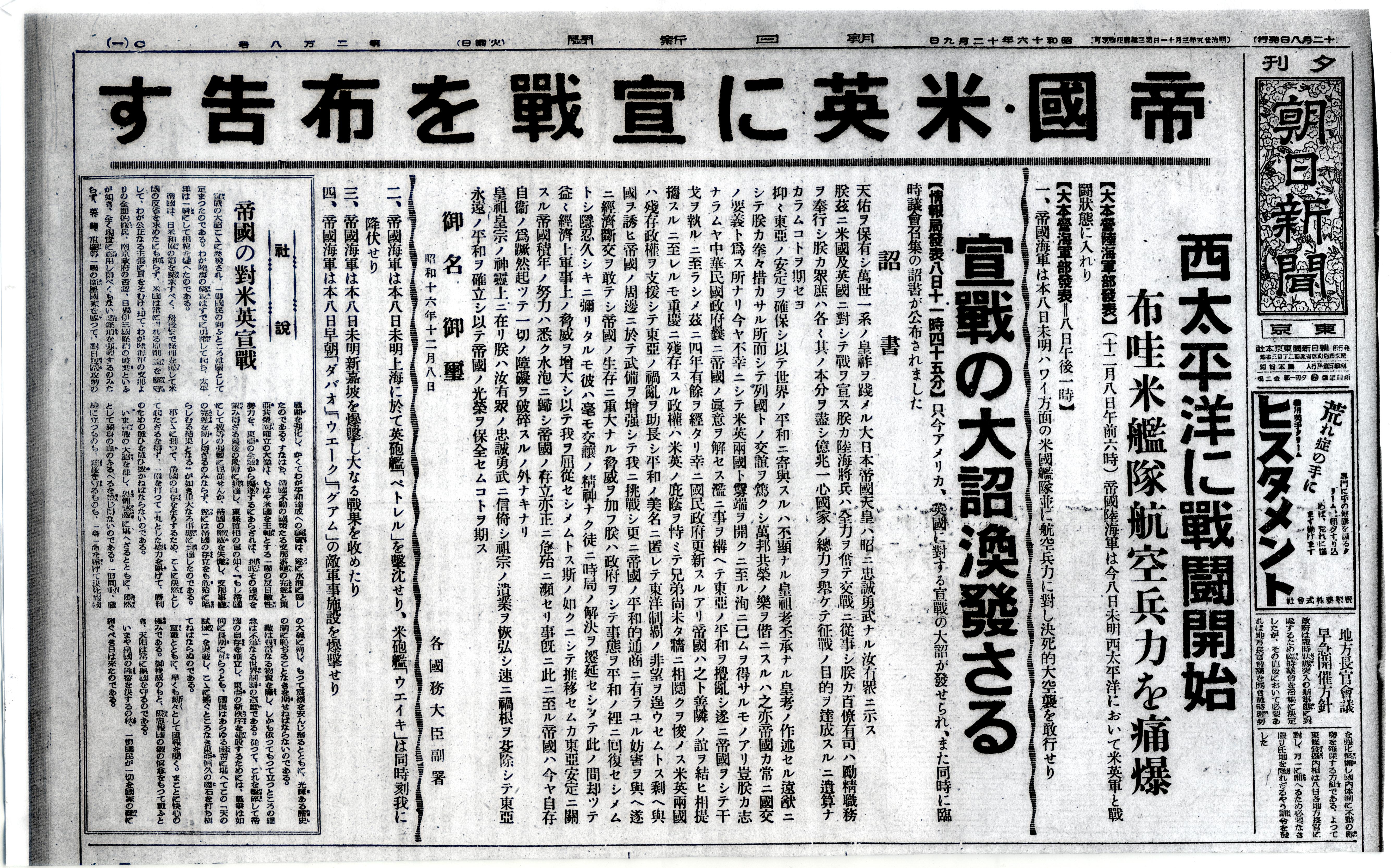
The Japanese leaders attempted to frame the Japanese attack in a very sympathetic context: essentially, that the US sought to crush Japan in an economic vyse, thus asserting its power in the Pacific in an attempt to spread Western Imperialism. War, it was thought, was the only possible solution, to allow Japan to become self-sufficient and to remain independent. In essence, the Japanese government attempted to frame the war as of of survival for the Japanese state.
The Japanese people, for the most part, were not nearly as supportive of the war against America as they were against China. Despite major propaganda efforts thanks to the de facto state-controlled press as seen here in the Asahi Shimbun, the typical Japanese person had a more positive view of the United States, thanks to the influx of American culture during the 1920s Taisho Democracy (Jazz being one example) as well as American goodwill towards Japan (the American aid after the Great Kanto Earthquake). There was also apprehension, as many Japanese were aware of the large scale of the US's military and that Japan's warmaking ability, already stretched by the war in China, simply could not compete. Still, civil dissent against the government's policy was virtually non-existent, as thanks to the Peace Preservation Law of the 1920s that essentially gave the government a carte blanche to crush dissenters (Socialists and Communists especially), as well as the Tokko special (secret) police, the Japanese imperial government had a tight rein on the popular will.