I was just thinking, the tie doesn't really serve a purpose, and is just fabric that hangs from one's neck. How did this come about and why is it the symbol of professionalism?
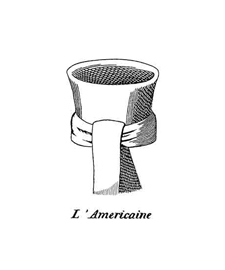
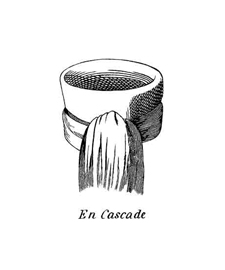
The descriptions you've seen of the cravat being taken from Croatian soldiers in the 17th century are commonly accepted by dress historians. It continued to be a rectangle or folded square, with or without a significant portion of the ends being lace, tied around the neck for several decades, but in the early 18th century men began to wear a "stock": a stiffened band buckled around the neck, covered with very fine linen. This could be worn with a smaller cravat tied over it, but more frequently men began to instead have a ruffle sewn down the front of the shirt instead, to poke out from the openings of the waistcoat and coat - but by the end of the century, a tied cravat began to come back into favor, worn over only the turned-up collar of the shirt, rather than a stiffened stock. (In the British military, the stock was black, and once the stock was gone a black cravat was worn over the collar.)
This led into the situation you may have seen satirized in the early 19th century - the shirt collar itself grew and was starched in order to stand up straight behind the cravat. In the 1820s and 1830s colored neckties became more popular (as did the word "necktie"), and by the 1850s were most commonly worn in ordinary dress, with white neckwear relegated to formal dress. The colored tie was worn with what the upper and middle classes considered everyday businesswear or casual dress. By the end of 19th century, the method of tie-tying most commonly in use today had been devised.
The necktie is a symbol of professionalism as it exists today because it has historically been a part of the suit. Even prior to the suit losing ground as being just "what men wear" in the mid-20th century due to a rise in the acceptability and desirability of casual dress, a suit was not worn by manual laborers and so had a connection to all sorts of indoor jobs, from low-ranking clerks and salesmen to doctors and lawyers. The tie itself doesn't signify professionalism - it has this meaning when worn in conjunction with good trousers and a collared, buttoning shirt.
Since this is a fashion/necktie related thread, is it true that the style of ties tend to get wider and thinner over time? The reason I've always heard is that it's to make people buy new ties, but that's speculation.
Edit: Just to clarify, I had heard from others that the point was to get people to buy new ties, but the idea always seemed kind of thin to me.
I didn't see it mentioned yet, but the etymology of "cravat" is pretty neat, it is based off the Croatian word for themselves, "Hrvat." The shift from Hr to Cr in cravat is the same that gave us Croat from Hravat.
Richelieu needed some mercenaries. Among those he hired were a number of Croats, whose military uniform had a precursor of the Cravat. The very young Louis XIV started wearing something similar, because he thought it looked cool, then all sorts of Parisians started wearing them too...
Source: Frucht, Richard C. (2004) "Eastern Europe: an introduction to the people, lands, and culture" https://books.google.com/books?id=lVBB1a0rC70C&pg=PA457&hl=en#v=onepage&q&f=false
The modern necktie is a distant relative of the military cravats from the 17th century. Many types of neck ornaments were popular in military regalia, as you can see from the link.
The everyday, ornately-tied cravat/necktie was popularized by a dandy named Beau Brummell, who essentially wrote the book on modern men's fashion. Much of his style was influenced by his time in the Tenth Regiment Light Dragoons (more info here).
There's an interesting quote I dug up from this source (which also contains some great images of early neckties), and includes some text found within Neckclothitania, written in 1818:
"It can hardly be imagined how political events should, even in the remotest way, influence or affect the thermometer of fashion, but it is nevertheless perfectly true that both the American and French revolutions have totally changed it." Where formerly the expense of finery ensured that one could tell a person of haut ton from a pretender, the new simplicity of dress confounds such judgments, and contemporary fashions seem to embody the notion of equality: "a monstrous and unnatural supposition." Still, there are niceties of attire by which one can spot a gentleman: chief among them, the style of his cravat.
This author suggests that perhaps an elaborate necktie is a way to express status in an increasingly democratized world.
As for its original purpose, it's hard to say. This book suggests everything from a display of military rank, to a source of limited protection during battle from grazed bullets and sword slits, to even protecting one's throat from catching cold.