For your own knowledge, please don't refer to medieval times as the "dark ages." This is a very inaccurate and often derogatory term. See this:
https://www.reddit.com/r/AskHistorians/comments/235w3l/why_are_the_european_dark_ages_considered_a/
For the rest, I can give you a partial answer. In England, there was something issued from the king called the "Assizes of Arms." It required all men of England to possess arms for themselves and their men. The Assizes of Arms was ‘intended to create a force for national defence.' In the Close Rolls supplementary of Henry III, a writ of summons uses the Assizes of Arms and lists the equipment that one in the king’s service was to have. The men coming with the lords summoned were to come with bow and arrows, lances, and gisarmes, which is a type of halberd. In 1181, the Assizes of Arms states that men possessing chattels of sixteen marks were to have a hauberk, a helmet, a shield, and a lance. Those who possessed chattels of ten marks were to have a haubergeon, an iron helmet, and a lance. Finally, all citizens and free men were to own a gambeson, an iron helmet, and a lance.
In short, it seems that all citizens were to be armed with the most basic of military equipment. Or, I should say, their lord had to own it for them and it was given to them if they needed it.
Henry III reissued these policies with some changes. Although there were several writs of arms produced during the early years of Henry’s personal reign, the definitive reissue of the 1181 Assize occurred in 1242. This new issue remained the same in many respects, but there were significant changes. One minor change replaced the gambeson with a pourpoint – a padded cloth or linen garment that was possibly better suited for wearing under plate armour. More importantly, the Assize recognised archers and the bow as the national weapon. The bow and quarrel was by far the most requisitioned item in all the weapons of the Liberate Rolls. The king clearly took a vested interest in equipping his crossbowmen.
Finally, the king would not have had the means to provide arms and armour for all the men in his service. Acquiring the items listed in the Assize of Arms for each man would require significant capital. To purchase all the items listed, plus a horse, it could cost a man between forty and fifty pounds. For a man with a knighthood, forty pounds per annum was considered sufficient by the crown. Thus just to get equipped, it could cost a man more than his annual income. This isn’t to suggest that every newly created knight would need to raise this money immediately – arms and armour were often handed down from father to son. The king would have considered the wages paid to a man sufficient to purchase the required arms and armour. Therefore, as seen in the Assize of Arms, more was required of those who made more money.
So yes, it seems men were required to be "called to arms." How they trained them, I cannot say without sources. In many areas, the local lord would train his own men since many of them served as his personal army. As for the peasants, many of them were probably just not trained since they would not be out campaigning, but rather only serve in case of invaders.
Some sources:
Frédérique Lachaud, ‘Armour and Military Dress in Thirteenth and Early Fourteenth-Century England’, in Matthew Strickland (ed.), Armies, Chivalry and Warfare in Medieval Britain and France (Stamford, 1998), 351.
Close Rolls (Supplementary) of the Reign of Henry III 1244-1266 (London, 1975), 5.
William Stubbs, Select Charters and Illustrations of English Constitutional History (Oxford, 1905), 182.
Michael Powicke, Military Obligation in Medieval England, (Oxford, 1962).
Andrew Ayton, ‘Arms, Armour, and Horses’, in Maurice Keen (ed), Medieval Warfare: A History (Oxford, 1999).
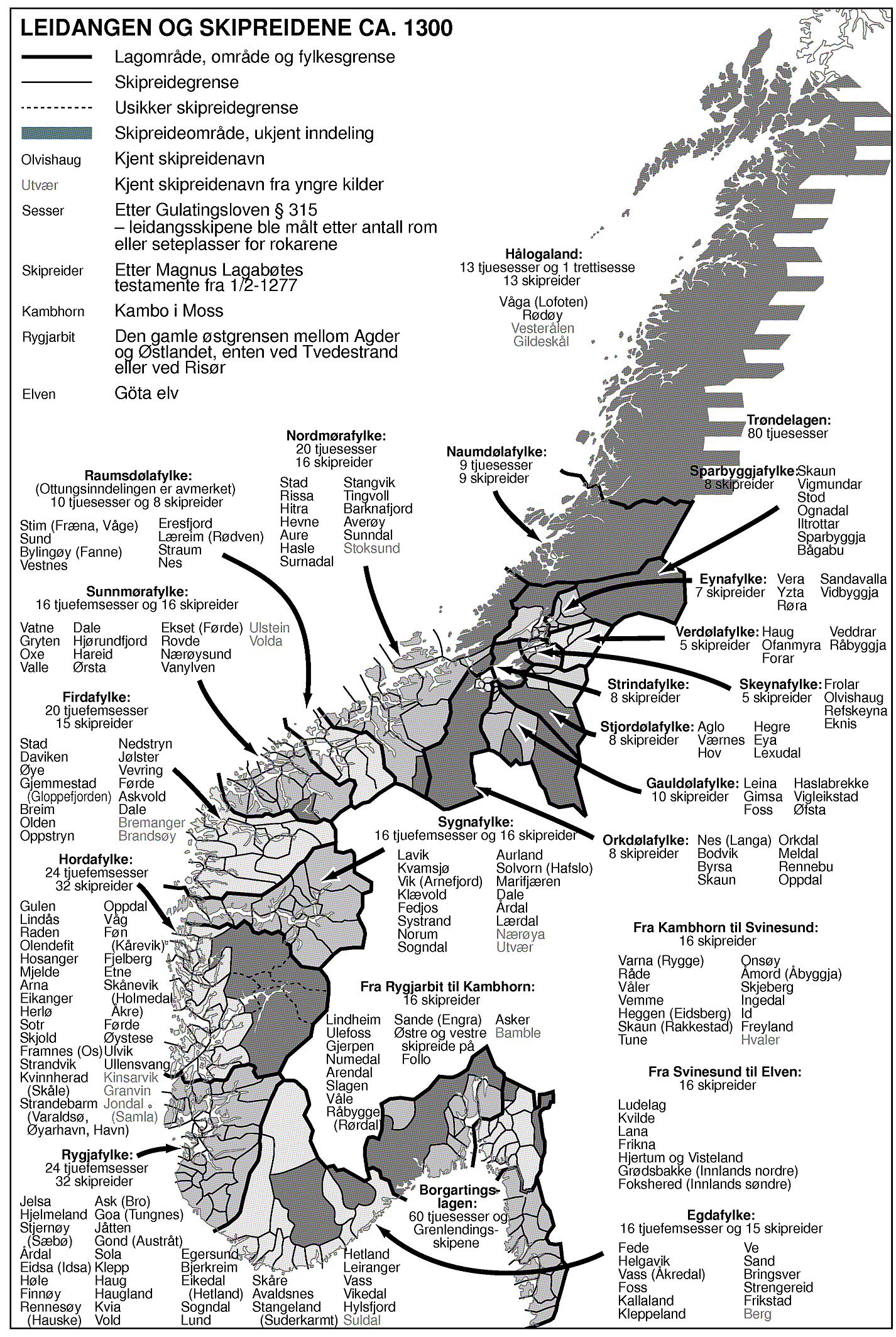
In Norway the same system more or less kept in place from the late viking age, possibly 950 in the middle/north until the last battle against the Hansa fleet in 1429 and and no longer used as a military division in 1628 and until it was no longer used as a taxing system in 1836.
The leiðangr was a system set in place where the land "as far inland as the salmon goes" was divided into skipsreide (ship-warfts). Each of the new areas had to supply a ship with full crew and equipment. There was also made a system of fryctorias (a big fire on mountaintops to warn people) from north to south along the coast. These kept in place until the Napoleonic wars.
The usual ship was usually a 20 or 25 "sesse", which means 100 man with two on each ore on each side. The rules for the crew varied, but in the west in the beginning it was one man per 7 men over 3 years of age. Later a system where an amount of farms would cooperate to equip and train one man emerged.
At the height in 1270 there would have been 300 ships, with about 27 000 men. About 30% of the men at the time. This many were never called to war though.
The leidang would have been called out a number of times. In the 100 years between 1177 and Magnus Lagabøte became king they were called out 54 times. A good example of the leidang at war, though a failed campaign is from the rule of Hákon Hákonarson. 120 ships were called.
After a while the system ended up being used to collect tax. The king would get the provisions, while the men and ships stayed at home.
THe training I didn't find much about right now, so I'm not comfortable talking about it.
Personal equipment:
In the Gulathing law, every man should have:
He will have a penalty for every item missing.
The farmers will have to supply:
The equipment would be controlled in the yearly weapon-thing. A gathering.
Sources:
Sorry for the quick reply. Am in a rush.
On this topic, I have read that one method of communicating the call to arms was to burn a cross as a signal. Is that accurate? Is that European in origin?