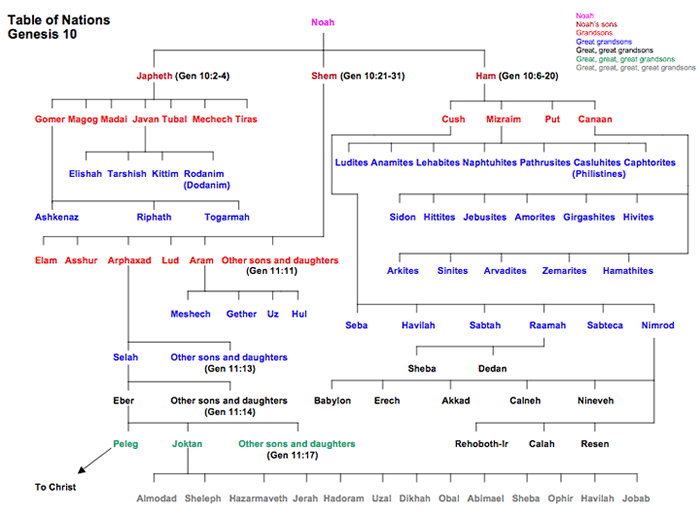
For exmaple, is Titus Flavius Josephus' Table of Nations indicative of ancient tribes settling in the Middle East? How much does our modern belief of how Babylon, Assyria, Canaan, Cush, etc. originated differ from his works and writings? http://www.swcs.com.au/jtable2.gif
And in general, how often do historians rely on Greek/Roman/Jewish historical accounts regarding antiquity (1000 BC and prior)? Or are those writings mostly discounted due to having 1000+ years between the writings and the events? I wonder how much of what was in the Great Library of Alexandria we would deemed/considered non-sense and how much of it was accurate?
Methodologically speaking, you have to assume an account that postdates by several centuries is unreliable until you have archeological or historical (text) evidence from the actual time period what the postdated source describes did in fact occur. And even when such evidence is found, you have to assume that narratives recorded several centuries after an event be adapted to some interpretation of history (and those who told them before) had found favourable to actual events. (Source my historical source criticism class a few years ago by the great J.C. Meyer.)
So in sum: Such accounts should be dismissed, but are interesting as A: Sources for their own time, and the aspirations, mindsets, and self-interpretation of its inhabitants, and B: As "spice" in narratives where you can confirm that the events described were real, but have little description other than postdated narratives.