Did French cuisine come to influence local styles in the region? Did that influence endure in the post-Colonial period or was there backlash by the Communist regime? Likewise, did Southeast Asian cooking come to have enduring influence on any aspects of French cooking back 'home'?
Though it is a very trendy topic for food & travel blogs, French influence is certainly not dominant in Vietnamese cuisine (I don't have knowledge of Lao or Khmer cuisine). That would be China. Most people will know that the bánh mì is a small baguette that came to prominence during the French period. There are however a variety of important food products and influences imported by France. Others were already around before colonization, but grew exponentially under French influence. Coffee is the best example. The 'café' culture is one food-beverage influence that remains very prominent in Vietnam. This influence is evident in the Vietnamese language. You can see some examples below of dishes and products whose names are influenced by France (some pronunciations in parentheses):
sa lát - salade - salad
bít tết - bifteck - beef steak
ốp lết - omlette - omelet
dăm bông (yam bomb) - jambon - ham
xúc xích - saucisse - sausages
cà phê - café - coffee
pa tê - pâté
cà ri - curi - curry
bơ (b-ugh) - beurre - butter
vang - vin - wine
phó mát (faw ma) - fromage - cheese
rôti (row tee) - rotisserie
sô cô la - chocolat
bia - bierre - beer
sốt vàng - bordelaise sauce
súp lơ (choop lugh) - cho-fleur - cauliflower
others are items are identified as western (tây) variants:
khoai tây - western potatoes
măng tây (‘western bambo shoots’) - asparagus - asparagus
hành tây - western onions
I don't want to get too much into specific dishes. It's a contentious topic and hard to really trace culinary lineages. (I'm not aware of any scholarly books or dissertations on the topic) One dish that most people believe is derived from France is bánh xèo, which is very similar to the crêpe or more specifically the galette. The bánh xèo is also a pancake filled with various vegetables, meat, or seafood. Wine is also alive in Vietnam, still produced in the upland city of Dalat. But the growing popularity of wine is much less to do with a French legacy and more with a growing middle and upper class consumer base looking for a new experience.
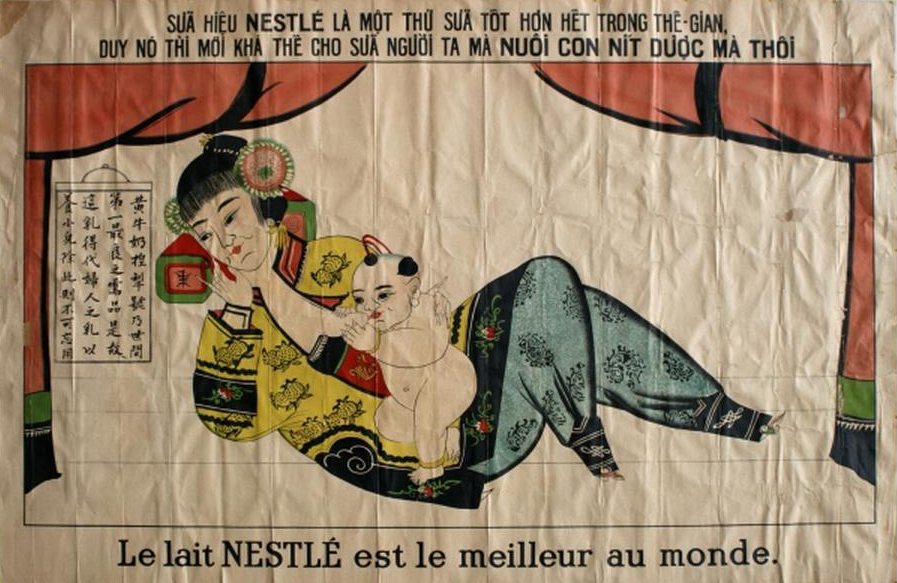
I have one unconventional influence. Baby formula. It's enormously popular in Vietnam. Not just for babies, but also milk based nutritional drinks for children. The large producers (eg. Mead Johnson) sponsor murals on the walls of most preschools today in big cities. I think in some part this is a colonial legacy. Nestlé, along with colonial officials and doctors, promoted baby formula as a healthier option due to malnutrition of mothers. You can see 1920s Nestlé advertisements from Vietnam. Of course, this is a larger trend in Asia, so it's not entirely due to some French legacy. Drive by your local baby formula/ powdered milk store in Vietnam in the evening, and its always packed.
Regarding the influence that Indochina had on France, it was common for Europeans to take Vietnamese or Chinese back to Europe to work as their cooks. They were quite fond of their cooking. Besides that, many Vietnamese laborers working in France found work as cooks. This was particularly true during and after WWII when France conscripted tens of thousands of young men to work in the metropole. I don’t know enough about French food nor its history to know if they were responsible for any lasting influence on the cuisine.
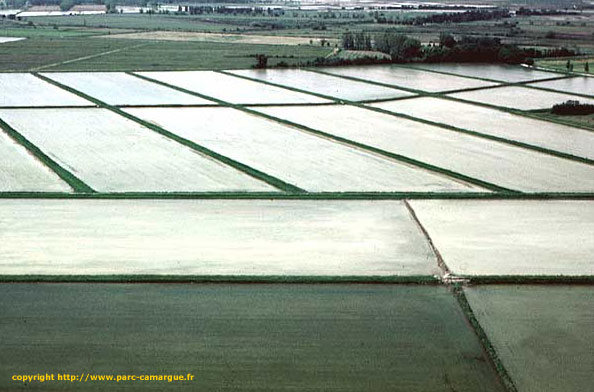
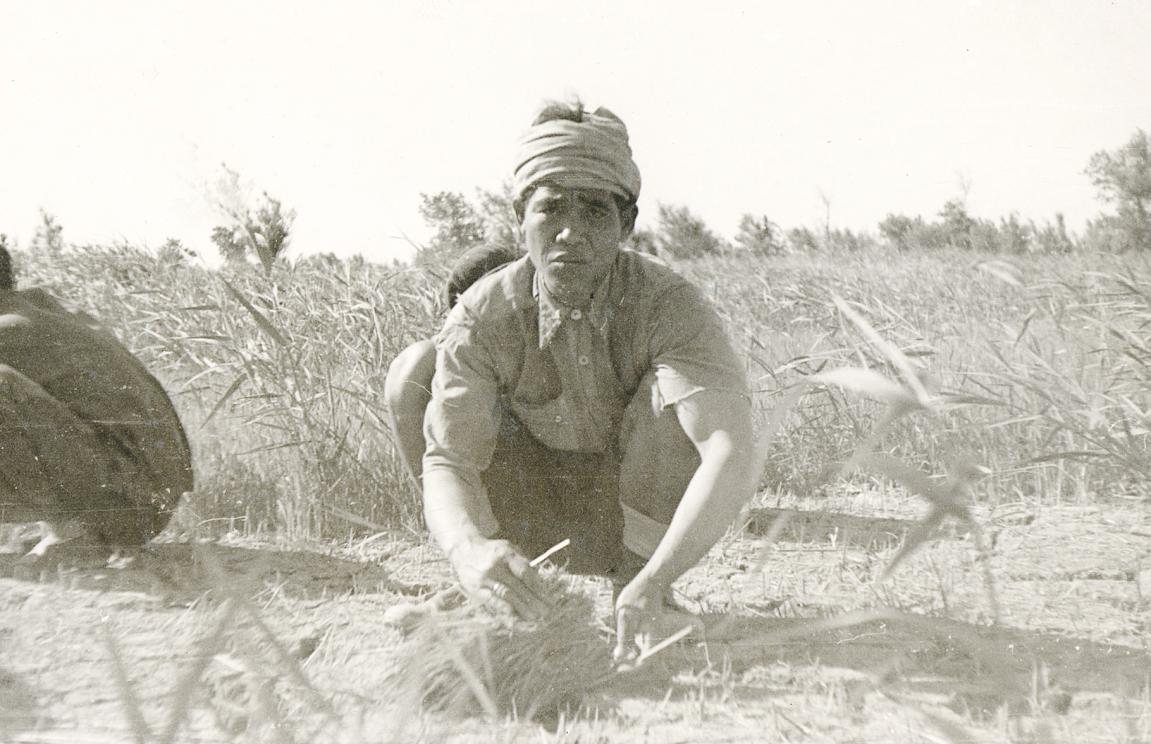
There is one undeniable influence. Take a look at this picture. Looks like somewhere is Asia, right? That's the Camargue in southern France, right next to Marseille and a couple hours away from Cannes. The French had tried to develop wet rice agriculture in this region, but never succeed. Only during WWII, when France sent Vietnamese workers skilled in rice agriculture to the metropole (ironically the French called them Ouvriers Non Spécialisés) were they able to develop the region into a large rice producer. You can see here one such Vietnamese working in the Camargue in 1943. So, while rice was already part of French cuisine, Indochina certainly had a role in developing the domestic rice market. However, most people living in the Camargue don't know the origin of their rice economy.
I will have to check specifically on language policies in the Democratic Republic of Vietnam and then after 1976 in the Socialist Republic of Vietnam. But my guess is that these words would have been banned for some time publicly. The communist state eliminated many Sino-Vietnamese words (which was about 90% of academic language) from the vocabulary in an attempt to 'Vietnamize' Vietnamese. That policy has had a pernicious effect on the language. Though the French cuisine terms are still around.
Though French cuisine is certainly not dominant in Indochina, it definitely left its mark as seen with Lich-Su's excellent response. The café culture is most definitely a leftover, as are certain gastronomic terms and much of the bread making techniques adopted in Vietnam. The use of wheat, which continues to find its way into the baguettes used to make bánh mì sandwiches actually came into Vietnam via large and complicated colonial networks as the French shipped not only their own wheat but actually had to purchase wheat abroad from Argentina, Australia, the US and Canada to keep bread as an accessible staple in Indochina. European style foods were perceived of as crucial for the French in order to maintain their distinct identity and the colonial hierarchy that they built. This same hierarchy, which was intimately tied to the concept of the "mission civilizatrice" rested on ideas of racist climatology as well which asserted that Indochinese peoples, being acclimatized to the tropics, were capable of withstanding high heats, something that becomes crucial in the context of the bakery. So early on, bakers take on local apprentices, first in Vietnam as the primary point of entry and later in Cambodia and Laos where they then train these locals in the trade. This is what leads to the significant remnants of French baking be it of bread or viennoiserie and of the use of wheat flour which was far less common pre-colonialism. I'd say that that consumption of wheat and the baking techniques that accompanied it is one of the most substantial French culinary contributions (alongside what Lich-Su has already mentioned). As for notions of food, hierarchy and identity I could rant for eons so I'll stop here as it isn't directly tied to your question.
In the other direction we actually have an interesting movement of rice consumption to the metropole, though of course to maintain illusions of racial difference the French went to the effort of creating new ways to cook it. They actually hired chefs to come up with rice-based recipes which were then diffused to the public in an attempt to make rice French. I'd say that this is where the colonial ties can really be seen, whereby the French needed their bread in the colony to be made in the French style and to identify as French, the rice brought back to France was stripped of its Vietnamese identity. This ties into Lich-Su's point on the rice paddies which I hadn't heard about, I always assumed that the ponds of the Camargue were entirely for the collection of the region's famous fleur de sel, this provides a whole new angle of investigation to my research!
To return to the rice/wheat dynamic though, it is doubly interesting to see primary sources in the 1920s referring to government attempts to insert Indochinese rice flour into...wait for it...French bread in the metropole! It seems to have been a government idea at the time to boost the rice industry in Indochina all the while making France less dependent on wheat imports. As you may have guessed, that really did not fly with the French public and was even protested by the same French colonists in Indochina who stood to gain from it.
As regards the Communist Regime, that'soutside my research period so I know less than I'd like to about it and what I've heard certainly aligns itself with Lich-Su's statement, there was likely a blackout of the terminology, how far this actually extended into cuisine and consumption of different dishes is something to be looked into. During the wars it was certainly more difficult to access the goods needed to make any hybrid foods that might have emerged. I'd be really interested in seeing how wheat factors into the war and postwar period. I mean when the bánh mì as we know it enters the mainstream where does the wheat in it come from? Northern China? Europe? Australia? America?
Last but not least, it's always tough to look at points of entry for foods, as finding exact dates for when they started to be eaten can be nigh impossible. The issue with wine consumption and other French luxury goods is doubly problematic in a French colony as it can be hard to tell if they made it into popular consumption as a form of direct colonialism or if they came back later simply due to the cultural capital of French cuisine ie. did wine establish itself in Indochina because of the French colonizing influence directly or simply because middle class and elites all over the world now drink wine? We know that there were French attempts and sometimes successes with viticulture in Vietnam during colonialism, this makes a domestic grape wine industry possible to meet domestic demand. Lich-Su mentions Dalat, which is where one of the favoured French climatological stations was built. Aside from providing the French colonists with a climate which they could liken to home it also offered an area in which to grow fruits and vegetable normally found in Europe. A study of the fluctuation in popularity/availability of grape wine in Vietnam would be pretty fantastic actually!
Sources: Barbisier. “Les Dangers du Gouvernment Père et Mère du peuple” L’Éveil Économique de l’Indochine, Numéro 558, Dimanche 26 Février 1928. 4-5.
Guy, Kolleen M. When Champagne Became French: Wine and the Making of a National Identity. Baltimore: Johns Hopkins University Press, 2003. H.C. “M. Darles Rentre en France pour Vulgariser la Consomation du Riz” L’Éveil Économique de l’Indochine, Numéro 564, Dimanche 8 Avril 1928. 4-5.
Jennings, Eric T. Imperial Heights: Dalat and the Making and Undoing of French Indochina. Berkeley, Calif.; London: University of California Press, 2012, 73.
Jennings, Eric Thomas. Curing the Colonizers: Hydrotherapy, Climatology, and French Colonial Spas. Durham: Duke University Press, 2006.
Le Courier Saïgonnais, “Fumez le Globe” L’Éveil Économique de l’Indochine, Numéro 563, (Dimanche 1 Avril 1928.
Peters, Erica J. Appetites and Aspirations in Vietnam: Food and Drink in the Long Nineteenth Century. Lanham, Md.: AltaMira Press, 2012.