We've all seen the caricature of the 'violent native' wearing no shoes, shirt, pants, sandals, or any vestment other than conveniently placed cloth covering breasts and genitals.
The societies depicted in these garments are usually presumed to be from central and south america, carribean, africa, the pacific islands, and sometimes some european islands.
It seems extremely impractical not to wear something like a shoe or sandal even in hot climates, and I would be astounded if people living in forests and jungles, where you can easily get an infection or walk over something poisonous, if you're going about it barefoot.
For another if a society really does feel good nude most of the year why bother covering their junk? It seems convenient for television and film but it doesn't make much logical sense.
Is it a seasonal thing? Do they put on more garments for work like hunting or war?
If this is even true which societies wore this loincloth uniform? Did any at all?
This is perhaps more an anthropology question but i can at least answer part of the history aspect.
Yes.
Various subgroups of the Naga people (NE India, NW Burma) wore loincloths as their main article of clothing as recently as 80 years ago, maybe sooner for some individuals. This is the reason some among the British took to calling them the Naked Nagas. This had been what they wore as far back as oral history can tell. Only about a generation or two before the present, people started adopting the lungi, a sort of long skirt worn by other groups in the region, and then of course pants.
Now on to why. Other than the fact that it gets cold in the mountains, for some groups within the Naga there were VERY strong sexual taboos. One cultural practice of some of these Naga subgroups was a courtship song where you boast about your manliness to the dorm (for lack of better word) where the young women of other clans were living. Clans are familial divisions within a given subtribe (not my term). But there was to be no temptation between members within a clan. Even if a guy and girl are only related by a common ancestor so many generations back that they cant even count anymore, it was forbidden for a woman in the same clan as the singer hear the song. This taboo continues today even though the songs are essentially dead now.
Being totally naked would have been fine for little kids as is it today, but for adults, a very broad incest taboo wouldn't allow for it.
That said it was/is not quite as restrictive as some western protestant cultures. And there were some groups who were actually naked, skipping the loincloth. Quoting from Hutton, J H The Sema Nagas, published 1921:
The Semas who went on the Chinglong expedition in 1913 then saw naked tribes for the first time; the coolies, catching sight of a string of naked Konyaks coming towards them, put down their loads and burst into fits of uncontrollable laughter at this sight of men who, though hardly less naked than they were, wore no three -inch flap.
(Konyaks are another Naga subgroup)
No.
For this I can only speak to the more recent past. At night in the winter it gets cold in the area at night. Not frost cold but cold. But it wasn't a seasonal thing. You sleep by the hearth at night, and during the day you just deal. There are cotton trees in the region (not the same plant cotton as you know it comes from) but it's not something that had been industrialised in these communities, and spinning thread and weaving are very time consuming (such that today most people who weave just buy industrial thread imported to the area), so you're not going to see enough fabric to fully clothe everyone when culturally that's just not a requirement.
I suspect that this is going to vary immensely depending on where and when and what particular groups you look at, but I can at least give you a partial answer pertaining to the Māori of New Zealand.
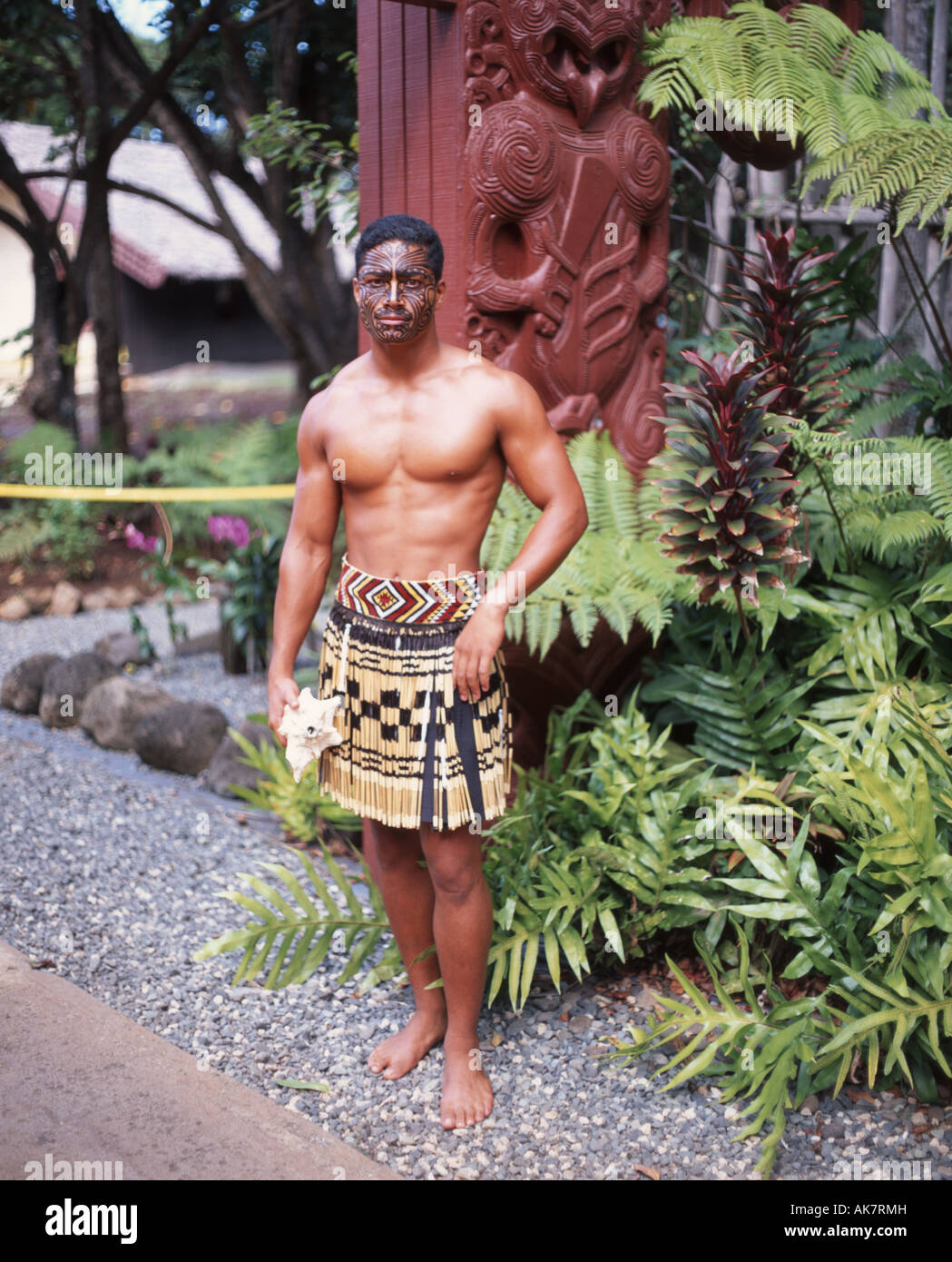
Traditional dress for Māori consisted of skirts and cloaks. Modern 'traditional' Māori garb for women is closer to a dress, and covers the breasts, but to the best of my knowledge this is a modern convention based on modern concepts of modesty. Apparently, one of the most common pieces of clothing among men and women was the maro, which is pretty much exactly a loincloth.
There is a story about early European explorers coming across a group of native women who were gathering shellfish from the shore, completely nude. When the women noticed the male explorers, they hid behind rocks until they could fashion skirts that covered their groin out of seaweed. This would imply that nudity was considered completely fine among other women, but the groin (and not the breasts) should be covered in the presence of men (or perhaps strangers).
Clothing was an extremely important part of Māori culture. It, like all facets of Māori life, was tied into the complex concept of mana, a word with no direct English translation that can roughly be thought of as pride, honour, respect, and power, but on a spiritual and tangible level. Clothing was thought to able to add to or take away from a person's mana. When one chief was asked to give a speech, he apparently said "He ao te rangi ka uhia a ma te huruhuru te manu ka rere ai (It requires clouds to clothe heaven and feathers to make a bird fly)", which was taken to mean that he was improperly dressed to do something as important as give a speech.
Māori would also wear ornate jewelry, made from precious stones, bones, wood, and feathers. Their hair was exceptionally important: so important that there were rules about who was allowed to touch whose hair, and that an important figure could be recognized by his or her hairstyle.
Finally, Māori did not wear shoes, or at least did so rarely. When they were to cross harsh, rocky terrain that could cut their feet, they wove sandals out of flax - these sandals were only temporary, and multiple pairs would have to be made for long journeys.
At least in Southern America, the travelers reported that the natives were naked, apparently even without footwear as it is described for instance in Hans Staden's account.
I believe the common image for the "naked savage" comes from Melanesia, which can be roughly defined as the scatter of islands around Papua. For example, in many areas of Vanuatu the only item of clothing is the namba, a sheath wrapped around the penis and held up by a string around the waist. The size of the namba can even be a form of group identification, with divisions between "big namba" and "little namba". Around the region there area peoples with similar forms of attire, such as the Dani of Papua. In many cases, the advent of Western imperialism came along with demands for Western forms of modesty, often with quite negative consequences, as not only were the clothes hot, they also inflamed the skin and provided a refugee for parasites.
As for shoes, you don't need them if you have never worn them, as the soles of feet build up thick calluses (think of it this way: how many lions or apes do you see wearing shoes?). In a sense, our need for shoes is not innate, but is rather socially constructed.


#/media/File:Landdiving7.jpg)
