I've just been scouring the internet, and noticing this trend again, I figured I'd ask, in hopes of an informative answer.
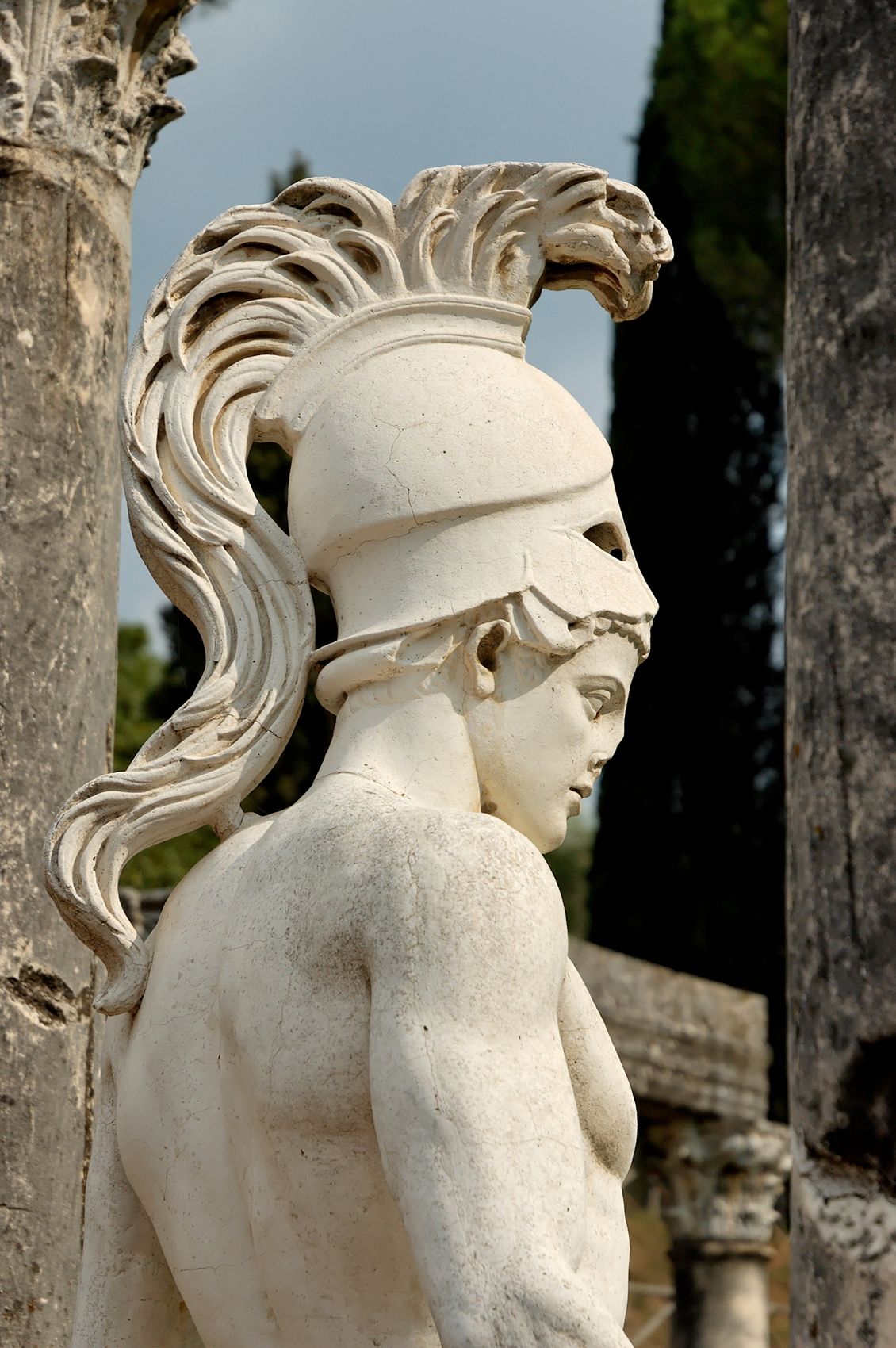
Quite frequently it seems, sculptures from Ancient Greece depict Gods, soldiers or heroes with helmets, but they are wearing them in an unusual manner. The helmets are simply sitting on top of their hair, as seen in the examples here, here, and here.
This is quite an unusual look, and my question is simply, why? Why is this done? I'm not artistically inclined, and so any deep rooted symbolism it might have is lost on me. Is it purely just to show their faces? If so, why not remove the helmet altogether?
I've never understood why this is done, and so any information on the matter would be quite interesting to me. Thanks in advance.
You pretty much just answered your own question:
Is it purely just to show their faces?
At least, that's the greater part of it. Greek sculptors and vase painters were generally interested in portraying either beauty ideals, strong emotions, or characters/real life persons. None of this is possible with a helmet covering the face. The characteristic Corinthian helmet was a powerful symbol of valour and martial prowess, but it covered nearly the entire face, so artists found a way to have their cake and eat it too.
The rest of it is that this is probably how helmets would be worn prior to actually engaging in battle. The Corinthian helmet was hammered out of a single plate of bronze; it was heavy, hot, and stifling. Warriors would not wear it over their face unless they knew they were going to need the protection.
The third of your examples is a special case. That particular bust is of Perikles, the famous Athenian politician.
His personal appearance was unimpeachable, except that his head was rather long and out of due proportion. For this reason the images of him, almost all of them, wear helmets, because the artists, as it would seem, were not willing to reproach him with deformity.
-- Plutarch, Life of Perikles 3.2
Plutarch proceeds to share with us a list of jokes made by comedy writers at Perikles' expense.