I'll go ahead and cut to the chase and assume that you're talking about the Augustan legion (Empire/CE). The answer is quite different for the Republican era. The men who would enlist in the army were generally volunteers, the draft being about as unpopular then as it is in the modern day United States. Augustus himself was forced to call a draft of citizens twice: Once in 6 CE,^1 and once in 9 CE.^2 There were some exemptions made to those who were drafted, including those who were physically unfit for service (see the anecdote near the bottom of 1) and those who occupied certain professions, such as doctors or others who were seen as necessary to the city. Sole surviving heirs had no exemption attached to them, and indeed, many of them may have been called upon to serve as officers, if the family had an estate.
Regarding men who were already in service, most of them wouldn't particularly want to get out. The men who went into the army were generally the poor, those who had nowhere else to turn to. The army guaranteed them pay, food, clothing, companionship, some of the best medical facilities in the ancient world, shelter, and, honestly, better sanitary conditions than anywhere else in Rome. If you want me to describe some of that, I'd be happy to, but trust me - modern cleanliness is a gift from heaven. The army had pretty high standards,^3 though, and not all men were necessarily qualified to join - more exemptions, if you want to term them as such :)
Recruits were preferred to be from rural areas or otherwise accustomed to hard physical labour (butchers, blacksmiths, etc). If you were from a less arduous lifestyle (Direct quote: "Fishermen, fowlers, confectioners, weavers, and in general all whose professions more properly belong to women should, in my opinion, by no means be admitted into the service.") then there was a bit less of a chance for you. Height was important, as was physical fitness and health. Men convicted of serious crimes were barred from service, but petty criminals were a-ok, and may have composed a good number of the ranks. Youth was obviously preferred, but the overriding emphasis was on physical fitness.
There were only three ways to get out of service, other than death (which probably doesn't classify as the exception you're looking for). Missio causaria, or "medical discharge," could be given due to extreme illness or some other injury that rendered them unfit for service. Multiple doctors would conduct a thorough medical examination of the patient, and, if they confirmed that the patient was unlikely to ever recover to be able to serve again, they were discharged. They were treated as honourably discharged, with their rewards being scaled to their respective length of service. Missio ignominiosa was the term for dishonourable discharge, which was just as bad then as it is now, and was issued for any man who committed a serious crime. People who received this punishment were banned from living in Rome or serving on any form of imperial service. Additionally, they were either branded or tattooed with a mark to denote them as such, and were shunned by all. Finally, the one that you're probably least interested in, honesta missio, was honourable discharge at the end of those 25 years.
To sum: There were certainly some exceptions, but the greatest way to get out of serving in the army was generally not to volunteer. You were statistically unlikely to ever be drafted ;)
A fantastic source for information on the Roman army is Goldsworthy's The Complete Roman Army, and it's where I pulled a decent bit of this post from (not so much for the footnotes - those came from his biography of Augustus, along with a bit of Suetonius, Dio, and Paterculus).
Hope this answered your question, and please feel free to ask any follow-ups!
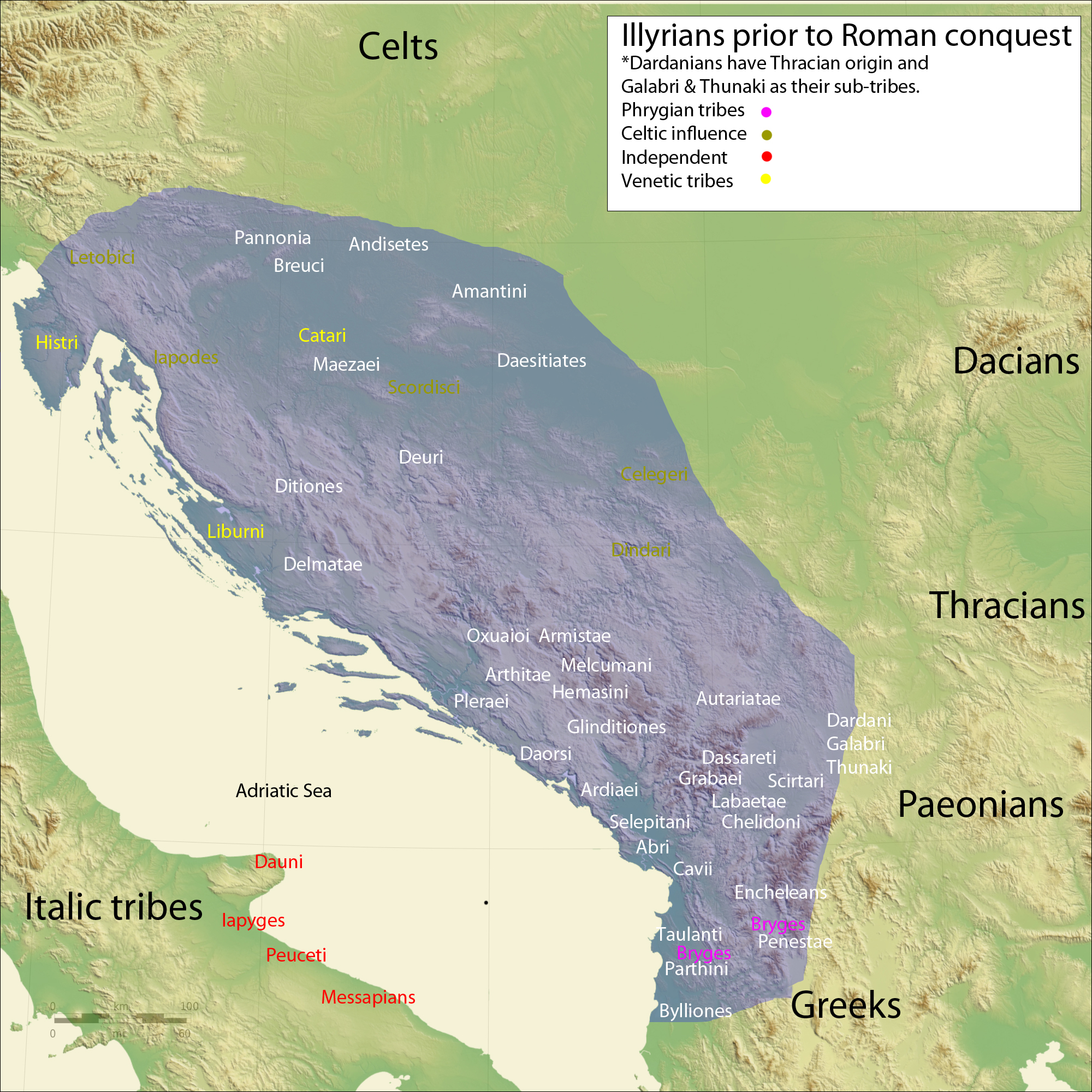
He was essentially saved by the bell. Right before the Romans made it to his territory, a massive rebellion broke out in Illyria. The commander of the Roman forces, a gentleman named Tiberius, offered immediate terms (which the king quickly accepted - however much he knew the Romans would probably back out of them as soon as they could).
The rebellion supposedly started with the levy of auxiliaries (they didn't like being drafted either), and, when they had been mustered, the armed tribesmen suddenly realized that they were basically an army. And they had never liked Rome much to begin with. On top of that, the Roman armies in the region had all been drawn off into Germany - there was no effective force to oppose them. The government of the area desperately tried to raise a force to crush the rebellion, but each attempt was summarily defeated in turn, providing more and more impetus to these tribes. And, if you looked at the map, a rebellion in this area had good reason to terrify the Romans, who saw it as the "greatest threat to Rome since Hannibal."
On top of all of this, there was an outbreak of violence in Roman Syria/Palestine, because the Romans were beginning to really set their foot down in that region, and people, for some odd reason, didn't like being taxed. Augustus was set aback by the whole "if it rains, it pours" thing, as he had a bare garrison in Rome: the Praetorian Guard (not even a whole legion of men), the urban cohorts (as green as it was possible to be) and his personal German bodyguard. Needless to say, they wouldn't stop a horde of Illyrians who decided to come swarming down into Italy - and those warriors were less than ten days from the capital, if they so chose to invade.
Augustus' emergency measures began with an inheritance tax on Italian citizens (which pissed all of them off) and a draft. No levy had been conducted in Rome for generations, and, needless to say, it didn't go over well. He initially called for volunteers, and there was a tiny number of volunteers. So, facing no alternative, Augustus resorted to conscription. There were only two exceptions: physical impairment or certain occupations. Slaves were requisitioned, promptly freed, promised citizenship, and formed into cohorts. Wealthy citizens (among the equestrian class) were pressed into service as officers and commanders - there were some who were recalcitrant. The most famous story here is of a father cutting off his sons' thumbs to prevent them from serving. Augustus promptly confiscated his property, auctioned it off, and sold him as a slave.
You didn't want to dodge the Roman draft.
Augustus, alternatively gripped by fury and despair (Quintilius Varus, give me back my legions!), ordered the entire Empire on high alert, increasing patrols in Rome herself to prevent any thought of dissent and to reassure the populace. A new draft was held, and, needless to say, people wanted to be in the army even less than they had three years prior. A draft by lot was instated, and yet again, there were draft dodgers who were promptly executed. Slaves were used in emergency legions again, veterans were mustered from their retirement, and Rome held strong. Mostly. Every fort and settlement between the Rhine and the Elbe were promptly and abruptly abandoned, and Tiberius spent the next four years utterly devastating the landscape and villages of Germany near the Rhine, the tactic immortalized by Tacitus as "making a desert and calling it peace."