I was just introduced to a general overview of David Rohl's revised chronology yesterday. From what I understood, the theory is plausible to certain academics but seemed strange to me that it revised over 300 years of history. I wasn't able to find many direct refutations or arguments about the new chronology as was wondering if someone here could give some more insight as to what this theory implies and how it affects the general sweep of history?
According to Professor Amélie Kuhrt, head of Ancient Near Eastern History at University College, London,
An extreme low chronology has been proposed recently by a group devoted to revising the absolute chronology of the Mediterranean and Western Asia: P. James et al., Centuries of Darkness, London, 1991; similar, though slightly diverging revisions, are upheld by another group, too, and partly published in the Journal of the Ancient Chronology Forum. The hub for the dating of other cultures is Egypt, so much of the work of both groups focuses on Egyptian evidence. Many scholars feel sympathetic to the critique of weaknesses in the existing chronological framework presented in these volumes, but most archaeologists and ancient historians are not at present convinced that the radical redatings proposed stand up to close examination. (Amelie Kuhrt (1995). The Ancient Near East c. 3000-330 BC. Routledge History of the Ancient World series I. London & New York. p. 14)
Basically, Rohl's revised chronology starts with the premise that the established traditional Egyptian chronology has errors, which most Egyptian scholars agree on. Most scholars agree that the main Egyptian chronology has weaknesses, and agree with Rohl in his critique of these weaknesses.
However, most scholars also disagree with the radical redating of the chronology. In fact, recent radiocarbon dates confirm that the traditional chronology needs refining, but not so much as Rohl wants to do. (Christopher Bronk Ramsey et al., Radiocarbon-Based Chronology for Dynastic Egypt, Science Vol. 328. no. 5985 (18 June 2010), pp. 1554 - 1557.)
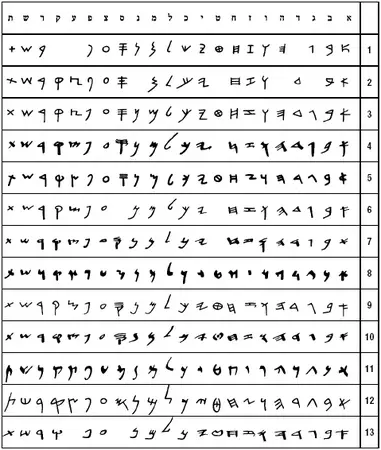
Most of Rohl's arguments come from archaeoastronomy and his main point of contention outside of this appears to be the identity of Pharaoh Shishak of the Old Testament (traditionally presumed to be Shoshenq 1, but Rohl believes him to be Ramesses II). He bases part of his argument on the fact that Ramesses' shortened name is Sysw, which is similar to Sysk (Shishak) in the OT. You can see his example [here](https://en.wikipedia.org/wiki/New_Chronology_(Rohl)#/media/File:Sysw-%26-Shyshk.jpg). However, I personally believe this to be a rather erroneous and misleading image, as a closer look at 7th century and earlier Hebrew alphabetic systems show a much greater difference between the qoph (ק) and vav (ו) letters. If you examine this chart, all these alphabets are from actual inscriptions, with 4-6 being from the eighth century BC and 7-8 from the 7th century BC. As you can see, the vav in these inscriptions looks nothing like the vav from Rohl's example.
So the mixed reception of scholars that you perceive is a combination of Rohl's valid criticism of weaknesses in the traditional chronology, but at the same time, they are unconvinced by his arguments for the scope of redating.
#/media/File:Sysw-%26-Shyshk.jpg)