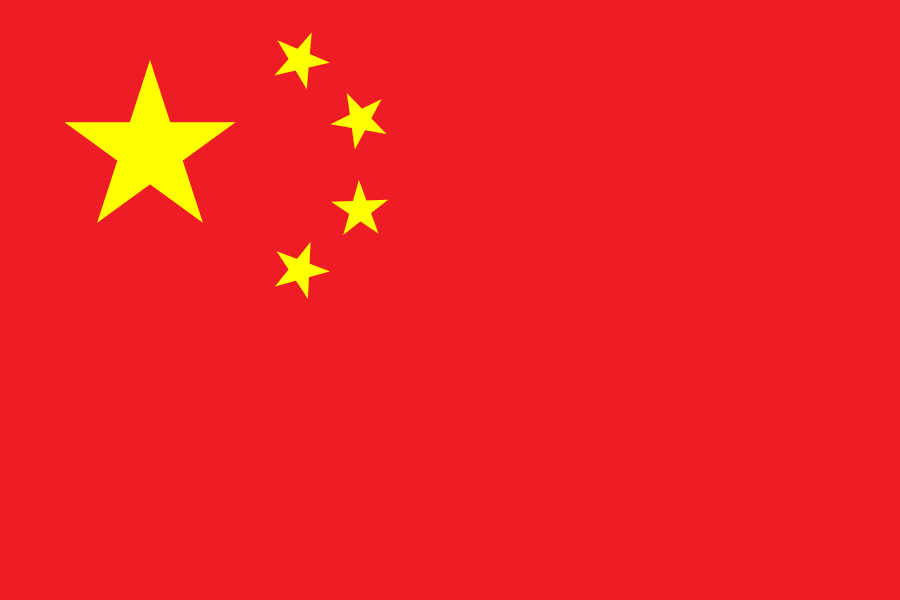
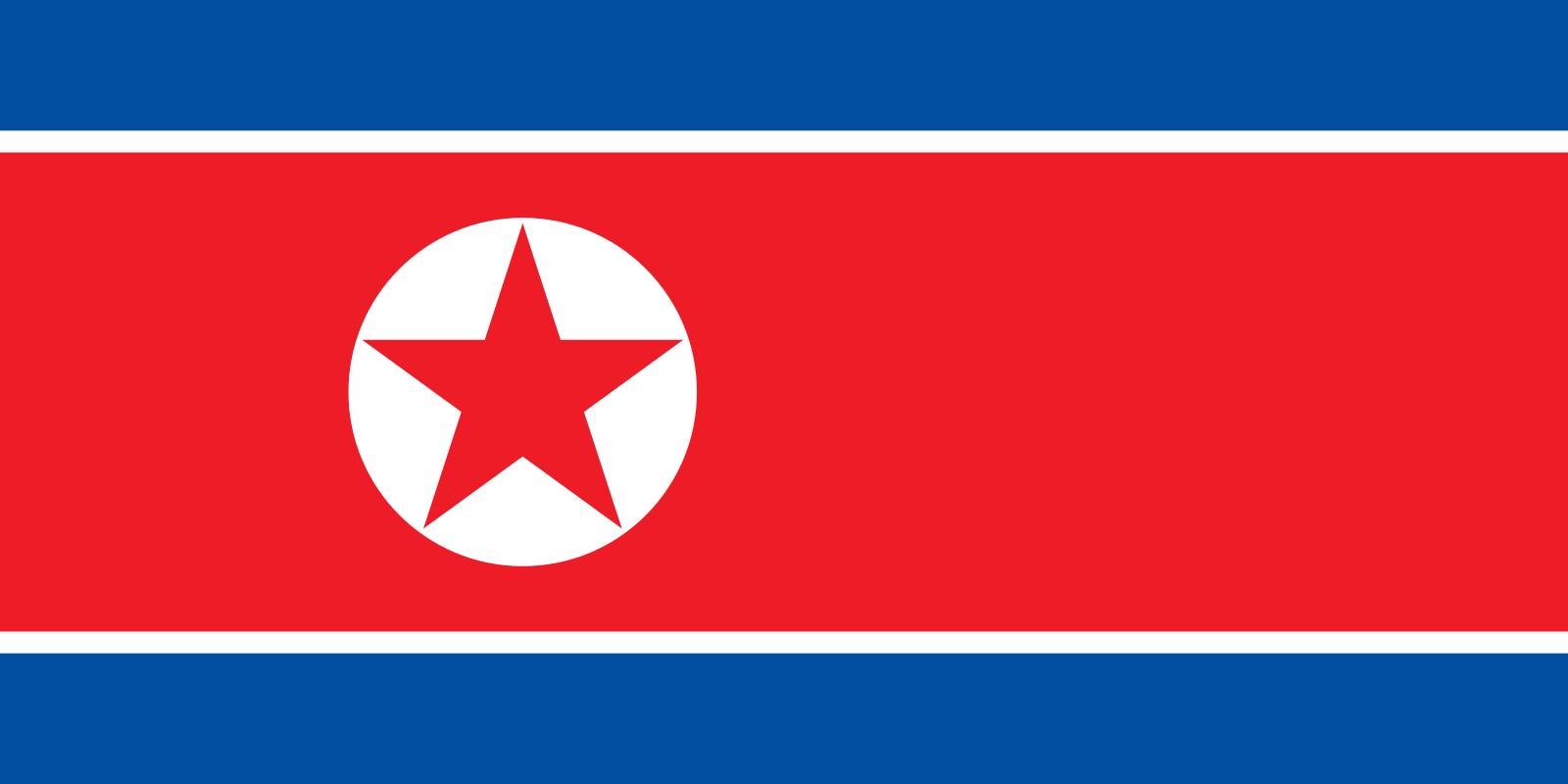
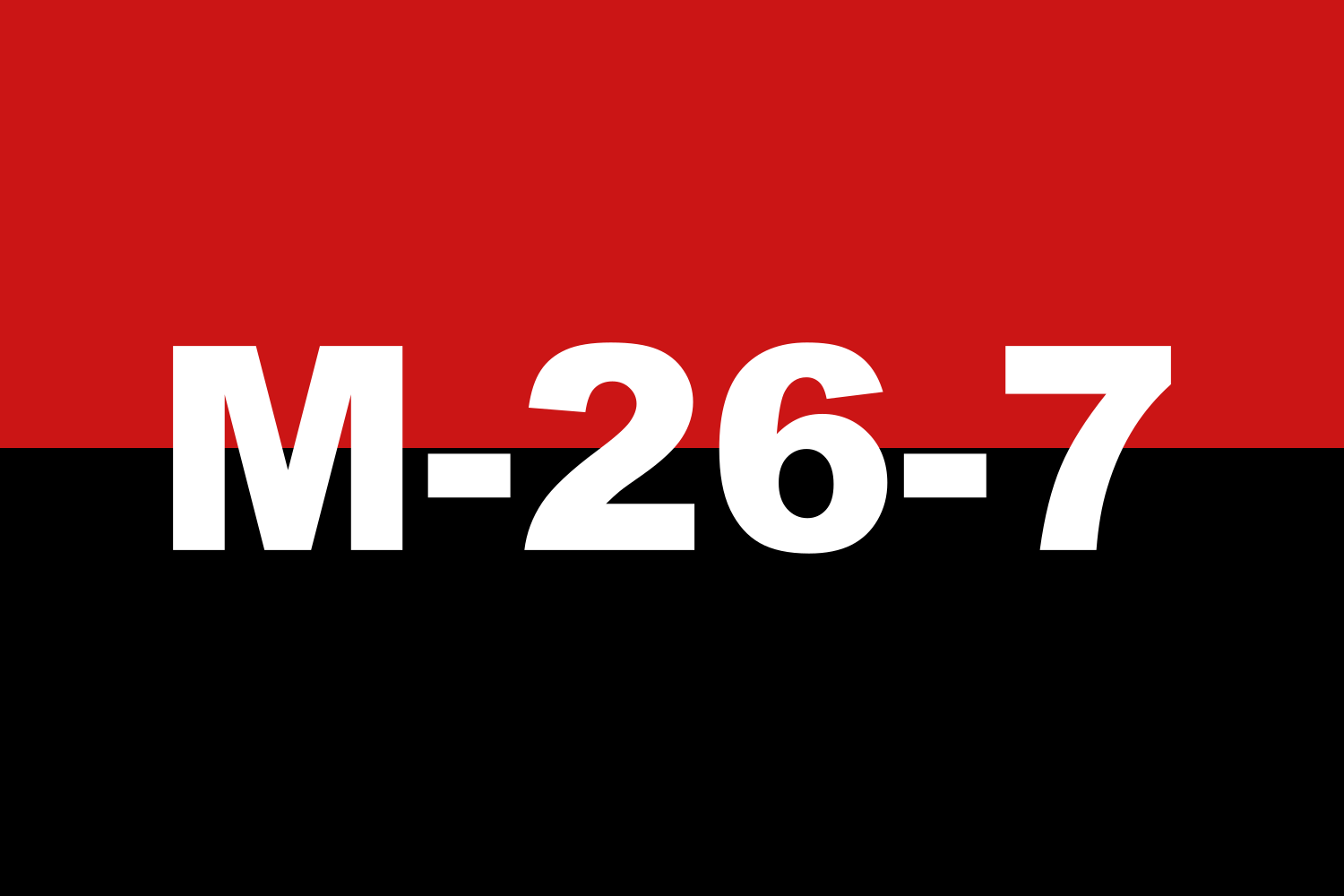
The Cuban flag was adopted in 1902 and has not changed since. This is in spite of a revolution, and rise of a Communist government. After the USSR adopted their flag in 1923, many other countries drew on it as inspiration following their assumption of power. The flag of Vietnam was used during their revolution, and was adopted as the country's national flag in 1945. The Chinese flag was adopted following the Communist's victory in the Chinese Civil War. North Korea's flag was designed in the USSR. Cuba however, did not change its national flag. There is another flag flown in Cuba that celebrates and commemorates the 26th of July Movement's victory, but is not the official flag of the country. Vietnam, China, and North Korea are all within the Soviet sphere of influence, and Cuba is more than an ocean away, but is there a reason other than proximity that Cuba did not adopt a new flag featuring revolutionary imagery? I would think that they would especially not want to continue using a flag that was similar to, and likely based on, the flag of the United States. Was there discussion to adopt a new flag?
Late answer.
The flag did not change because the Cuban Revolution promoted itself as a continuation of not a rupture with the fight for independence.
The Cuban flag is a variation of the flag that Narciso Lopez used when he landed in Cuba in c. 1849. The flag was then adopted, with some changes, by the independence movement during the first and then second independence wars, ending with full independence from Spain (with American help) in 1898.
When Batista fled Castro's 26th of July Movement was one of dozens of rebel organizations. The flag of his movement, black and red with 26 7 M on it, was too insular and never aspired to be a national flag. In addition, Fidel had presented himself as a modern day follower of Jose Marti, one of the key figures of the independence movement. As a successor he tried to use as many familiar symbols as possible to argue that his movement, even as it radicalized, was merely a continuation of old anti-colonialist struggles.
Even today, the thesis of Castro's Cuba as a successor to Carlos Manuel de Cespedes' and Jose Marti' ideas of Republican Cuba is still presented in schools across the country.
Russia changed its flag as well, becoming the USSR, but it was attempting to rupture with the symbols of an imperial past in order to contrast those symbols with new ones forged for its worker's republic.
Edit: Here is a section referring to this thesis of una sola revolucion (one single revolution) from the 19th century to the present day. The book by an admittedly very anti-Castro source, but well respected within academia for other works, like Republicas de Aire. https://books.google.com/books?id=nKVxCgAAQBAJ&pg=PT130&lpg=PT130&dq=cuba+tesis+una+sola+revolucion&source=bl&ots=mPeZYeLg7O&sig=dvWoTvqZ1D0V7DjGrydkFiB979I&hl=en&sa=X&ved=0ahUKEwil0OmBx4zKAhVILB4KHbQOAJ4Q6AEIJTAB#v=onepage&q=cuba%20tesis%20una%20sola%20revolucion&f=false