Were they believed immediately? Hushed up while third parties corroborated them? And which were the first dinosaurs to be discovered?
I would love to see some of the first reactions to what must've seemed like the discovery of a real life, larger than life, monster. Surely, it's the sort of stuff modern day cryptozoologists dream of.
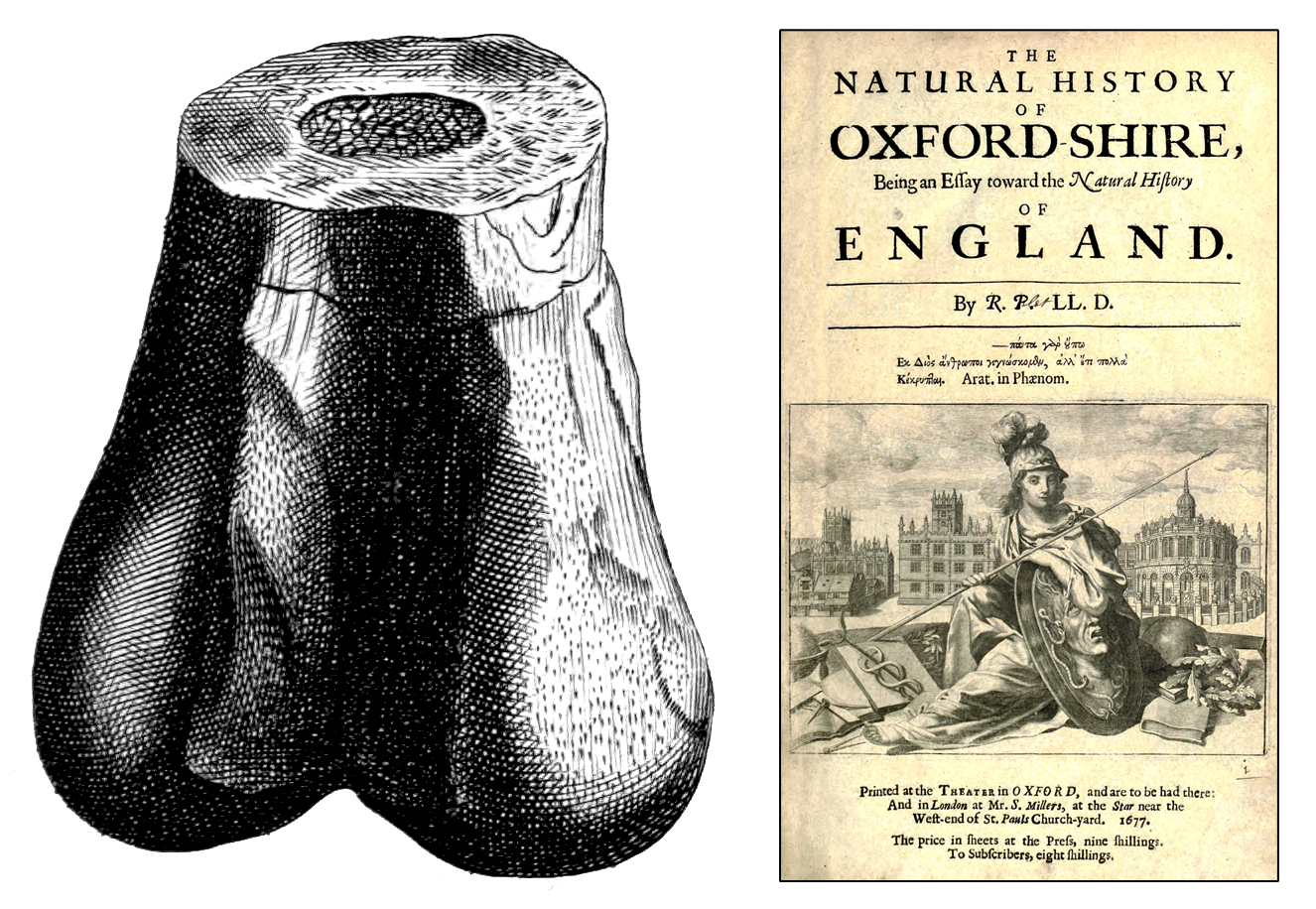
Looking back, the earliest discovery of something we can definitively call a dinosaur fossil (of the non-avian variety) is part of a femur found in 1676 in England. The specimen, now lost, would later be given the rather unfortunate name of Scrotum humanum due to its appearance, but it was never actually thought to be fossilized scrotum. It was correctly identified as a femur, but thought to have been from an elephant brought to England by the Roman Empire or some biblical giant. based on surviving illustrations, it's now thought to have been from a Megalosaurus or a related type of large theropod. There were likely earlier discovery of dinosaur fossils around the world that were interpreted in other ways, that we cannot currently verify. From my own area of expertise, various Native American cultures have been interacting with fossils in a variety of ways for thousands of years, but dinosaur fossils are very rare in the east so most of the examples I could cite are either more recent extinct animals from the ice age, or much, much older creatures that predate the dinosaurs (and are mostly shells).
In the mid-1700s, European scientists were just starting to catch onto the idea of extinction (thanks, in part, to Native American fossil hunters who provided Europe with its first mostly complete mastodon skeleton). It wouldn't really catch on until the 1800s, and even in 1803 Thomas Jefferson was a famous opponent to then nascent Theory of Extinction, charging Lewis and Clark to report back on any information that might suggest mastodons and mammoths were still alive in the west.
The first discovery of fossils that were thought of in a way similar to how we regard dinosaurs today, and eventually would be labelled as dinosaurs themselves, began in 1815 with the discovery of large bones in a English quarry, which were then acquired by the geologist William Buckland, who began to collect various unusual fossil including a monstrous jaw bone. By 1818, with the help of Georges Cuvier, the leading proponent of the Theory of Extinction, Buckland would identify these fossils as having come from a large reptilian creature and in 1822 he named the creature Megalosaurus (though this wouldn't be official for another two years). In 1822, the fossils of the second creature to eventually be called a dinosaur (Iguanodon) was also discovered in England, which would be formally described three years later.
In the 1820s, however, little was known about these animals other than that they were very large, had reptilian teeth, walked upright, which made them substantially different than any living reptile. In 1842, Richard Owen lumped these two species along with a third (Hylaeosaurus) as a single category of "terrible lizards", or Dinosauria.
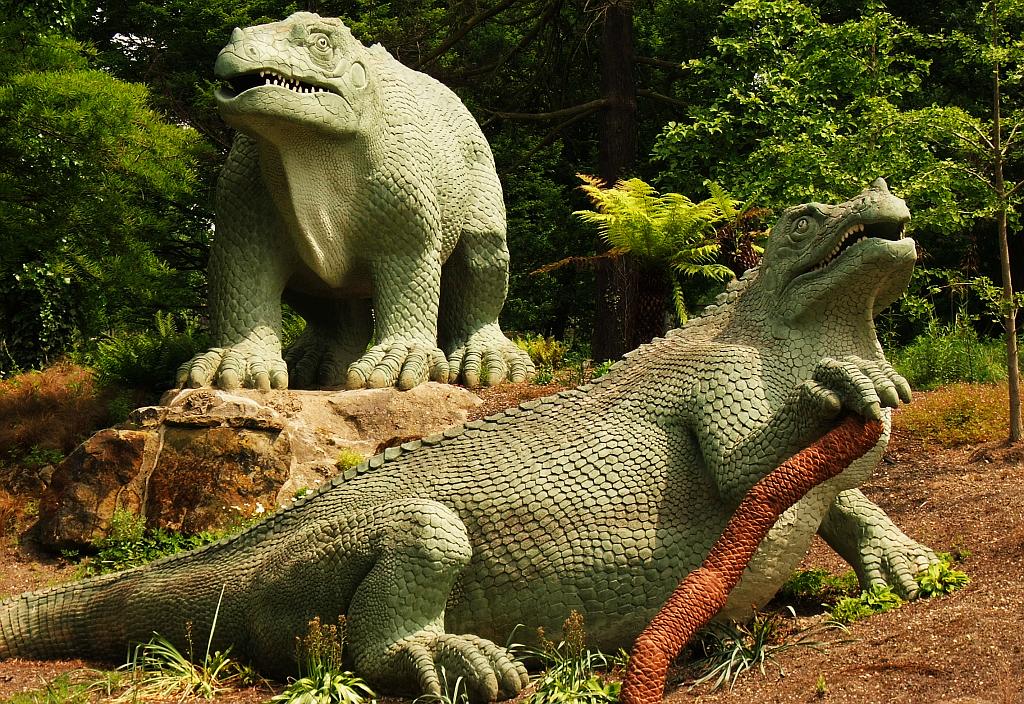
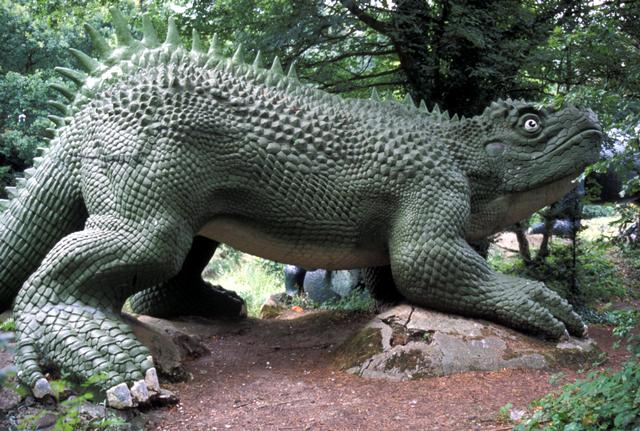
In 1853, the Crystal Palace in London unveiled a display featuring "life reconstructions" of these dinosaurs and other recently discovered extinct animals. This is how the Crystal Palace portrayed Megalosaurus, Iguanodon, and Hylaeosaurus. For comparison, this is how we depict these species today (or related species): Megalosaurus*, Iguanodon, and Hylaeosaurus. The opening of the Crystal Palace exhibit was basically the Victorian equivalent of Jurassic Park in terms of catapulting dinosaurs into the public consciousness.
*technically, this is Torvosaurus, Megalosaurus' North American cousin. I couldn't find a handy modern depiction of Megalosaurus.