Inspired by this imgur post, I realized that I can't name a single work of "great" European architecture from antiquity that wasn't built by Roman hands (or at least supervised by Roman project managers / whip crackers).
I imagined that looking for great churches from antiquity would pull up some responses, but even this list shows almost entirely Italian churches or areas that were once Roman. Am I to assume that until 1070, Anglos, Slavs, Germans, and Normans were all worshiping in thatched long halls? Their kings ruled from tents made of buckskin and sinew?
I'm probably wrong, I'd love to know how badly.
Can you specify what you mean by "antiquity"? In any periodization, antiquity begins long before the Romans and even late antiquity ends long before 1070. Obviously the Parthenon and ten thousand other temples have nothing to do with the Romans and pre-date any sort of Roman power.
I assume you're really just looking for late antiquity and the early medieval period. The list you're referncing is nothing but churches, so it's not really all that surprising that they're related to Rome in various ways.
Am I to assume that until 1070, Anglos, Slavs, Germans, and Normans were all worshiping in thatched long halls?
I have no idea why you would assume that. I'm not sure that anyone ever worshiped in "thatched long halls." There are a number of famous wooden churches and styles of architecture that rely on wood, but such churches are distinguishable from halls. Even limiting ourselves to stone churches, go look at the architecture and buildings of the Visigoths in 6th-8th century Iberia. There are many extant monumental buildings built in stone. Slightly later than the Visogothic period, you have the palace that became Santa María del Naranco, in a proto-Romanesque style.
Afterwards, you need to look at the Carolingian Renaissance, occurring in the late 8th and 9th centuries. The Palatine chapel in Charlemagne's palace in Aachen is one of the greatest works of European architecture.
Similarly, there's no lack of large-scale Anglo-Saxon architecture (all of which obviously predates 1066.) St Peter's Church is a particularly famous example.
If you are interested in more on this subject, take a look at two books in the Pelican History of Art series, "Early Christian and Byzantine Architecture" by Krautheimer and "Carolingian and Romanesque Architecture 800-1200" by Conant. If you narrow down your question, I can give you more resources to look at.
Cities and the buildings in them change over time, as do demographics. Italy, from the floodplain of the Po to the volcanic soil of Calabria and Sicily, is very fertile and consequentially densely populated and densely urbanized: the perfect environment to organize large public works. But that doesn't mean that other densely populated areas couldn't also be densely urbanized.
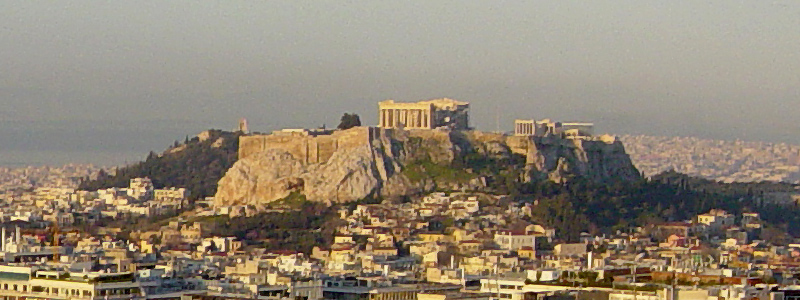
Excluding the near east, the best example of monumental architecture is ancient Greece. The Acropolis of Athens certainly wasn't built by the Romans, it predates them!
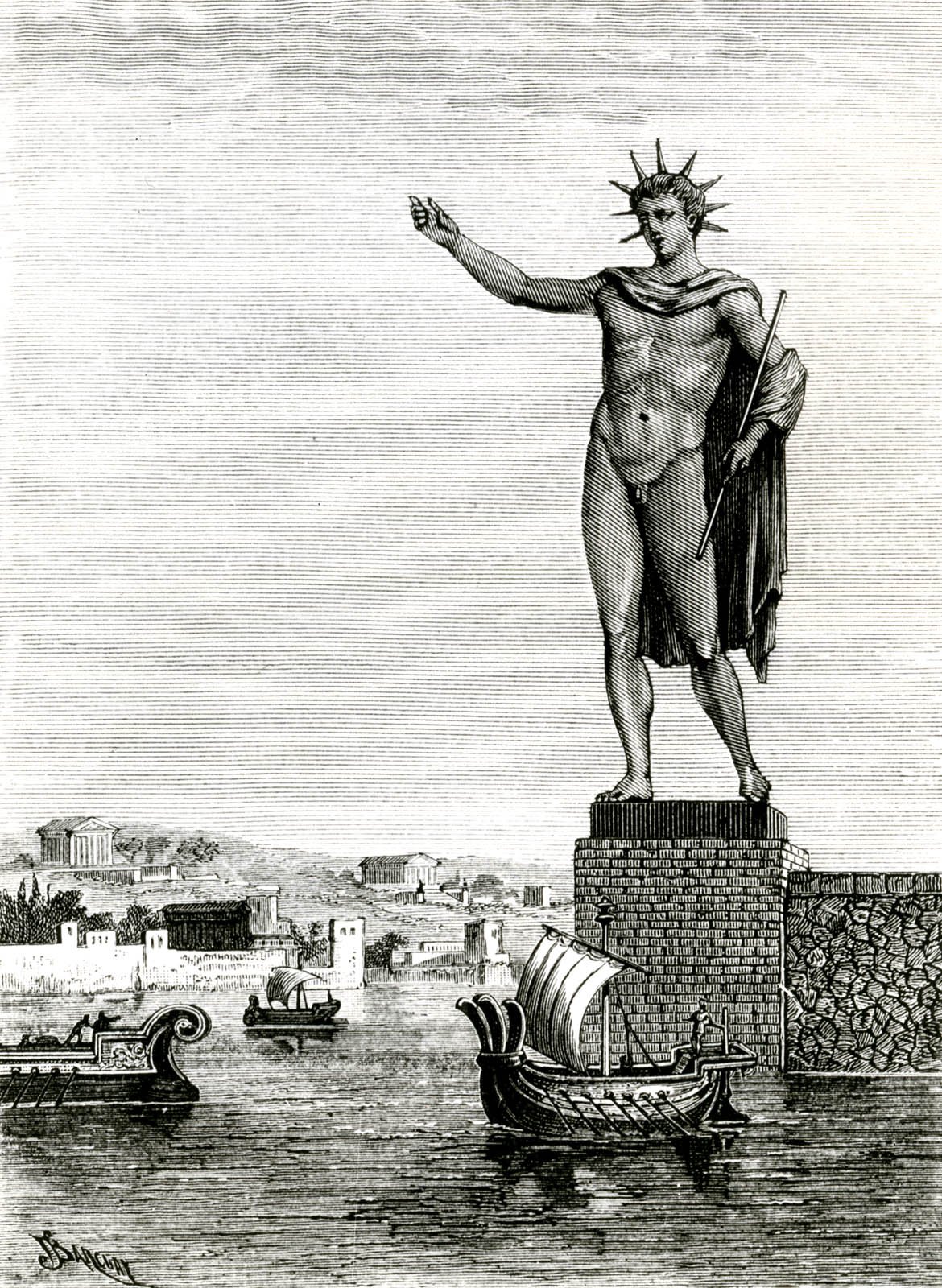
It doesn't help that a lot of ancient structure haven't survived to be included in our collective memory. The Colossus of Rhodes and the Lighthouse of Alexandria would have been awe-inspiring in their day. The Romans themselves were great admirers of Greek art and architecture.
Prior to the expansion of the Roman empire it is certainly incorrect to say that there weren't large settlements outside of Italy. Marseille, Carthage, Paris and London all have pre-Roman roots. But five centuries of Roman rule over the is enough to leave a strong mark.
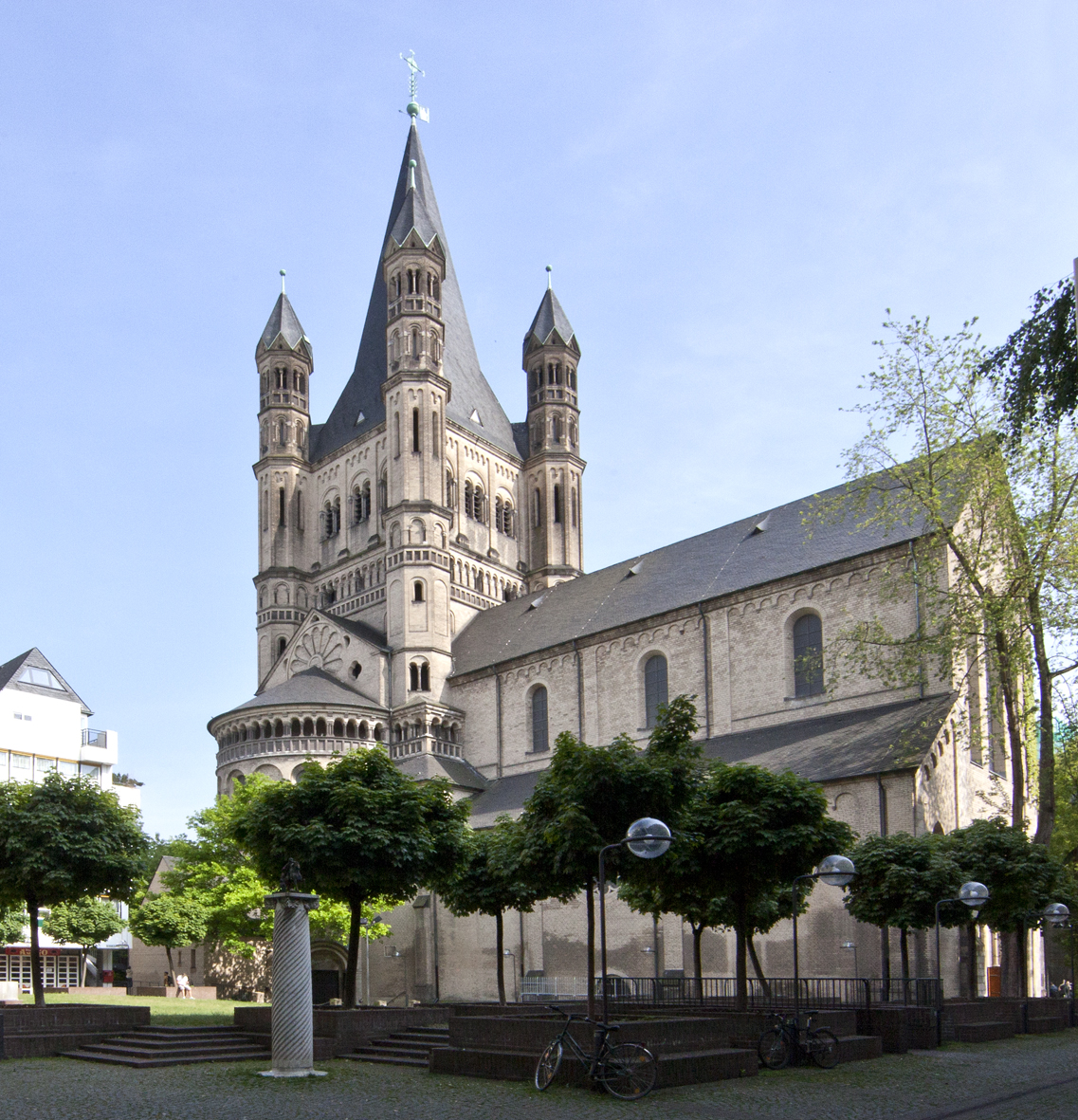
Many churches and basilicas we think of as medieval are expanded or built in place of old roman structures. The very word "Basilica", now normally used to identify a non-cathedral church with special privileges comes from the Roman word for the courthouse that normally stood near the forum. In Milan, you can clearly see the Roman, early medieval, and renaissance additions to the Basilica of St. Lawrence. The same thing is true for buildings constructed in the following centuries. The Great St. Martin Church in Cologne was completed in the 13th century, but the foundations can be traced to least to four centuries prior. Prague Castle was first fortified in the 9th century, and was continuously modified since. The Basilica of Santander similarly has ninth-century roots, even if the building wee see is mostly in the Spanish Gothic style of the following centuries.
Given these constraints, there are a number of buildings that were being built outside of Italy after the fall of the roman empire that have kept, more or less, their appearance. Just before your cutoff date of 1070, in 1024 Conrad II commissioned a massive cathedral that was to be his final resting place in the town of Spayer. The current cathedral of Cordoba, which began construction as a mosque in 781, is another example of very non-roman architecture built in this time period.