I don't have personal experience, but it seems like there would be more ink dots and drips if you don't use cursive, that is, if you are using quill and inkwell.
Someone who knows how to use a quill can use it pretty skillfully, and if it's kept in good condition and properly blotted, it won't drip. A manuscript written by a skilled scribe usually looks pretty clean. Of course, we might expect to see different things depending on the type of manuscript. Something like the Ostromir Gospels, a luxury item created for a mayor of Novgorod, is going to look much cleaner than a book of homilies for personal use in a monastery or home. We have a ton of clean-looking manuscripts written in uncial or semi-uncial.
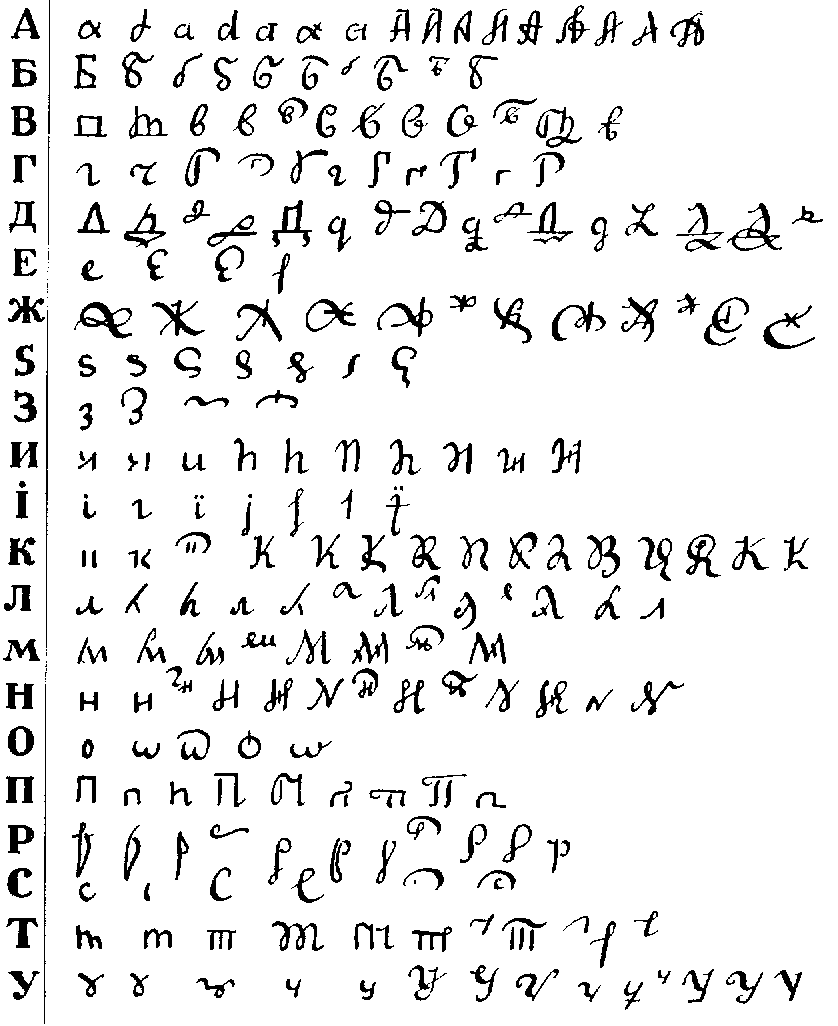
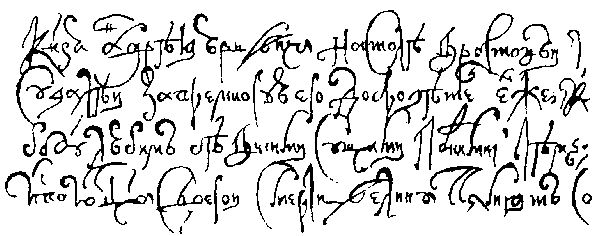
That said, I think there's to the idea that cursive script required something like a quill to happen, but the reverse (a quill requires cursive) is definitely not true. Cursive, at least in the (East) Slavic regions, seems to have grown as a time/space-saving device. Skoropis' 'quick-writing' developed over the course of the 15th-19th centuries, and you need a bit of specialist training to actually read it. You can see a table of letter-forms from the 18th century here. The left-most forms are (usually) the most uncial or semi-uncial ones, and then they sort of go from there to become progressively less-recognizable. Special letter forms developed for certain positions in a word or on the line. Here's an image of 17th century skoropis' in use. The script was mostly about saving time and space. In certain contexts, things get even more difficult to read, especially when the people writing the records are the only ones who expect to be reading them.