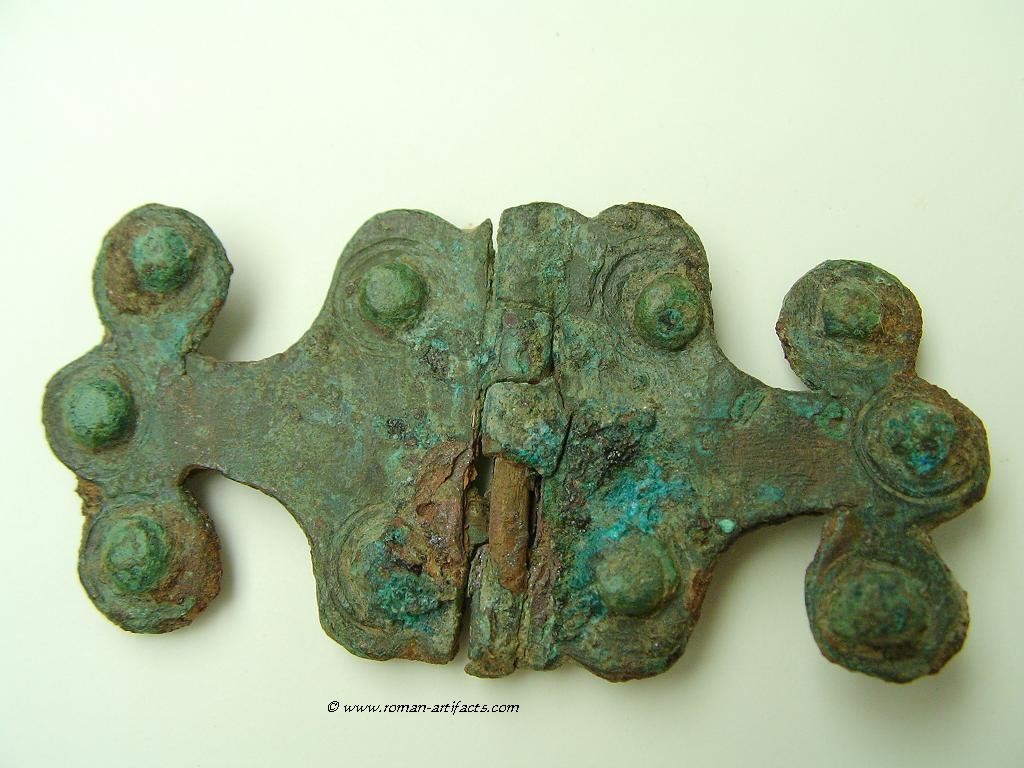
I've heard that they apparently date back to ancient times.
But to me, a hinge seems like a pretty complex (relatively speaking) piece of hardware. I mean, it's got a pin that essentially floats inside a 'barrel' and is able to rotate to a certain extent, and the mounting plates are strong enough to suspend a door. It's all metal - everything seems very specific and standardized.
Granted, I don't know exactly how hinges work. The one I described above might only be the modern hinge made possible by standardization in things like pin diameter, thickness, ability to fit into the barrel and float, etc.
What other hinges existed? How were they made possible without standardization (or how could they have been; extrapolating from what sources say)?
Update: Yes, I know that hinges use a pivot, but how was a pivot made possible? I thought that filing and handwork would require so much precision, just to make the pivot positioned perfectly enough to rotate so perfectly and everything. I figured that the way it was suspended would have taken some weird ingenuity at least.
I can't really explain my fascination with this specific subject, lol, but it's there.
I'm not sure I understand the problem. The pyramids were constructed in the Bronze Age. We find complex, extremely ornate jewelry and metalwork from the Bronze Age on. I don't see why the complexity of the object makes any difference, ancient people weren't stupid and they weren't unskilled. In any case hinges really aren't that complicated, they're basically a pivot around which two plates rotate. They don't even need to be made out of metal, and they don't need to be small--there's evidence of door hinges that consist basically of the entire edge of the door being a cylinder into which a pivot is fixed. Nor do I see why standardization would matter--why would all hinges need to be the same size and to have parts the same size? It's enough for an individual hinge to work, why do all hinges have to be the same, how does that affect the operation of the set of hinges holding up my bathroom door?
Hinges go back at least to the Egyptians, the British Museum has a rather nice bronze Egyptian door hinge. Greek has several words for hinges, but in Latin the word is cardo, which also means a pivot. Hinges are extremely common in antiquity. Here's one from a suit of armor. Here's a drawing of four bronze Roman door hinges in the British Museum. I'm not really sure of getting the question
Ancient metalworkers were perfectly capable of making complex metal fittings for doors, including hinges and locks. However, this took a lot of time, as everything had to literally be made by hand using a hammer and file. They were usually made of wrought-iron and much bigger and heavier than modern hinges for the size the door.
Early hinges would be a simple iron pin that sat in a fixed stone or iron socket, with multiple pin-and-sockets set along the inside of the door as needed to support the weight. This obviated the need for a complexly-formed cylinderical "barrel", at the cost higher weight and needing to be cleaned and oiled regularly.
By the high middle ages, the all-iron hook-and-band hinge had been invented. Here's a link to a British company that makes reproductions for use in modern renovations.
More common were simple leather hinges, although leather hinges seem mostly to have been used for boxes, chests, and other containers. I've been unable to find a substantiated instance of leather hinges actually being used architecturally, though.
hi! You may be interested in a related post from last year
Since it's been archived, if you have follow-up questions for any of the users, just post them here and mention their username to notify them