Right now in Syria armor add-ons are very common, You can see them here http://imgur.com/a/sQQ4Y
How common and what kind would we see during WW2?
In the case of the US Army, add-on armor for M4 Shermans was very common, especially towards the end of the war (fall 1944 and on) when the Americans began to face larger numbers of German medium and heavy tanks (Tigers, King Tigers, and Panthers) with long-barreled high-velocity guns.
Through the end of 1944, uparmoring was limited to the decisions of individual crews
The practice seems to have initially begun in Normandy
Piles of sandbags seemed to be most popular. They can also be found on tank destroyers. While not really "armor", it was hoped that the sand would deaden the impact of German shaped-charge warheads like the Panzerfaust and Panzerschreck. They were thrown onto the front glacis like this
The 14th Armored Division (at first assigned to 7th Army, later to 3rd Army) that entered combat at the end of November 1944 developed standardized mounting systems for sandbags at the beginning of 1945, putting them in frames on the hull and sometimes the turret. This forced the unit markings onto the gun barrel, another 14th Armored Division trademark. Many other 7th Army units like the 191st (some quite extensive and borderline absurd sandbagging here) and 781st Tank Battalion also used sandbags in this form.
Sand is very heavy, and it overtaxed the suspension of the Sherman while providing only minimal protection. The use of sandbags in Third Army (which the 14th Armored Division was later transferred to) evidently made General Patton quite upset!
While also not really "armor" concrete was also used for the same purpose, and was again only marginally effective. It was also used in the Pacific to defeat Japanese magnetic mines. Sandbags and concrete were generally not effective at stopping German antitank rockets, although there were a few (rare) instances where they did work.
Even M4A3E2 "Jumbo" crews with their 4 inches of sloped frontal armor capable of turning away 88mm hits were apprehensive, and many used concrete and sandbags as well! This undoubtedly seriously overtaxed the already burdened suspension. This seemingly defeated the purpose of the new high-capacity wheels (D52861 and D78450 "concave" and "convex dish", and D52876 "closed spoke") developed for later (intended for 76mm turret vehicles due to their heavier weight) Sherman variants! Contrary to popular opinion these wheels were not "Jumbo-specific"; they were introduced in production during the summer of 1944 and could be found on both 75mm and 76mm Sherman from the fall of 1944 on.
Concrete on a 750th Tank Battalion Jumbo
Sandbags on a 743rd Tank Battalion Jumbo tied down with a camouflage net
The first systematic attempts (higher than the division-wide level) at up-armoring came in 1945. In February 1945, while licking their wounds from the Battle of the Bulge, Third Army decided to do something about armor protection for their tanks. Local French and Belgian steel firms were contracted to manufacture up-armoring kits made from armor plates of knocked-out Shermans. The whole plate, headlights, lifting rings and all, was simply cut away and welded onto the front of another Sherman! Two pieces (often from a side armor plate) were cut to cover the transmission, the top one bolted on, the bottom one welded. Sometimes but not always, like in the photo, additional armor pieces were cut to cover the turret sides. This program was not meant to produce "ersatz Jumbos" (Zaloga calls this term "hobbyist baloney") but rather to get rid of sandbags once and for all.
About 108 of these kits were manufactured, and distributed 36 each to the 4th, 6th, and 11th Armored Divisions. In addition, the coaxial .30 caliber machine gun was sometimes replaced with an aircraft .50 caliber machine gun.
The 9th Army and its associated tank units around this time also developed an armor of their own; a layer of steel tracks welded to the glacis, covered by sandbags, and tied down with camouflage netting.
Units that weren't part of the above programs often went their own way. Here is one 3rd Armored Division (1st Army) Sherman with an appliqué plate on the turret that looks to be cut from the turret of another Sherman
Sources:
Sherman: Design and Development, by Patrick Stansell and Kurt Laughlin
Armored Thunderbolt: The US Army Sherman in WWII, by Steven J. Zaloga
Armored Victory 1945: US Army Tank Combat in the European Theater, by Steven J. Zaloga
http://www.100thww2.org/support/781.html
http://the.shadock.free.fr/sherman_minutia/
http://www.history.army.mil/documents/ETO-OB/ETOOB-TOC.htm
http://www.network54.com/Forum/47208/thread/1011032200/Sherman+Jumbo+(with+full+name)
It's also worth noting that pretty much all the attempts to put this stuff on the tanks actually made matters worse, mechanically. They provided necessary stand-off distances for the primitive shaped charge rounds, or normalized kinetic energy rounds. In order to make the tank sufficiently armored to provide a meaningful level of protection, the tank would be seriously overburdened and mechanically unreliable. The official recommendation both from the US army and German Army engineers was to avoid the practice of putting anything else on the tank, be it sandbags, track links, concrete etc.
However, the crews felt better, and if the psychological effect make them more aggressive and willing to get into combat, most commanders ignored the recommendations of the experts and let the crews do what they would.
If you go to about two minutes into this video, you'll hear Zaloga and Doyle talking about the issue for the next five minutes.
Regarding German add-on armor, the following concepts were used to increase general protection or protection against a specific weapon:
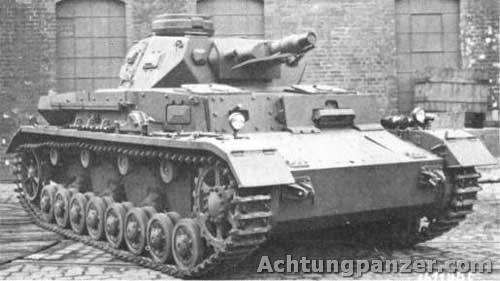
Additional armor plates (sometimes known as applique or layered armor) was used to increase the general armor thickness of a tank. All kinds of early- to mid-war tanks were uparmored that way and the additional plates were welded and later bolted to save time and prevent poorly done welds right away.
It should be noted that two armor plates were inferior to a single plate of the same thickness, so a new series of tank chassis was usually constructed using single, thicker plates and additional armor was for older models.
Spaced armor, where one plate is placed at some distance infront of the other, was only used on a few specific tanks like the Panzer III. Its original purpose was to defeat British high velocity rounds but depending on its thickness, may even defeat explosive rounds or shaped charges.
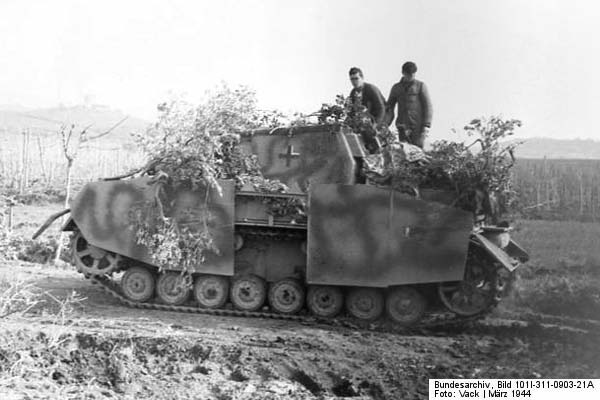
Schürzen (side skirts) are a special kind of spaced armor, usually only 5mm/0.2in thin. They were designed to stop Soviet anti-tank rifles but also proved to be effective against explosive rounds. In fact, these skirts were so effective that Germany canceled an entire production run of a new medium tank since a newer tank design was no longer needed (Panther II).
Thomaschürzen (mesh skirts) which replaced the normal solid steel Schürzen later in the war had the same properties but were much lighter. They were actually available right away but required a different mounting system which would have interrupted tank production.
Contrary to popular belief, Schürzen were not meant to protect against shaped charges like modern cage armor does. This might have been a side effect but I haven't seen any evidence yet. Thicker spaced armor (like in the paragraph above) was definitely capable of stopping/hindering shaped charges.
Improvised armor such as concrete and track links were applied directly by the crew. However a directive in 1944 banned all improvised armor due to the added weight and the general concern that it may even decrease effective armor protection.
The only real benefit probably was increased crew morale.
Other measures to increase survivability include Zimmerit coating, an anti-magnetic paste that was applied to the entire tank's surface to prevent magnetic mines sticking to it.
Although being a fairly late war invention, tanks produced even later in the war were no longer covered with Zimmerit to save on resources.
Sources:
Panther & its Variants, 1993, Walter J. Spielberger
Panzer Tracts 3-3, 2009, Hilary L. Doyle & Thomas L. Jentz
Germany's Tiger Tanks, 2000, Hilary L. Doyle & Thomas L. Jentz
WWII Ballistics: Armor and Gunnery, 2001, Lorrin Rexford Bird & Robert Livingston
Nachrichtenblatt der Panzertruppen Nr. 15, September 1944. Berlin: Generalinspekteur der Panzertruppen, 1944
A couple of notes with specific regards to the Syrian armor pictured by the OP:
The Syrian tanks are depicted with slat armor, which is very different from most WW2 add-on armor. Slat armor is a very light armor that's meant primarily to help defeat light anti-tank weapons, especially rockets like RPGs.
Ironically, the only WW2 army to use add-on slat armor extensively was the Wermacht, who added a "schurzen" skirt armor attachment to some of their tanks. And I say ironic because the army to make most extensive use of anti-tank rockets in the war was the Germans themselves (with their panzerfaust/schreck). It's this same weird irony that had the Germans applying anti-magnetic coating on their tanks when they were the biggest users of magnetic slap-on mines.