In my British Art History class we were discussing Thomas Lawrence's Pinkie and the professor mentioned that there has been speculation that Sarah was of mixed heritage but very fair skinned, which led to her nickname of Pinkie. Is there any concrete evidence to suggest this?
The short answer is: we don't know for certain, and it isn't implausible that Sarah was mixed race, but it does seem to be unlikely. Mixed race children are common in the Caribbean and are often recognised as such, but the dynamics of Sarah's life seem to make it improbable she was the product - however distantly - of such a union. I suspect the idea is rather fanciful.
First, we know for certain the identity of her parents. Her father (Charles Moulton) was not a plantation owner but rather a merchant; in marrying Sarah's mother, he stood to gain socially within colonial society. Sarah's lightness of skin and her father's professional background make it unlikely that she was the product of an illicit union, particularly because she was the first child of the marriage. Her mother Elizabeth belonged to the Barrett family (the same family the British poet and anti-slavery activist Elizabeth Barrett Browning belonged to), who were wealthy and successful plantation owners - by the mid-1700s the family estate included around 2,000 slaves - on the border of modern-day St. James parish. Furthermore, Charles left Elizabeth at some point when Sarah was very young, and she was raised by the Barrett family; it would seem unlikely in my mind, then, that she was born to anyone other than Elizabeth if her family were willing to step in (and we know her grandmother Judith was very fond of her).
Incidentally, Moulton himself may have gone on to have children by a free woman of colour; parish baptism records indicate a mixed race child of that name was born in 1821 not too far away from where Sarah would have been raised, which may be a grandchild of Moulton. His marriage to Elizabeth had broken down by 1789; a child born to Moulton in that year would be 32 by the time the Moulton baby of 1821 is born. It is conceivable that an affair with a non-white woman may have been a factor in the ending of the marriage - of course, it could as easily be no relation at all.
Now, colonial laws in British territories generally took their initial inspiration from Barbados, and Jamaica was no exception; much like in Barbados or the United States, a child's status was determined by their mother's status. Although certainly relations between white women and enslaved black people did happen, they are significantly rarer than those between white male planters or overseers and black women; the children of such unions being, of course, slaves. If she was of mixed race heritage then, this heritage would have presumably come from her mother's side of the family, in the form of a slave child by a slave mother who was freed by her master/father, and adopted into the family. We have no reason to believe that Elizabeth was the product of an illicit affair of any kind, and records from the extended family indicate that Sarah's grandfather was a man deeply concerned with his reputation and the status of his family name (so much so he would not let anyone without the family surname inherit his wealth); it is doubtful that he would have have taken a wife who was not clearly and firmly white.
Furthermore, Sarah went to England with two of her younger brothers, Edward and Samuel. Edward and Samuel both inherited the Barrett family fortune because they were the only remaining legitimate heirs to it by the time their grandfather dies; they had been sent for schooling in England, along with Sarah, to further their education (the youngest brother, George, did not survive infancy). If she was in some way an illegitimate child, especially as a woman, it seems questionable in my mind if the family would have bothered with such an expense when they had a tutor for her in Jamaica already from England. The now-famous portrait was reportedly commissioned originally as a purely personal project for the benefit of her grandmother, who missed her after she went to England for schooling. There is nothing that I am aware of in the detail of her life then that suggests she was in some way not seen as authentically part of the family, nor is it clear how mixed race heritage would have been possible without it also being true of her brothers, whose racial heritage does not seem to be challenged (and one of her brothers is quite well documented).
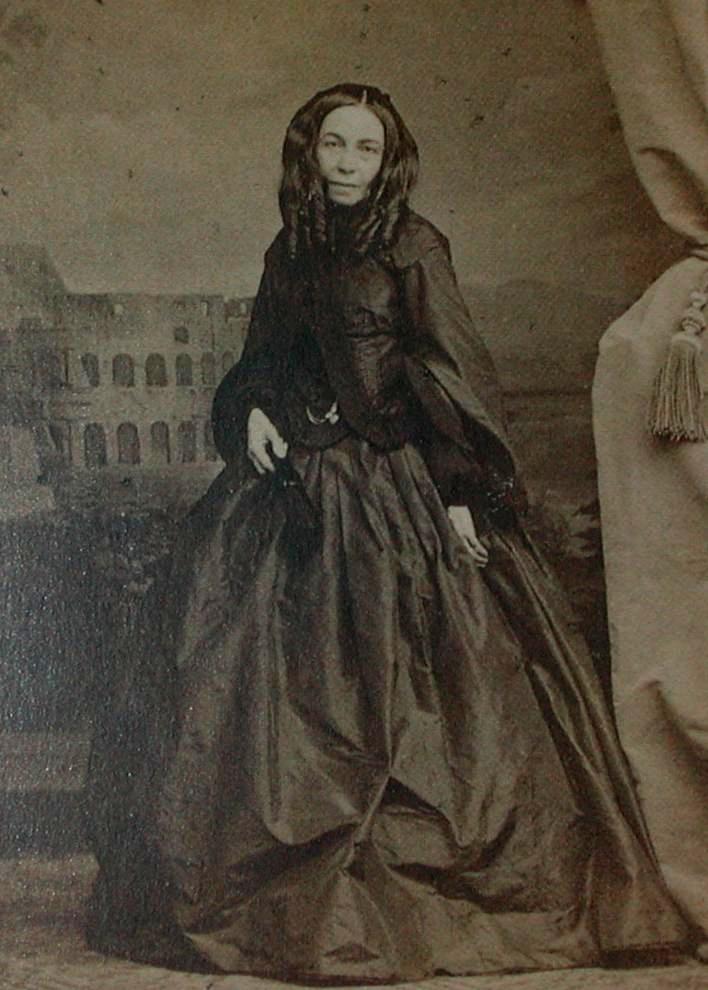
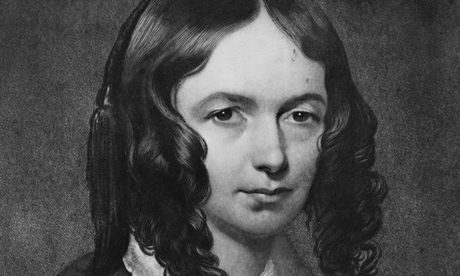
The suggestion I have seen made is that it was Elizabeth's father, Sarah's grandfather, who may have had a mixed race relationship; that could be conceivable, particularly if the relationship was with a woman who was herself mixed race (in which case Sarah and her brothers would have stood a very good chance of being very pale skinned and white-passing). But that still seems a little unlikely to me. I remember seeing this claim alongside the idea that Elizabeth Barrett Browning looks very different in photographs to portraits, and that she looks more 'exotic' in the flesh. Honestly, I am unconvinced. And again, her grandfather was a many deeply concerned with family heritage and name by all accounts, yet there is no indication that she was in some way illegitimate. Similarly, another one of his descendants of the same generation, Richard Barrett, went on to sit in the Jamaican legislature and achieve prominence within it - he was certainly accepted as white by white society. We also can say with confidence that Sarah's grandfather himself was not mixed race: under Jamaican law at the time, he would have been ineligible to inherit most of his father's property and wealth.
Additionally, I would note that Jamaican society was especially unkind to women of mixed heritage. If Sarah could pass as light-skinned and her family were so fond of her, it seems very unlikely they would have given her the nickname 'Pinkie' to highlight a racial heritage that would severely disadvantage her in life in finding her a husband of the right station; more likely, it is to do with her blushing complexion you can see in the portrait, or the manner in which she was dressed.
Whilst it is plausible that Sarah was of mixed race heritage and that her family were merely fully loving and accepting of her, it seems unlikely that she was in reality. She was the eldest child, her heritage would have almost certainly had to go back through her mother and show up in her brothers as well, something for which there is no obvious evidence. Likewise, her grandfather was a slave owner with considerable interest in preserving the family name and integrity, yet her grandmother seems to have been deeply fond of her.