To be clear, the distinction I want to draw is NOT between flair and not-yet-flaired. I'm interested in hearing from people who have no formal training in history or a closely-related field, at any level (including undergraduate or career-only, well, beyond required intro classes), and don't plan on it.
If you are interested in "history in general," I'd love to know what draws you to the past and especially to hang out in this sub.
Thanks!
So, /u/BritainOPPlsNerf is a friend from online gaming. He would constantly be destroying me in the game Napoleon Total War. So I decided to do what work for me in Rome Total War, study the tactics.
By studying the tactics, I got deeper and deeper into French history. Now I don't do the military part of my flair that much and more so the France part.
I also love France.
I think I've told this story before on one of the AskHistorans Podcast episodes I guested on, but I attribute my Aztec interest to a sort of "library inertia."
Towards the end of undergrad, I was already so used to a routine of "get up, go to library, study," that I found myself mechcanically dragging myself to the library every morning even after I graduated. By the time the coffee kicked in enough for me to realize that I didn't have a paper due, I had already found some book to interest me.
My undergrad background is in anthropology, and my archaeology professor was a Mayanist, so I already had a lot of Mesoamerica in a broad sense. But I was far too cool and hipster to study the Maya, because it seemed like everybody was doing Maya stuff. I instead started gravitating towards other Mesoamerican groups: the Olmec, the Zapotecs, the Toltecs, etc.
I ended up flipping through an overview text on the Aztecs from the 70s, Brundage's Rain of Darts: The Mexica Aztecs, and was instantly hooked. One thing about Mesoamerican history is that a lot of it is not History, in the sense of contemporary written records; it's post-holes and pot-sherds. The archaeology is fascinating, but there is something of a missing element of human drama in looking at ceramic horizons.
The Aztecs exist in a sort of protohistorical state where we still don't contemporary written records by them, but we do have this sudden explosion of literature from the 16th Century onward. We have writings by and about them, their habits, customs, and history, in a way we don't really have for the older Mesoamerican groups.
Aztec history is vivid, personal, and dramatic, in a way that Classic Maya glyphs laying out lists of conquests are not. I think anyone who is interested in history would admit to how those aspects of history can easily draw even a casual reader into serious study. At which point you will switch over to more proper study of political-economy, historical ecology, postmodern textual analysis, like a serious pipe-smoking history curmudgeon, only sheepishly admitting you like a good story too.
Total war, Civilization, and most of all, Paradox games have been influential- and have been since my youth. Also, I used to read a lot of fantasy and fiction in general (I'm still half way through the Malazan series)- but somewhere in time my interests shifted from fantasy to history because history, I came to find, is actually the more fascinating genre by virtue of its non-fiction status. The fact that history aims to be truthful increases its value to me, but regardless of the truth, history as a narrative just tells an amazing story- the greatest ever told i'd say.
With my traditional interest in pirates, privateers, and other nefarious sea borne ne'er do wells, it came from a video game as a kid.
Sid Meier's Pirates!. While the game for an old school Commodore 64/Apple IIc game was state of the art in that it was open world and very immersive, there was one part of the game that has become a relic of the past.
Back in the day, there was no copy protection for software for the most part. Any floppy disc could be copied numerous times, and with the cost of games being prohibitively expensive for people, it was common to have a large library of pirated (ha!) software in a huge box like recipe cards. Often you would want to make copies of legit software because the old 5.25's could be bent accidentally and cause the floppy inside the thin plastic protector to rub against the case, destroying it.
Well, in order to combat this type of piracy(ha!), MicroProse, came up with an ingenious solution. In all of their games, they would include a booklet that you would be prompted early in the game to cite something from. In this case, a table of when and where the Treasure Fleet or silver train would be located at different times of the year during each of the games scenarios. If you failed to cite correctly, the game would instantly become impossible to play as the difficulty would make it impossible to complete the most basic of tasks.
That wasn't all that these books contained. What we would call collector editions to games, with their included maps, trinkets, and other collectibles, were actually kind of standard for premium title PC games in this era. In this case Pirates! included a map of the Caribbean, but the booklet (as you can see in the link) was not only a game manual, but also was a short history of the Caribbean and piracy. It gave short blurbs about major settlements, descriptions of ships common to the era, famous pirates, descriptions of the various time periods which were presented as playable scenarios, etc. From this little video game booklet, a whole world of sea dogs were opened up to me. While the booklet was simplified and therefore got a few details wrong, it was just as good as any young reader history book about the subject out there.
tl;dr Video games got me into history.
I'd guess my reason is pretty common... my Dad was into it. Grew up surrounded by WWII books, in particular the Third Reich, got into my late-teens and just started reading it. I went off a bit from the old man, got way into Third Reich politics, economics, world relations, etc, where he is really well versed in battles and overall war strategy. I studied the Eastern Front extensively where he usually knows more about the Western Front and America's involvement.
So yeah... the old man's obsession with WWII lead to mine I guess. I studied Rome a ton when I was younger so had an interest in history, but the only "specialty" I have is Germany WWII.
I am a regionnal geologist and have been quite active in regional projects with a strong geochronological/stratigraphic/structural component. Geology is considered a historical science, and some of the places I've worked are messes, and require a lot of thinking about relative vs absolute chronology, degrees of certainty and relative reliability of data from different sources. Much of those préoccupations are readily apparent in historical enquiries, which I find interesting as a result.
I grew up in Québec City, which might be called a living museum; the imprint of history is rubbed in your face everywhere you look. I was classically schooled, as they say, which included Latin and Greek institutions back in the day, and develloped an interest in classical civilisations which has always stayed with me (I remember reading Herodotus under a tent in the arctic to the sound of falling sleet... good times). Growing up there also nurtured my interest in the history of New France and it's neighbors. It has also brought to my attention the interplay of physical determinants (such as geology) and history. For instance, my teachers pointed out that when the british led their successfull assault on Québec City, they climbed up a very specific place in the cliffs, where a small faulted fold creates a gully which allows a relatively easier climb. Can't help but wonder how important that otherwise insignificant fault was in the greater scheme of things. Another thing I find fascinating is the progression in the selection of rocks as building materials, starting with the construction of some of the older parts of the city adjoining the river built from European rocks discarded as ballast along the shore.
Finally, I spent quite a lot of time in northern regions where I had dealings with aboriginals (mostly Cree and Inuit). They showed me quite a lot about living out on the land, and their traditional practices, their oral history and their current realities. This got me interested in native history.
Edit: typos.
Well, my mother was a solicitor in criminal and immigration law, and she would tell me stories about clients (obviously keeping their identity hidden). Some clients sounded horrible, but most of her clients sounded just horribly human. I was interested in history for a variety of reasons, but I think that really made me think more about dehumanisation, social welfare and other problems connected with crime. I'm now hoping to go into social work and I'd say it's partly as a result of that.
One issue deeply connected to crime and the history of crime is capital punishment. My own country has abolished it but I had relatives living in countries with capital punishment, which both fascinated and terrified me because it seemed almost unreal. My grandparents were involved in the campaign to abolish capital punishment and two relatives of mine had been executed for political reasons. I'm not particularly interested in what many questioners here ask- although I don't mind and absolutely would encourage questions about this topic- which is about gore and methods, rather about the abolition and process towards abolition of capital punishment, and about the different experiences of different communities and people with capital punishment, for example, minorities in the history of capital punishment. How were Victorian Jews subjected to or sentenced to capital punishment differently? How did Victorian Jews tend to see, write about and talk about capital punishment? How did the wider media see Victorian Jews in connection to capital punishment? Originally, that started with me simply wanting to look for people a bit more like me. To use the Victorian example, when talking about capital punishment in Victorian Britain, religious imagery was not uncommonly used, specifically Christian imagery. That was not something I was familiar with or felt any connection to, so I wanted to look at how perhaps Jews used Jewish religious imagery. This led me to look into ideas of the sub-altern and so on, and from there onto other minorities, particularly the Irish and also Irish Travellers, but it started with the very basic desire to feel connected to the people I was studying, and that led onto interest in how familiar ideas and not so familiar ideas surrounding the same subject were expressed by different people, different societies and within different contexts. How was execution written about in 20th century Ireland? How was fear of death expressed in poetry by the condemned in colonial India, in colonial Nigeria, in colonial Jamaica?
The experiences of the minority within the justice system is something deeply relevant for today, which has only increased my interest.
Seeing how people have justified or thought of execution in different contexts is just a small insight into how people have thought of death, of religion, of law, of order, of societal structures, of gender and so on. It is something very small but tended to capture people from the highest Lord of the land to the poorest thrall. It allows you to learn about the poverty, oppression and hopelessness of certain times and people, of fraud and financial woes in others, and so on. The history of capital punishment is so closely intertwined and interlinked with everything in every society which had ever had capital punishment, and that's what really interests me.
I also blame Horrible Histories.
My family background is largely Scottish, so I've been "aware" of Scottish history for most of my life. I avoided it, though, because everyone in the area had Scottish history, so they always focused on it whenever family history research projects came up. I always went with Scandinavian. Much more exotic.
I also used to work as a proofreader and one day came across a copy-paste error stating that the national anthem of Paraguay was "God Bless Uruguay". Doesn't take a genius to notice that error, so off I went to Wikipedia to find out what the national anthem of Paraguay was. (Incidentally, the national anthem of Uruguay isn't "God Bless Uruguay" either). Wikipedia is fun, so I went ahead and read the entire list of national anthems. Listed for Scotland was "Flower of Scotland" which a) I'd never heard of and b) didn't match with what I knew, which was "Scotland the Brave." (Also, this is a political question...)
So I looked it up, found the Corries, like traditional/folk music, and started listening. They did a lot of contemporary Jacobite songs, as well as modern songs that references the Jacobites (this is also a political things). They were confusing, though, and it was really hard to figure out what was going on. I went to Wikipedia, but that was worse.
Meanwhile, I got sent on mandatory training at work that I should have been exempted from (due to it being a topic heavily related to my undergrad). It was, predictably, boring and I finished the work immediately. So I started telling myself a story to pass the time, using 18th century Scotland as a setting since I'd been thinking about it. 8000 words over the course of two days and the start of something bigger.
So I bought a book off Amazon for research purposes and found a totally different view on Jacobites. That led me indirectly here in search of answers, but no one knew anything. I did, however, get tips about researching and resources as a layperson and dug in as best I could, trying to answer my own questions. Pretty soon, I actually could, and could answer others' questions as well.
In summary, family history, a weird typo, boredom, and creative writing.
Edit: Nonsensical typo
I am a huge fan of Paradox games, and since they are essentially sandbox history, when I started out as a beginner I tried to replicate some of the great conquests (Germany's European Conquest in HoI3 or British dominance in EUIII).
Needless to say, I failed spectacularly in my first few attempts and this got me thinking about how these things were achieved in real life when I couldn't do it in a game. So I picked up a book about WWII that focussed on the military aspects of the war.
Nowadays I spend more time reading about historical wars than actually playing the games (although that will change when HoI4 comes out). And I lurk around here cuz you guys are incredibly knowledgeable about conflicts in general.
Well my family has a history of ill Mental Health but that never really interested me nor did I really care to educate myself on the vast topic to understand it, I was much more into Computer Science.
Then a few years ago when I came to choosing what subjects I wanted to study for GCSE's, having already chosen my other options, for my final option I had to choose between German, Home Economics, Psychology & Geography I wanted to choose German but at the last minute there weren't enough people for German to run so I choose Psychology.
The first year of Psych was fairly mediocre but then the second & final year we learnt some really interesting ideas & I started to connect the dots between how I was current feeling, my family history & the wider perspective of why we are the way we are. Now I do something completely unrelated but Psychology will always be a strong interest.
And now I love Psychology, Languages & History and am completely uninterested in CompSci.
So /u/sunagainstgold, what got you interested in your specialty?
I'm really into statistics and LGBTQI rights. One day I read Sex By Numbers, which goes into sexuality research, so I'm trying to read up on all the late 1800s-to-1930s sexuality researchers I can get my hands on.
I'm currently trying to learn as much as I can about Magnus Hirschfeldt and Weimar-era sexuality.
My grandfather bought some land at a lake in the 1950s, and built a cabin there in 1962. I grew up going to the family cabin, which collapsed on itself in 1990 and was rebuilt as a house, so I have always been around water and been interested in nautical things.
My parents used to keep books around the house as surprises for me if we'd be stuck there on a rainy day. Sometime in the early 1990s, that book was Master and Commander and I was absolutely hooked. I went on to read the Hornblower novels and the Bolitho series and even JD Davies' novels (he is a good historian, not a great novelist), and the rest, as they say, is history.
My dad would always quiz me on the Civil War as a kid. It's crazy how that sticks with you.
Years ago I started playing a video game for Mount and Blade: Warband. With the game's massive modding scene, a team created a mod called Mount and Musket, a Napoleonic Wars themed mod. Eventually, this team was hired and asked to make the mod into an official DLC.
Anyways, upon loading the first version of the DLC (now called simply Napoleonic Wars), I was mesmerized by the uniforms and the organization the community has set up (ranks, regiments, companies, etc.). From there, I fell down a rabbit hole about the Napoleonic Wars, starting with uniforms and regimental tactics to reading diaries and studying maps from famous battles.
I was 10 years old in 2004, when my friend brought over a board game his parents had gotten him for his birthday. It was called Memoir '44, and it was a game where each player took control of a side in different World War 2 battles and tried to defeat the other player. All the scenarios were based on real battles, like Pegasus Bridge and Pointe du Hoc.
I went to the library the next day and checked out every book on the subject of World War 2 battles and tactics. 12 years later, I'm still fascinated by military tactics and how they've evolved over the years between different cultures.
I'm really into one-day classic road bicycle racing, and the Mecca for that is Belgium. After a while I became very curious where names like Brabantse Pijl and Scheldeprijs and Ronde can Vlaanderen came from.
That took me straight into the Eighty Years' war and the Thirty Years' war. I celebrate the birthday of Charles V each year.
My dad used to take me with him as he ran errands on Saturdays, and we'd frequently go by old houses and farms. He'd talk about his grandparents/uncles/whoever and talk about what crops they grew or animals they raised and learning to drive a tractor and whatnot. Often, there was nothing left of a farm but the house or a barn or foundations, and I'd daydream about what used to be there. And I'd wonder why they weren't there anymore. What changed? Why did all these folks up and move to the city, as was the common theme?
Later, I struck up a friendship with a local guy who wrote little local history books. He took me with him a couple of times when he'd interview old folks whose families had founded the towns all around where I was raised. Hearing these old-timers talk about what their farms smelled like when they were doing their chores or about getting from place to place during snowstorms got me interested in the context - how people got by day-to-day. And of course why they weren't on the farm anymore - when they left, and how the farms were broken up or consolidated, and I'd still wonder why that happened.
(It's always fun to hear someone tell you they can't remember anything about a farm or place, but if you ask them what it smelled like, it all comes rushing back.)
And that's led to my hobby - pick a thing - lately it's been an old flour mill by my house - and research the hell out of it. How big was it, how did it compete with other mills, how the industrial revolution changed milling, our diet, and the grain local farmers grew, which changed the culture of farming and led to my ancestors finding other work as they were driven off the farms.
So I guess I'm saying i was a curious kid and I'm still curious.
I became interested in papal history in the weeks leading up to John Paul II's visit to New York in 1995. I had actually attended his Wednesday audience at the Vatican in 1992 (he looked terrible; he would undergo surgery within a week) but I didn't become interested at that point. He had been pope for as long as I could remember and I realized that I didn't know who any of his predecessors were or what they looked like. I was also intrigued by the notion of an office that more or less has been continuously occupied for nearly 2,000 years. So I started looking into it a little. I also found out from a family history that one of my ancestors was a cardinal under Leo X.
I'm also interested in a few specific areas of maritime history: Caribbean piracy (Sid Meier's Pirates! on the Commodore 64 was my favorite video game as a kid), the Bounty mutiny (after seeing the 1984 Mel Gibson movie; I was far less taken with either the Clark Gable or Marlon Brando versions), and the Titanic.
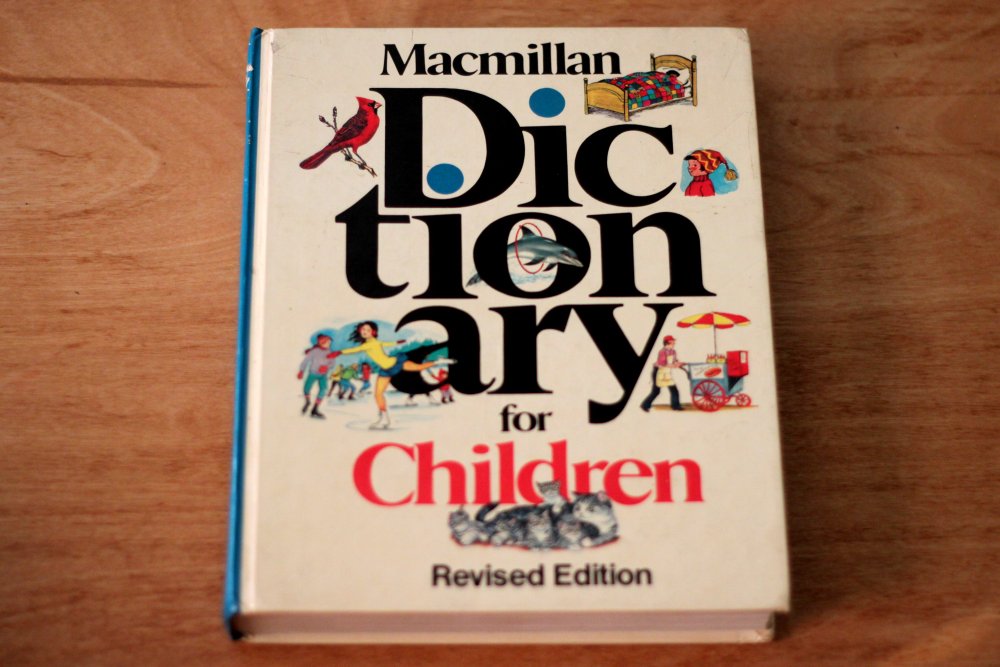
US Presidents: When I was about six I had a copy of the Macmillan Dictionary for Children and spent lots of time looking through the four pages of presidential portraits at the back. I've since visited the final resting places of about half of them (I got to McKinley's tomb after it had closed for the night so I don't know if that one counts).
My other interest is general US history from just before the revolution to just after the Civil War. I'm not too sure where that came from, or why I never really got into 20th century history.
Zero background in history, not in undergrad, in the home, really anywhere. However, I've always been a big fan of stories and storytelling. Not "novels" per se but how people craft narratives. I found Hero With a 1000 Faces more interesting than most of the works it applies to. This was a pretty short jump to looking at the concept how the victors write history, and how we love the pithy saying but it's rarely more than partially true.
It started with reading a lot of wikipedia articles, but then I kept questioning things ore reading accounts that didn't quite jive, so I started reading more kinda pop-history/anthropology (sup Jared Diamond, this subreddit's favourite author). The first bonafide "history" book I read for personal interest was Lovell's The Opium Wars. Then someone handed me a book by Simon Montefiore, and "History" pretty much became an interest of mine on that day.
I don't focus on one particular era overall, more I go through phases of fascination with different areas, either geographic or temporal, read a bit on it, and then move on.
I also work in the legal field which requires plenty of reference to past laws, cases, and precedent, and that can often spawn a digression. For instance, I've read a lot on the legal history of madness in the courts, and how Canada's rules surrounding "Not Criminally Responsible [by reason of mental disorder]" largely still follow the Not Guilty by Reasons of Insanity test and rules set out in 1843 in M'Naghten. Which, of course makes sense because our understanding of mental illness hasn't changed substantially since 1843.
edit: changed incorrect year on M'Naghten to correct year.
Korean history. My great aunt was a missionary in Korea, teaching surgery at Yonsei Severance hospital, one of the top schools in Korea. She is responsible for the first heart and lung machine in Korea. She also saved the life of one of the guys that rigged the 1960 election as well as operating on many students who were shot during the April Revolution. So I've always had a passing interest in Korean history.
I really got into it when I moved to Korea in 2008. I teach and many of my students had/have no real knowledge or appreciation of Korean history. These same kids go off to the army for mandatory national service. I started really getting into modern Korean history so I could try and impart SOME knowledge and understanding of the system that these kids were going to defend, but they really don't give two shits about it. I, on the other hand, have visited many tombs, shrines, temples, bunkers, and oberservation posts and have quite the collection of books on the subject now.
I love distance running. I've done a marathon and I'd do more if grad school gave me the time to run 40-60 miles a week (and if the weather where I live wasn't cold and icy and snowy 2 thirds of the year).
In high school this video was shared around my cross country team. I was flabbergasted. Persistence hunting was the coolest thing I'd ever heard about. It connected with my own spiritual feelings about running- running feels so primal, like I'm reaching the very essence of being human, and the idea that humans are evolved to run resonated with me. I also particularly like running long distances (10+ miles) in heat (100+ degrees Fahrenheit), which is weird even for distance runners (and dangerous! don't follow my example) but is also closer to persistence hunting as it's actually practiced.
(I'm a lot more ambivalent about the endurance running hypothesis now, but it is clear we're evolved to efficiently move long distances whether by running or walking, so the comfort I feel when my legs are moving still has presumably deep roots)
Since San peoples were the only people whose persistence hunting practices had been documented in any detail I consumed any information about it I could find. I eventually became interested in San peoples independent of persistence hunting (which is only sparsely documented among them anyways) or their status as foragers (which is not universal for San peoples). I'm an atheist, but the San monotheistic/dualistic cosmology has a poetic appeal to me and trance dances (and the associated rock art) speak to my love of music and art.
This interest then grew to include the related/overlapping Khoekhoe peoples (hence "Khoesan") and the wider history of Southern Africa, which also appeals to me because of the wildlife.
As for foragers, I study behavioral ecology (of birds) IRL and a lot of hunter-gatherer literature is written within a human behavioral ecology framework so it's easily accessible to me. I admit there's a rather unscientific romantic appeal too- I have ADHD and I've always been a weird guy who doesn't quite fit in, and there's evidence that some alleles that incur a risk for ADHD are selected for in nomadic and forager societies. As such, the life of a nomadic forager has an emotional appeal to me, even though I know how much harder it is than my American urban 20-something life.
Those are very emotional reasons to be sure, but hey, interest and passion are emotions. I think any intellectual pursuit requires a sort of Gray Jedi approach.
I am heavily involved in the Society for Creative Anachronism. Part of what we do is to pick a persona from a time that interests us and do a bunch or research on the history of that time period/person you create.
You would be surprised what people do in their attempt at historical recreation. From raising sheep, shearing them (using period-recreated tools) for wool, to drop spinning yarn to nalbinding, as one example. There are countless others.
I took an interest in 11-12th century Normans because of this. I read whatever I can get my hands on. To me it's fascinating to learn how influential they were on European history.
I was a young and impressionable child at the time of the Bicentennial of American Independence, when my family was living in the Washington DC area. It's hard to overstate just how much the Spirit of '76 manifested itself in the culture then. This led me to an abiding interest in American history and government, to the extent that I went to law school to study constitutional law and am now fortunate enough to be able to practice in that area as a government lawyer. That interest has led me to other areas of history, especially British history. I don't think you can understand the American Revolution without understanding the Glorious Revolution and the English Civil Wars, which in turn leads to other areas of study that lead to still others...
I have loved knights and armour since I was a little kid. So, I guess this is a childhood love that morphed into a more adult and serious interest. It started with picture books, then moved into better picture books like Peter Connelly books and Gravett's "The world of the Medieval Knight". I did school projects about the 100 years war when I was 11. I played tabletop RPGs and videogames, and I always picked the character with the heaviest armour and the biggest sword. When I was in highschool I got into reenacting (oddly, never joined the SCA.). That introduced me to more scholarly texts like Blair and Williams and also introduced me to the primary sources. I have been mining that vein ever since and trying to think more critically about method and Historiography.
Basically, this has always been my interest, now I just read more stuff with footnotes.
Thought I would answer even though I am a lurker and not a poster for this sub.
I first got into history as a kid because I was a huge bookworm. I started reading books from the Royal Diaries series for kids. They are written as if a diary by a female royal. Like most, I got into the more popular Elizabeth I and Marie Antoinette ones. I kept looking for historical fiction novels that were roughly this time period focusing on female royals. This eventually transformed into reading biographies of my favorites. In college I added history as a second major just because I thought it was fun. In the end, I would say I settled on using the understanding of specific individual's lives to achieve a broader understanding of the time period in general. I mostly focus on female figures because I find it especially fascinating to see how they accomplished things in light of cultural norms regarding women. For example, I would argue that Elizabeth I used the cultural norms regarding marriage to use herself as a constant bargaining chip in keeping good relationships with other countries. So she used that system to her advantage. On the other hand, Catherine the Great worked against that system to get rid of her husband and rule entirely in her own right, while keeping men subservient to her. In other words, she defied cultural norms regarding women.
I think a large part of my interest in studying individuals rather than time periods or events is due to my psychology background. I love people and trying to understand them. Reading a biography feels so much more accessible than anything else. Understanding how people interact with the world is what I want to spend my life doing, so I suppose I shouldn't be surprised that it's how I view history as well.
Since my younger years, I've expanded quite a bit from the more popular people to study (Elizabeth I, Catherine the Great, Marie Antoinette, etc) and started taking this more seriously as a branch of study by reading more than "pop" history books. Recently read Lieutenant Nun which, if you haven't read it, you definitely should! It's everything I love about history in one tiny (~80 pages) diary about a woman's insane life.
Apparently once I start posting I just can't stop talking! Figures. I will just add that, as an adult, one of the first things I made sure to collect was the entire Royal Diaries series. I credit them with starting me on this path and being the person I am today. Knowing and learning about history has made me feel far more educated and complete than anything else I've ever studied. It's crazy to think that this all came from reading a few young adult books when I was 10.
Once upon a time I was a young hoodlum serving time in drumheller Penitentiary. Got Baigent and Leigh's Holy Blood and Holy Grail, and The Messianic Legacy more or less at random from the library when it was apparent a lockdown was imminent. The books are both crap, and served as the basis for The davinci Code, but piqued my interest in nascent Christianity.
I actually grew up across the street from Pamplin Park in Southern Virginia, surrounded by civil war history and with three ancestors having plaques on their wall of civil war veterans it was impossible for me not to become thoroughly engaged when A.P. Hill was killed by a union patrol less than a mile from my house. The study of the past has just fascinated me ever since. At this point I'm a huge Rome buff due to both my love of Rome Total War and Mike Duncan's "The History of Rome" podcast.
I guess I am technically pursuing a history degree now (Economic History) but I'm not there yet and I wasn't there when I first started browsing so I suppose I count.
My interest started with Paradox' grand strategy games (Europa Universalis, Victoria, Hearts of Iron, Crusader Kings), it's not so much an interest in history as it is an interest in the systems that govern our economies and politics and how those have played out throughout history, but also how they play out today. The grand strategy portion of the games is more interesting to me than the history portion, the latter is more like a vessel for my interest in the former.
I suppose I like learning about anything though, so I had some exposure to history from the documentary channel (and elementary school) and so on before picking up those games. I hang out in this sub because it has the highest quality answers and moderation on Reddit.
I saw grey toy soldiers that didn't look like regular green army men. I asked my grandpa what they were and he said they were German, I thought they looked cool so I always liked them. Now I'm a military history buff.
My father is interested in military history, which is why I have an interest in that.
My major interest is History of Medicine, which came from taking a course on it in my undergrad prior to that, I'd always thought I'd wind up doing my MA on military history. (Spoiler: I'm not). That course coincided with a course on history of madness and one on sexuality. All three were taught by lovely, engaging, and enthusiastic historians.
I sparked an interest in Canadian history when I learned about Thomas Darcy M'gee (his assassination anyway) and I realized Canadian history is actually kinda bloody and really interesting.
I am currently studying for my undergraduate degree in history, and I've loved the subject for as long as I can remember, going back into my childhood. My parents both love history too, so for me it was inevitable while surrounded by my father's fixation on the historic Native lifestyles and Custer's Last Stand, and my mother's love of Ireland and England (where we also have many relatives). In more recent years my mother has been hitting the books and archives hard, and this interest and hobby has trickled unto me too! Over the last year, we've uncovered so much more about a thought to be completely dead-end side of out heritage which comes from the Swedish part of Finland - thankfully, DNA science can solve many mysteries!
On that note, my mother had my father take a Y-DNA test because of our distinct surname which is not very Irish, although it is at the same time. I had done a lot of research to try and find out its word origin, and with the help of a university linguistics department member in Iceland, I hypothesized that it comes from an Old Norse personal name, or Old Norse place name (these were both the suggestions of the very helpful Icelander). In Ireland, a bio-technician and family historian with a PhD listed my surname on his website as one of Old Norse origins. I emailed him a few times, and he said although it was listed on his list, it is highly up to circumstance whether it was a borrow name, an actual Norseman's settling name, or other. Naturally I was so greatly intrigued, and it was soon enough that my father's Y-DNA test returned. To my luck it seems, the results came back with exactly what a lover of Vikings would want to see - that he was directly descended from them! Now I know to take this with a grain of salt, as one should with most history, but the test showed that a group of men in Norway shared their Y-DNA with my father, and a group of men in northern France, and with a few in Scotland and England. Now naturally, only those who have taken the test appear, so you could have more and more distinct relatives, but you would never know. What I did know so well though was the history of Viking movement. We know there weren't boats of seafaring Irishmen sailing to Norway, but rather the reverse. Although I can't really prove this ascendancy 100%, I feel that what evidence I have is empirical. In short, as a child who loved playing with Viking Playmobils and all that, this was like a surreal dream come true. I just find never-ending fascination with the fact that very possibly a Norseman sailed across the ocean around 1000+ years ago, and through him, I am here alive!
Now to plain "history" as a subject? I find it hard not to take fascination in so many of the things which surround and form our world! Why are we wearing shirts which look like this? How did guns evolve? Why do some of the hairs on my arm appear blond yet the rest of my hair is darker brown? Questions like this can all be answered with history - that, and I love artefacts, specifically old weaponry. It's hard for me to name my favourite period or historical peoples, but it's a tie between the Napoleonic European Empires and the Vikings & Anglo-Saxons. The samurai, the Ancient Greeks and Romans... everyone and everything has something utterly fascinating behind it!
Furthermore, my grandfather and his brothers all served in the Second World War, and my great grandfather, another gr-gr grandfather, and some other relatives served in World War 1. With so much family invested in those conflicts - the two deadliest of all time - it's hard not to find so much appreciation and fascination with those time periods. Appreciation that we aren't living in those times ourselves, and appreciation that they are over, and never to be forgotten.
Ancient Egypt for me. I've got tons of books on various subjects that I've gathered over the years. Lots of reading as a kid about the general history, hieroglyphs, and the religion. The closest to anything "formal" was a single ancient history class I took in college as an elective (though unfortunately the Egyptian portion only lasted a week).
I honestly don't even remember what first got me interested. I remember the popular culture stuff like The Mummy and Age of Mythology, but I'm sure I was already interested in Ancient Egypt even before those.
especially to hang out in this sub.
Interesting questions, high quality answers, and strong moderation that keeps the quality of this sub among the best on the site.
Tchaikovsky's 1812 Overture had cannons in it.
I was very young, only five or six, but I could operate the record player. I thought those cannons were the coolest thing.
Eventually, I asked my parents what the whole 1812 thing was about, and they told me about Napoleon.
About the same time, I happened to see the movie Waterloo on tv. That got me hooked.
It's not too outrageous to suggest that I may be the only kindergartener in Indiana who brought in a handmade map of the battle of Waterloo to show-and-tell. (And a little statue of Napoleon.)
Eventually, I moved on to "cooler" battles and wars with airplanes and battleships. Little boys are always interested in all the gory stuff; flame throwers, bayonets, machine guns. I used to make dioramas of battle scenes with little plastic soldiers and small trees and houses bought from the hobby shop.
I'm very glad that my parents didn't panic and take away all of this "violent imagery" from me. Learning about battles and wars led me into areas like geography and cartography, aviation and, when I got older, more sophisticated topics like politics and World History.
And of course, when you're young and want to read about serious stuff like wars, you naturally have to read books far above your reading level. That gave me a push and an advantage in every other class I had in school.
Eventually, my profession became music and literature, but, for my hobbies, I study the U.S. Navy and the history of the British Empire. (And, of course, the Civil War. Everybody studies that!)
But I really owe all of my intellectual chops to Napoleon, Tchaikovsky, and those awesome cannons.
I decided that I wasn't going to wait around for an opportunity to let someone else formally educate me, and I was going to do it myself. I started buying history books, starting in The UK, then working my way through Europe, to the Middle East, to Asia, then Africa, Oceania, and then back around to the Americas. So far I'm not even close to finished, but sometimes when I get burned out on a specific area, I'll throw in a random book from another area or time period, and it keeps things interesting. If you were to determine my 'area of expertise' I suppose it would be England from the 1100's to maybe the 1600s, but I can imagine that would change. I've become rather fond of Russian/Soviet history, as well as the history of genocide and ethnic cleansing. [In a purely educational way, I would never support genocide of course.] I'm fascinated by the way culture differences can influence people to the extent that they do things other societies can't even fathom. To me, the study of history is the study of our world, and I'll never understand the people in it until I understand where they come from.
I don't know. I have always liked the history of rome. It might have to do with the longevity of some civilizations.
For me it was World War I.
Just the concept of all these countries that I've always known as Democracies/Republics waging industrialized war while still being led by hereditary monarchies just strikes me as bizarre.
I've always been fascinated by it because that generation just has this weird mishmash of modern life and what most casual people view as a sort of "ancient" life style.
I love great stories. World war II was the easiest war to understand when I was younger and it had so many amazing stories that I got hooked. Eventually it expanded to a general interest in all history with a focus on World war II, the Roman empire, and the middle ages. I also really liked guns and other weapons and wanted to hear how they were used.
I'm an electrical engineer by trade but going back for my degree in economics.
I lived for a year in China for work, since then I've had an interest for East Asian history. I also like old maps, so I started looking for old maps of Asia and since then I've sort of specialized myself in the premodern era. I'm an engineer by trade so I have zero training in history, but I find deep satisfaction in educating myself and learning more about a field totally unrelated to my professional life. People have called it a waste of time, but I like to have my own backyard that interests nobody in my entourage. My Sunday afternoons spent reading and drinking tea are very refreshing mentally.
I'm an editor who spent a long, long time working for the tabloids (it was kind of a family vocation), during which I did a lot of researching and yes, even fact-checking on stuff we wrote about - which, in my case, ran from serial killers and weird crimes out to paranormal events, cryptozoology and (most significantly, I guess) Bible prophecy and claims of miracles.
I'd already had a graduate degree and done research in hermeneutics and film theory, so the religious stuff kinda stuck more than the rest. (I guess I do have some kinda-sorta training, but it was strictly liberal arts and not social sciences.)
After a while, I'd be reading commentaries on Zechariah or Daniel (or Bogomils or Essenes) just to make the weekly grind a little more interesting for myself - I don't think 90% of the readers cared nearly as much about some of the details I was plunging into as I did.
I mean, it'd also be possible to draw a line all the way back to Catholic school, or teenaged fascination with Robert Anton Wilson... but one way or another, the space I'm most interested in is the vaguely disreputable liminal space where unexpected things happen.
My story, I guess, would be relatively simple. When I was younger, I was already into military history, but I was more of the amateur World War II style, rather than anything serious. I was thinking I would remain a late modernist throughout my studies, but as I got the basics of ealry modern and the general formation of the concept of the Westphalian nation-state, I got dragged into that more and more. My degree was joint between international relations and modern history, so I enjoyed learning about the politicking and Kabinettskrieg of 18th century Europe. I also was really intrigued by the military aspects of the early moder, espescially the pike and shot era.
I'm not entirely sure why I ended up focusing on the Austrians and the Holy Roman Empire, but I think at least part of the reason is that I feel they get a short stick in much of English language history. As a kid growing up in the US, most of my education had focused solely on the Anglo-French rivalry and conflict, and the colonial aspect. When we did touch on Germany, it would usually just be a bit of how Prussia beat the Austrians in a few wars. Even when we got to focus more on Europe, it would usually be a vague mention of 'Habsburg domination'. Nonetheless, the Austrian Habsburgs really interested me, so I went into that.
Once I was into them, there was a lot to learn. The Holy Roman Empire as a whole tends to get written off with Voltaire's quote really easily, and its internal mechanisms don't get the focus they deserve. Learning about that, and this strange rule of Imperial law over the prines of the Empire really fascinated me, and helped get me where I am today.
Cold war history: wargame
Ww2 history: warthunder
I'm obsessed with :
The early origins of the railways in the Nineteenth century, from it's beginnings with Trevithick to Stephenson engineering the early lines (Stockton to Darlingon and The Liverpool to Manchester). This goes on to liking the railways in Britain up until the end of steam in 1968, which saw the closure of thousands of miles of track route - Looking up abandoned lines is interesting.
I also like the Victorians, the architechture, the breakthroughs, the innovation, the spectacle.
My favourite has to be the London Underground though, it was mental to even suggest putting the railways underground but they did it. I like Bazelgette too, for the sewer network which helped beat cholera.
My grandfather fought in WWII and litteraly never spoke about it. In the almost sixtiey years he lived after the end of the war he never spoke to his wife, his children, his friends, he didn't join any veterans organizations, he just by all accounts never spoke of the war. I knew he'd been an infantry scout with the 1/1 Marines so I started there. He was one of the great influences in my life, fostered my love of science and reading but there was always this one part of his life which I knew existed but was mostly a void. So, WWII became a hobby.
What drew me into history was the first Age of Empires and the Rise of Rome expansion. It was one of the first computer games I ever played and I was around 12 at the time. I became fascinated with the ancient world from it and particularly Roman history. The fact that the ancient world was so complex blew my mind, and to be honest it continues every day when I learn something new. I never studied history as a main focal point, but whenever I had a history class, whether high school or college, I excelled simply because I enjoyed the subject so much.
I'm big into the Pacific Theater of WWII, and to a lesser extent into counterinsurgency.
The Pacific Theater stuff really started in the summer between 10th and 11th grade, I went to visit my aunt who was living in Micronesia at the time. I stopped in Hawaii for a few days on the way there, and bought a couple books on WWII from the book store at Pearl Harbor.
Once I got to Micronesia (Pohnpeii, staying outside of Kolonia), I was blown away. I had always been into history, but to be in the place where the history was made just made it so much more real.
There are areas where the roads on Pohnpeii go around large round ponds in the flat areas of the island. These are bomb craters from WWII that just never got filled in. There are still a number of intact Japanese shore defense batteries and AAA emplacements, especially on Sokehs Ridge. There's even a small island in the lagoon that was hollowed out and turned into a float plane hanger, and has a pier where the little steam engine would carry planes out, lower them into the water, and then go back inside the fortified hanger until it had to go recover the planes.
I feel in love with the idea of the Pacific, the geography, the environment, everything. Hiking through the jungles made me realize how much it would have absolutely sucked to be one of the soldiers or marines in the books I was reading.
From there, I've been all about the Pacific. In college I majored in history, but eventually started to drift more towards political science (specifically security studies, insurgencies, and post revolutionary politics). Even then, I've been able work my interest in the Pacific into it. Last year I coauthored a paper with one of my old professors for the Western Political Science Association about the future of US grand strategy in the Pacific with regards to China (specifically in dialogue with the doctrines of Air-Sea Battle and Offshore Control). My old professor recruited me to help him with the actual force structure and operational levels of our proposal because he knew I understood the military and the Pacific, and how conflicts might be fought in the Pacific from my history background.
Mine was pretty recent. For as long as I can remember, I was a history buff. I blame my dad and the history channel (or the Hitler channel as I knew it). As time went on, I moved away from history and got interested in politics. But I always kept coming back to history. I loved the World War Two era, specifically the Nazis. But I hated how once I told people that I was interested in the Nazi's, they would look at me like I grew a horn out of my head.
So the years went on, and I found Dan Carlin's Hardcore History. To start off I listened to the World War One episodes, and I fell in love. I had no idea that World War One had been so influential and that we are still dealing with its ramifications today. So now my book shelf is full of World War One books, and I can't get enough of them. Thanks Dan.
World war II, military hsitory, political history, military aviation. This is because i grew up watching the military channel and owning military airplane books. Playing axis and allies made it even better.
Im reading the ian kershaw 1000 page biography on hitler (condensed). What are other great ww2 books?
I'm a lawyer with a science undergrad and very little exposure to history classes post high school. I was researching a legal issue one day and came across a decision from the Virgin Islands. I remember thinking to myself, "How is it that I've been an American my entire life and know absolutely nothing about the Virgin Islands?" And that got me thinking about how none of the history classes I'd ever taken had really covered anything in depth other than mainland US and modern European history. It's embarrassing to realize you know so little about the world. So I made a resolution that each year I would pick some historical subject I knew nothing about and then binge read on that topic for the rest of the year. I usually download every book list and syllabus I can find on the topic from PhD program websites and then make it a goal to read every book listed. It's fun, and I enjoy switching to something new each year.
I'm just a nerd who can't keep out of the library.
I used to spend summers at my dad's house in a tiny one stop sign town where I knew no one and never found anything to do during the day but bike around aimlessly and read anything I could get my hands on. This didn't amount to much of a selection; the public library was one tiny room and Dad just had some Tom Clancy and a backlog of National Geographic, the Economist, and Scientific American. When my mother moved, too, I became real good friends with a proper public library system.
I went to a science and engineering college, so that library kinda blew for everything outside its focus, but I didn't exactly need help keeping busy just then (and also was getting a lot of good sci fi recommendations), but I went to grad school at a big R1 and that's when I properly started in on history. It didn't hurt that I later married a history buff son of an anthropologist.
I actually kinda wish I had a real focus, instead I've just gotten on jags. The books I really remember sucking me in to topics early on are Island at the Center of the World and a little survey called Old English and its Closest Relatives.
More recently I was reading on Cossacks and the Russian Civil War because of some unbelievable stories passed down from a colorful figure in our family (Hey, here he is!), which led to Laurie Stoff, which was really interesting. I also somehow wound up reading and enjoying Hitler's African Victims.