I've searched around but only found one earlier post asking this question without any replies.
How did warfare between the different Mesopotamian and Sumerian city states work? Would they employ standing armies (which seems pretty expensive to me), would they look at the surrounding desert and mountain tribes for mercenaries, would they conscript the men? And what did the Akkadians and other empires use?
I can't really think of the most logical solution. I don't think there's one answer for all cities, but surely some methods were used more than others?
I'd also appreciate any literature you could recommend.
We know quite a lot about warfare from that period of time.
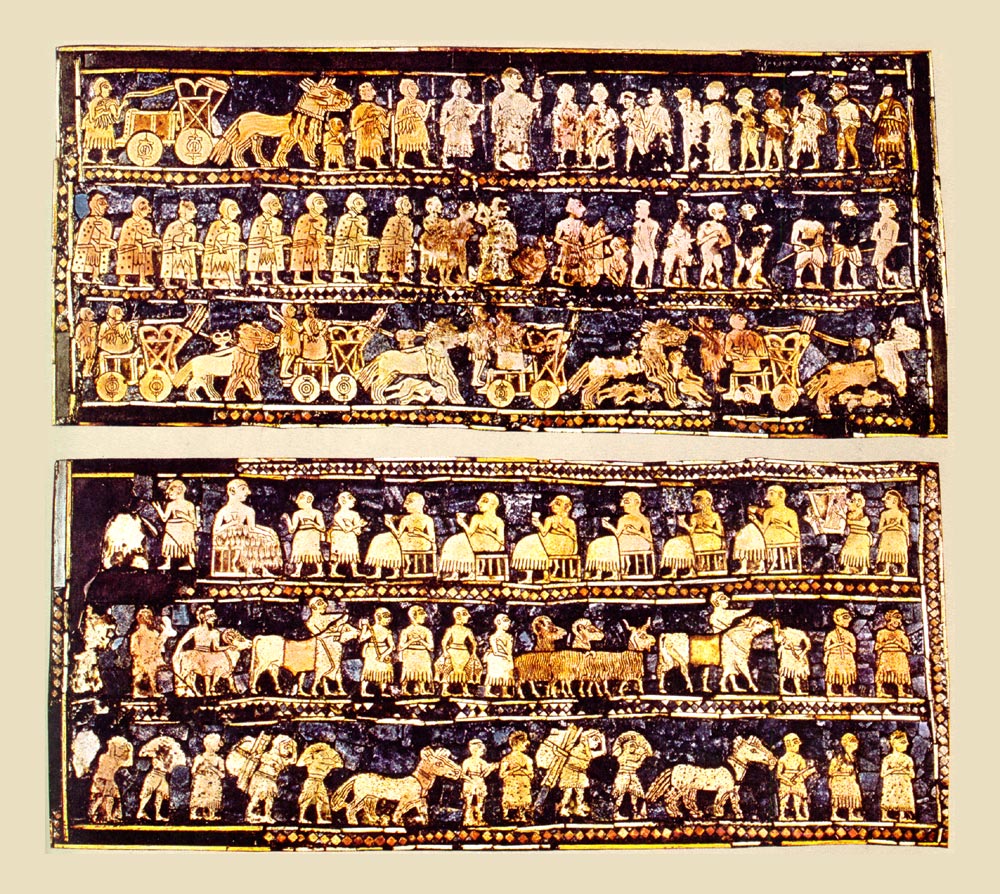
First of all, we know that they deployed infantry, and that said infantry was well trained to fight in formation. We know that they used an early form of chariot, and that his chariot/battle-cart was utilized for skirmishing. All of this is derived from artwork from that period, called the Standard of Ur:
http://www.antarcticaedu.com/artfirststandardurlarge.jpg
Note how on the top image to the left there are a row of men wearing capes. They are carrying levelled spears, and it is theorized the cape was studded and thus a form of armour. Additionally, the chariots/carts on the top image carry several javelins. Having numerous missile weapons implies they were meant to disorder enemy formations rather than charge into them.
In the realm of archaeology, we have numerous specimens. The Sumerians used copper spears, axes as well as sickle-swords:
http://sumerianshakespeare.com/117701/118301.html
Likewise it seems that the Sumerians were capable of deploying significant numbers of troops. Sargon of Akkad boasted he had 5400 soldiers, and these were apparently full-time professionals as they ate with the king daily, meaning he supported them with food. Other cities probably had a small standing force and called up farmers and urban residents as soldiers when needed as a form of militia. Keep in mind that, in regards to Sargon, 5400 was a small number compared to the rest of the population, but as a force in being they were unmatched since they could march on campaigns without needing to be mustered like levies.
Sources:
Warfare in the Ancient Near East to 1600 BC, by William J. Hamblin