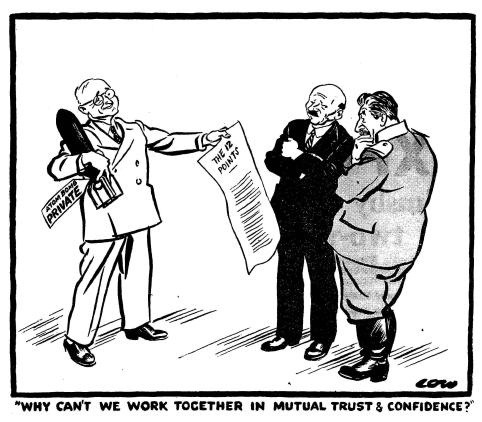
The UK was a major contributor to the Project, yet they became a nuclear power in 1952 3 years after the USSR became one.
The British did contribute to the research effort involved in producing the bomb, but their scientists were intentionally uninvolved in the physical production of the first atomic weapons. This was due to an adequately paranoid Leslie Groves, who was the director of the Manhattan Project. Not so much do to a distrust of the UK (and Canada), but for a desire to have a monopoly on nuclear weapons, which he felt would be increasingly more difficult if shared among war-time allies.
This was solidified by the McMahon Bill in late 1946, which dismantled the Manhattan project and replaced it with the Atomic Energy Commission. A non-military apparatus to control and oversee peacetime use of nuclear technology. More importantly in regards to your question, this bill also made virtually every piece of information regarding nuclear technology, atomic energy etc, completely classified even to our allies. This was lifted in 1958, after the UK had developed it's own weapons program.
"Churchill's Bomb" by Graham Farmelo is a good read on the subject if you are interested in learning more.
In his 3 Oct 1945 message to Congress Truman had ruled out sharing information about the bomb's construction, while proposing talks about sharing the science:
I therefore propose that these discussions will not be concerned with disclosures relating to the manufacturing processes leading to the production of the atomic bomb itself. They will constitute an effort to work out arrangements covering the terms under which international collaboration and exchange of scientific information might safely proceed.
In an press conference at Tiptonville five days later, the President invoked US spending on the project as support for keeping the technical know-how, saying of Britain and Canada:
It hasn't been discussed with them, because we have all the information so far as the practical know-how is concerned, but I am sure they would agree. You see, Great Britain started the program by the expenditure of about $100 million in the beginning; and when we got into the war, it was decided that it was such a great program and required the expenditure of so much money that nobody could do it but us, and that was true. We spent more than $2 billion in creating it.
He returned to the issue in his Oct 27 Navy Day address
As I said in my message to the Congress, discussion of the atomic bomb with Great Britain and Canada and later with other nations cannot wait upon the formal organization of the United Nations. These discussions, looking toward a free exchange of fundamental scientific information, will be begun in the near future. But I emphasize again, as I have before, that these discussions will not be concerned with the processes of manufacturing the atomic bomb or any other instruments of war.... The possession in our hands of this new power of destruction we regard as a sacred trust.
Others weren't too impressed with the "sacred trust": Britain's Low voiced displeasure at being left out in the cold after what many considered a joint project. Britain revived its own project in 1946, but recurrent economic and financial woes contributed to the long development phase.