Today:
You know the drill: this is the thread for all your history-related outpourings that are not necessarily questions. Minor questions that you feel don't need or merit their own threads are welcome too. Discovered a great new book, documentary, article or blog? Has your Ph.D. application been successful? Have you made an archaeological discovery in your back yard? Did you find an anecdote about the Doge of Venice telling a joke to Michel Foucault? Tell us all about it.
As usual, moderation in this thread will be relatively non-existent -- jokes, anecdotes and light-hearted banter are welcome.
I made the unfortunate choice yesterday of writing a detailed response to a badly worded question, which rightly got removed a couple minutes after I submitted my post. But I don't get the opportunity to answer questions often, and I did enjoy writing it. Some I'm going to repost it here, with a reworded version of the original question and some minor edits:
Why didn't the Portuguese colonise the Middle East?
The Portuguese did establish some beach heads in the Middle East. In the early 1500s, they occupied Muscat (1507), Hormuz island (1507) and Bahrain islands (1521). Their main objective never strayed from exploiting lands further east (India, for one) and they did not make major inroads into the Middle East, despite their colonial beach heads at three of the most important ports in the Persian Gulf.
By controlling Hormuz and Muscat (the latter of which they controlled the longest, for some 150 years), the Portuguese could effectively control an important east-west sea route, and had vital resupply points for the lengthy sea voyage to India. Bahrain, once conquered, was exploited economically. The island is in perhaps the single best location to farm pearls, of which the Persian Gulf was famous for in pre-modern times (and before the invention of cultured pearls in the 20th century). The Portuguese monopolised the trade of pearls, forcing all exports to leave on Portuguese, not local Arab, ships. This was a profitable trade, but the Portuguese by no means took steps to reinforce their rule and give it lasting power. There were no Portuguese settlers (though there was a garrison), no imposition of the Portuguese language, or "Portuguisation" of the culture. It does appear to have been purely exploitative, the Portuguese control was unstable and they faced rebellion and rival occupations of Bahrain and Muscat fairly regularly. In the early 1600s, a resurgent Persia under the Safavids, with the help of the British East India Company, occupied Bahrain (1602) and Hormuz (1622). I'm less familiar with Oman's history, and how Muscat left Portuguese control.
Now when the Portuguese arrived in 1507, the Ottomans were ten years away from conquering the Middle East. They were a regional power, controlling the Balkans and Anatolia (modern Turkey) from Istanbul, but were only one of many rival states. In 1517, they conquered and wholly occupied the territory of the Mamluke Sultanate, which ruled Egypt, Hejaz (western coast of Arabia facing the Red Sea) and Syria; they quickly extended their control over much of modern Iraq, including Basra.
Selim I (1512-1520) oversaw these extraordinary conquest, which more-or-less doubled the size of the Ottoman empire. Under Suleiman the Magnificent (1520-1566), Ottoman resources would be used to expand the empire's influence in the Indian ocean. If you recall, I called Bahrain, Musqat and Hormuz three of the most important ports in the time period. Another equally important port was Basra, in modern Iraq, and it was here - and in the Red Sea - that the Ottomans constructed fleets to challenge European rivals in the Indian Ocean. Remember that the Europeans had circumvented Africa to obtain a direct route to Asia, cutting out Middle Eastern middle men on the silk road. The Ottomans did challenge the Portuguese in the Persian Gulf, and at times even occupied Muscat for instance. The Portuguese position was hard fought, and indeed it was Anglo-Persian efforts which ultimately broke their hold on the Gulf, not the Ottomans.
As for why didn't the occupy further Middle Eastern lands, why would they have? Their goal, as I understand it (I am by no means an expert on the age of exploration), was to capitalise on the spice trade. Muscat and Hormuz provided "lay-overs", and the fortified positions likely helped secure Portuguese shipping from Arab "piracy" - 300 years later, the British entered the Gulf to end such "piracy" (the term is somewhat contented, but will do for now) and established themselves as a regional hegemon in the process. As for Bahrain - suffice to say that its pearl trade made a nice bonus, but it was never more than a side show to the colonial enterprises further east. Beside's Yemen's production of incense, I can think of no other trade good or geo-political reason which would have instigated further Portuguese penetration in the region. Possibly, had the Ottomans never conquered the Mamlukes and become the largest single Mediterranean state of the period, the Portuguese would have penetrated deeper - for example, establishing themselves up the red sea coast, or taking Basra. But I struggle to think of a logical reason for them to do so. There was no economic motivation for such action to occur, nor did the Portuguese rule of its Persian Gulf ports lend itself towards larger territorial conquests.
As for sources - I will try to provide something on the Bahrain info (it mostly comes from memory). I don't know the details of the Ottoman-Portuguese naval rivalry, but a respected book which tells it well, and which may provide further answers (and useful resource for your essay) is Giancarlo Casale's The Ottoman Age of Exploration, 2010.
I have been puzzled for a few weeks why I could not find any printed listings of all the singers in the Naples Royal Chapel, considering it was a pretty major music group through the early modern period, and boasted many distinguished singers and composers, such as Scarlatti, and Caffarelli.
Turns out most of those records burned during WWII.
:(
How has war ruined your historical research?
cc /u/thefourthmaninaboat /u/an_ironic_username /u/coinsinmyrocket and you other Naval enthusiasts!
Someone posted this amusing spoof article over at /r/Sweden from a Swedish The Onion type site. I've translated it below:
The Museum of History bans archaeology groupies.
The Stockholm Museum of History has banned a group of women between the ages of 21-30 after accusations of sexual harassment.
Johanna Haglund-Flemström, spokeswoman for the Ethnographic Museum, says; "We have zero tolerance for threats and harassments targeting our staff and this group was a risk towards some of our individual employees. We've taken the decision to ban them from visiting the museum."
Some object to banning individuals from a state financed activity such as a museum, a blonde 25-year old groupie who calls herself Mia tells us;
"That I would force someone to do something that they weren't in on is silly, I admire and worship archaeologists and especially osteologists. Fredrik Lindharv is a PhD and was involved in digging up an iron age village outside of Tierp last year, he has also published an article on medieval crop rotation in Popular Archaeology, I'd do him!"
Male groupies are somewhat uncommon, but even they can be found. Jonas, 26 years old, tells Svenskbladet that;
"Archaeology is interesting but I get really turned on by social anthropology. My dream is to sleep with Lena Sommestad, author of the book Från Mejerska till Mejerist [From milkmaid to dairyman: a study on the masculinisation process of diary work]. Preferably on a seal skin in a saami sled in the Ethnographic Museum."
I've become a bit obsessed with a "Let's Play" video of Crusader Kings 2 on Youtube. Every night I spend half an hour watching someone else play a complicated video game about medieval administration, and it's one of my favorite parts of the day.
Is this normal? Is something wrong with me?
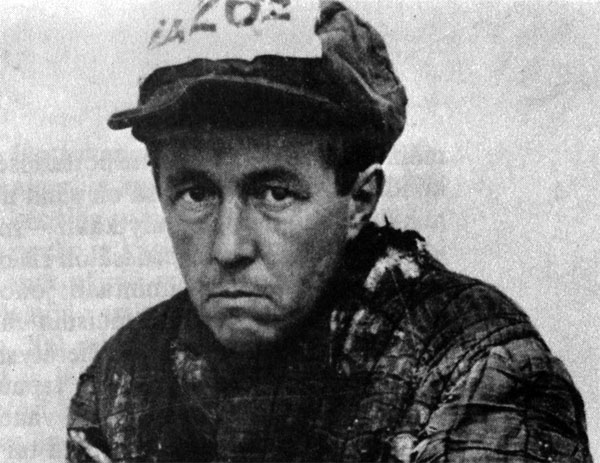
I put up a new blog post this morning, about a strange cameo I found of the first official history of the atomic bomb in Solzhenitsyn's Gulag Archipelago: Solzhenitsyn and the Smyth Report.
Also, can we all agree that Ed Norton should play Solzhenitsyn in any movie adaptation about his time in the Gulag? I mean seriously.
I have a question about a historical document, but I'm not sure if this is the right place to ask. I've been transcribing the records of an insane asylum that was open between 1855 and 1935 in the southern U.S. There's an abbreviation, 2 P.&C., that is given to say how the person was sent to the asylum (others are by jury, admitted by family, etc.). Does anyone know what this could mean or know of any sources that may have any similar information?
Taking an extra history class next quarter. I decided to tack on an American Slavery class alongside with my other US History class.
I have a kind of stupid question for people with expertise in naval and maritime things. Maybe /u/jschooltiger ?
What is the difference between the astrolabe and the quadrant?
Somehow I thought those were similar things working on the same principle. You point the alidade towards the object, and read the degree angle. In astrolabe, it is the whole instrument that is suspended from the ring on the top, while on the quadrant there is some kind of string with a weight. But the principle feels to me more or less the same: find the angle between the object and the direction of down?
Yet I ran into a quote from 1500 (when all this instrumentation was in infancy) :
"At sea it is better to navigate by the altitude of the sun rather than by any star, and better with the astrolabe than with the quadrant or with any other instrument."
Why was exactly astrolabe the best?
On a whim, I decided to read the Wikipedia article on Summa Theologica. Long story short, I'm now pretty interested in philosophy, and am starting my journey by reading Plato and Platypus Walk Into a Bar.
(what? You guys are expecting me to jump straight into Russell or Socrates?)
Expect increased level of smug from me for the next few days.
so is the 3 strike system a real rule or is it more of a guideline?
X-posted from my own blog, but I figured y'all might like one of my weekly updates. I didn't get as much done on my dissertation over this past week as one might hope--last weekend, I stayed true to my word to relax, but after that I only got around 500 words done a day on average. There was, however, a nice burst of energy the day before yesterday where I managed to get nearly 3000 words done! I'll try to capture that energy and keep it up for the rest of this week. It's a little harder because I've got the primary sources down, so now my job is to put my own analysis and synthesis of all of them...it means I can't just sit down and let the primary sources do the talking, which is easier, I have to add my own voice to them, which requires a little more thought. But I'll endure, I still have about 2 weeks 8)
I have two questions:
Where did the phrase "only the dead fish flows with the current" originate from?
In Legal Origins by Glaeser and Shleifer (2002), they give an economic argument on how France had wars on its soil during 22% of the years in between 1100-1800, whereas England only had 6% of the times (p. 1208). One of the reasons Glaeser and Shleifer give is because central power in France had smaller power compared to more local/regional authorities, whereas the English was more of the opposite case. How true is this from the perspective of historian literature?
I'm not sure why I just thought of this, but I remembered a visit I made several years ago to Yin Yu Tang at the Peabody Essex Museum. It's a traditional Chinese home built two hundred years ago and eventually transported to, and reassembled at, the museum. I'm curious if anyone here has ever visited and what their thoughts were. I enjoyed it but I'm no expert and know fairly little about the time period. It would be interesting to hear the perspective of someone more well-versed in this area.
As a side note, how common is an exhibit like Yin Yu Tang? I haven't heard of anything else very similar but it seems like an interesting and engaging concept at the very least.
Anyone has a good podcast on WO1 and WO2? I want to hear from both sides.
Does angone know of a good (preferably single volume) overview of plagues through history? Googling brings up 'Guns, Germs, and Steel' but I remember hearing it's not favorably viewed by academics.
Just started a project for my history class. The paper I'm going to write will (hopefully!) show that the Napoleonic Wars were like a mini-Cold War. Any thoughts on the idea itself? Maybe a few pointers? Whether or not connection itself exists just digging for it will be interesting.
I'm learning classical latin and I came across a discussion online about Medieval latin documents needing to be translated. A commenter said there's a lot that needs to be done in translating medieval latin documents but I'm wondering how true that is. And is medieval latin hard to read when with classical latin knowledge?
I was mulling over fonts today while I was procrastinating working on a paper that is due on Monday and I was wondering: which fonts do professional historians tend to use most? Do you guys hate Times New Roman as much as the rest of the web and reddit seems to?