In regards to your first question, perhaps the section Travel and contact across the Atlantic before Columbus from our FAQ will provide an answer.
As for your second question, I can only really comment on migrations related to Mesoamerica. For that topic, I would point you towards a previous post I had written about the location of Aztlan, the semi-mythical homeland of the Aztecs/Mexica.
How many populations are thought to have reached the Americas prior to Columbus?
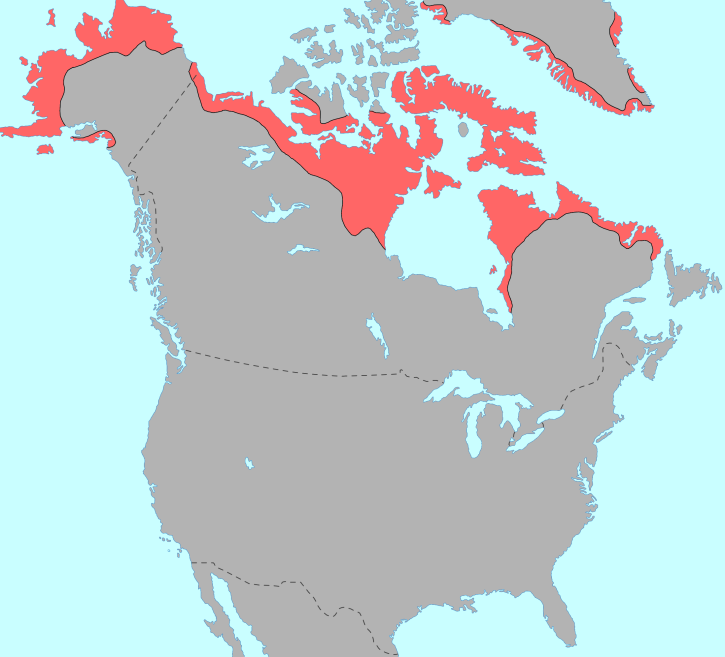
As far as those who left as lasting impact on the demographics of the Americas, there are at minimum three. In reverse order, these are the Aleut-Inuit migration (circa 4500 BP, along the Arctic Coast), the Na-Dene migration (circa pre-4800 BP?, in Alaska and northwest Canada, more recently pushing into points further south), and the Paleoindian migration (pre-16000 BP, ultimately everywhere else). This is generally known as "Three Waves" model, and it's far from perfect. To begin with, lumping the entire Paleoindian into one wave is almost certainly wrong, but at the moment we don't have enough archaeology to resolve it further. Genetic evidence suggests that the Paleoindian populations represent there were at least two early Paleoindian populations and perhaps as many as fifteen. But all these lineages have been in the Americas for so long that they're all jumbled up today. There's also quite a bit of debate over when exactly that jumbling happened - in particular, whether it happened during the "Beringian Standstill," a hypothesized 10,000-year period in which various Asian populations were stuck in Beringian, unable to push further into the the Americas, though increasingly it's looking like there wasn't really a standstill, but more of slow trickle of Paleoindian populations along the coast.
Beyond those, there are some populations that are known to have reached the Americas but didn't leave much if any impact on the genetic landscape of the continent. The Saqqaq culture of Greenland (4400 BP - 3300 BP) is more similar, genetically, to the Chukchi people of eastern Siberia than they are to later Inuit populations in the region. The Norse reached Newfoundland around 950 BP (~1000 AD), but didn't stay long there. Polynesians (probably sailing from Easter Island) likely reached South America by this time as well, but the details of the Polynesian-South American encounter are hazy at best right now. While it doesn't look like Polynesians left much of an impact on the genetics of South America; pre-Columbian South Americans do appear to have left their mark on the genome of the Rapanui of Easter Island.
What major intra-American migrations were there?
I'll focus on migrations that impacted the history of the Eastern Woodlands (basically the United States east of the Mississippi, with some spill over into southern Canada).
The Algonquian migration was probably underway some 3000 years ago, coming from the Columbian Plateau (probably). While a small number of Algic speakers headed west into California, the majority went east across the northern Plains into the forests of north of the Great Plains. The various peoples who eventually formed the Blackfoot Confederacy probably represent the Algonquian populations that lingered on the plains or were a very early back-migration. A later Algonquian migration pushes out from Ontario in two major fronts. One goes east to the coast, then south along it. The other pushes directly south across the Great Lakes, probably around 1500 years ago. Eventually, there's a back-migration of the Anishinaabe heading back to the Great Lakes from the coast around 1000 years ago.
The Iroquoian migrations push out of Allegheny Plateau / southeastern Great Lakes. The ancestors of the Cherokee go south fairly early, perhaps 3000 years ago. Around 1000 years ago, there's a population boom in the Iroquoian region, and the northern Iroquoians push north into the St. Lawrence River (probably contributing to the Anishinaabe back-migration mentioned earlier).
Siouan peoples probably inhabited the Ohio Valley initially, though by the time of European contact very few were still in the area. Some had gone east, with the Catawba on the coast being the most divergent of all the Siouan languages. Most went west though, since the influx of Algonquian migrants from the north seem to have either assimilated or dispersed many of Siouan communities in the area, with the historic Iroquioan push into the area finishing the job. Archaeologically most of the Middle Mississippian peoples in Illinois and Missouri (including Cahokia*) were most likely Siouan speakers of one sort or another. There seems to have been a bit of a population boom in the Middle Mississippi valley during the time of the Emergent Mississippians (pre-Cahokia), which led to further Siouan migrations up the Mississippi and Missouri Rivers, ultimately giving rise to the Mandan, Dakota, Ho-Chunk, and others. Those who remained in the Middle Mississippi and Lower Ohio Valleys are the Dhegiha (now the Osage, Omaha, Ponca, Kansa, and Quapaw).
Linguistically, the Southeast is a lot more complex than the Northeast. Aside from northern spill-over, there's only one big language family (Muskogean) and a lot of little ones / language isolates. Various Muskogean oral histories say they came from west of the Mississippi originally, with the ancestors of the Chickasaw and Choctaw stopping soon after and others, especially the Creeks, heading even further east. By the time of European contact, Muskogean languages stretched from the Carolina coast to the Mississippi River and as far south as the Gulf of Mexico. But mixed in where many other languages. Southeastern Georgia and northeastern Florida were mostly Timucua speakers, with other Timucua speakers deep in the heart of Muskogean territory. In southern Florida the Calusa language(s?) dominated, and might have been related to the Tunica languages in Arkansas and northern Louisiana. Tunica itself might be a distant relative of the Muskogean languages, forming an even larger linguistic family, but that hypothesis has lost a lot of ground lately as the supposed connections seem to be rather tenuous. During the Colonial period there's a lot of reshuffling of southeastern demographics and many of the smaller languages get lost in the shuffle as the smaller populations are assimilated into the larger ones. The data points are too few and too isolated at the moment to get a clear view of what the migrations in the Southeast. The northeast experienced some major reshuffling too, but the big picture remained largely in place so there, the situation is easier to resolve.
*Cahokia, here, refers to the archaeological site east of St. Louis. It was named after the nearby town of Cahokia, Illinois, which in turn was named after the Cahokia, who were a members of the Illinois Confederacy at the time of European colonization. The Illinois Confederacy was an Algonquian-speaking confederacy that moved into the region after the archaeological site had lost its power and influence, and they don't have a particularly close connection with the archaeological Cahokians (though some Cahokians may have ended up intermingled with the Algonquian Cahokia).