As part of my job I help prepare students for Oxbridge applications, a good method we use is demanding a independent project to sharpen knowledge of the nature of the subject and gather valuable cultural capital. A student I am looking to push in preparation for applying to read Classics at Oxford has decided to opt for Roman military tactics with an emphasis how it changed over time or by opponent. To keep it from sprawling we discussed looking into a particular legion(s) who fought many different opponents over a relatively short period. This would have the added bonus of opening more experience using primary sources as a broader history may by necessity of word count lead to largely secondary and sweeping arguments.
My knowledge of this period I would charitably describe of 'informed pub knowledge' I.e. There in broad strokes but lacking the intimate knowledge of sources or specifics. Could anyone recommend a good legion/period to look into - I was thinking of one of the legions which follows Caesar around as a) his penchant for self-promotion means there should be sources available and b) he gets around fighting many different opponents over the period.
Please feel free to correct my laughable ignorance!
A good possible starting point could be "Legions of Rome" by Stephen Dandos Collins. I've read here that it is kinda a general overview of the legions but could give you a starting point on which legion fits your criteria and which is likely to have alot of information about it.
One example might be the second Punic war, and in particular the strategy of Scipio at Zama, designed to counter the elephants of Hannibal's army.
There's a slew of pop books on legions. I read this one on Caesar's Tenth about a decade ago. I don't remember good feels about it. I don't think anything was wrong, exactly, just it repeated uncritically what's in the sources.
Just from this Amazon page I see a book about one of Nero's legions, and one about one of Marc Antony's legions.
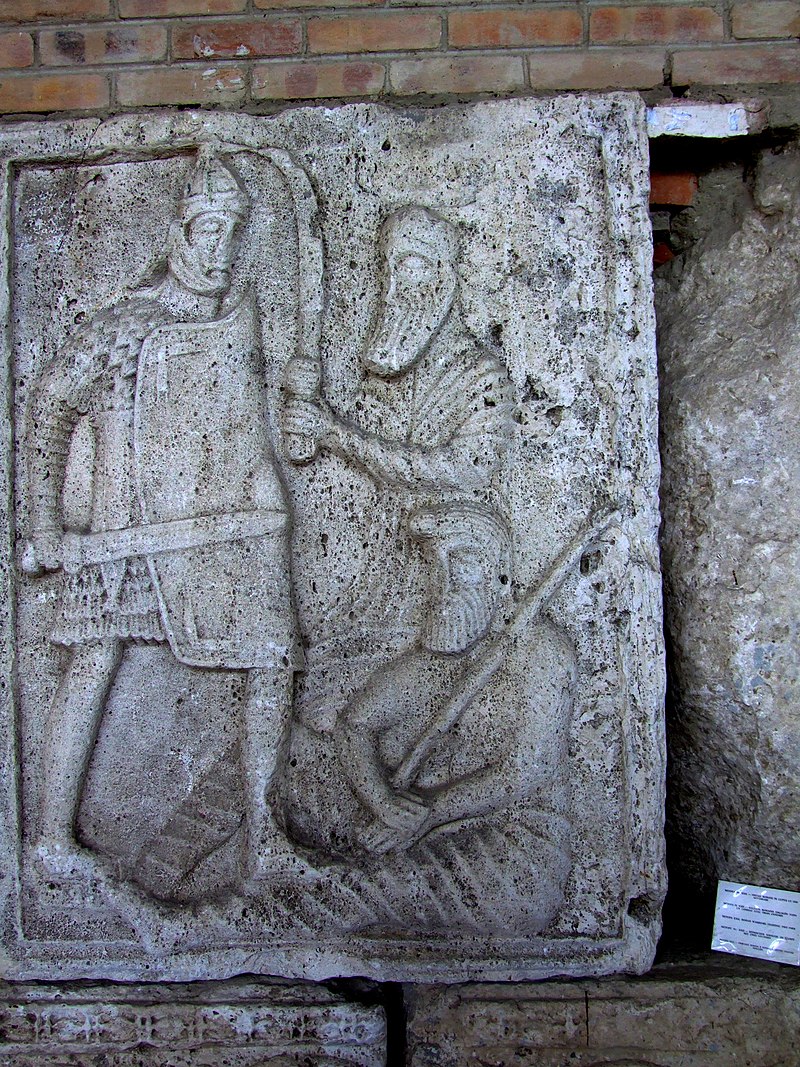
An interesting case-study could be Trajan's Dacian (Romania) Campaigns. Roman legionaries had to change their armour in order to counter the Dacian falx sword, which could swing down over the top of their shields. To counter this, they had to reinforce their shields and armour their right shoulders. Link is to a relief from a Roman victory monument in Dacia depicting a falx armed Dacian attacking a legionary.
Or, another change in military organization was the 'vexilisation' of Roman units during the second and third centuries. A single Legion (5,000 men) became too large to be used effectively against new threats facing the Empire. After Trajan's conquests at the turn of the 2nd Century, there were competitively few large scale battles and campaigns that a Legion could be effectively used for. Instead, small units or 'vexilations' would be detached to deal with raids and small scale warfare. For example, there is an inscription from Roman Pannonia on the Upper Danube (approximately modern Hungary) detailing how 'vexilations of the British and German Legions' helped win a victory (CIL III 3228).
A good book for this shift in defensive policy would be Luttwack's 'The Grand Strategy of the Roman Empire'.
Hope some of this helps. I did an Extended Project on the Roman Army at A-Level for similar reasons as your student, and it did help prepare me for university work!