Sea was an option, but far from the most favourable. The Dutch Navy was a powerful force, and could often harass/challenge attempts to send troops or other supplies to Flanders and the Spanish Netherlands by sea. The issue of communication between the various Habsburg realms (Netherlands, Iberia, Italy, Austria) was a continued one for large periods of history.
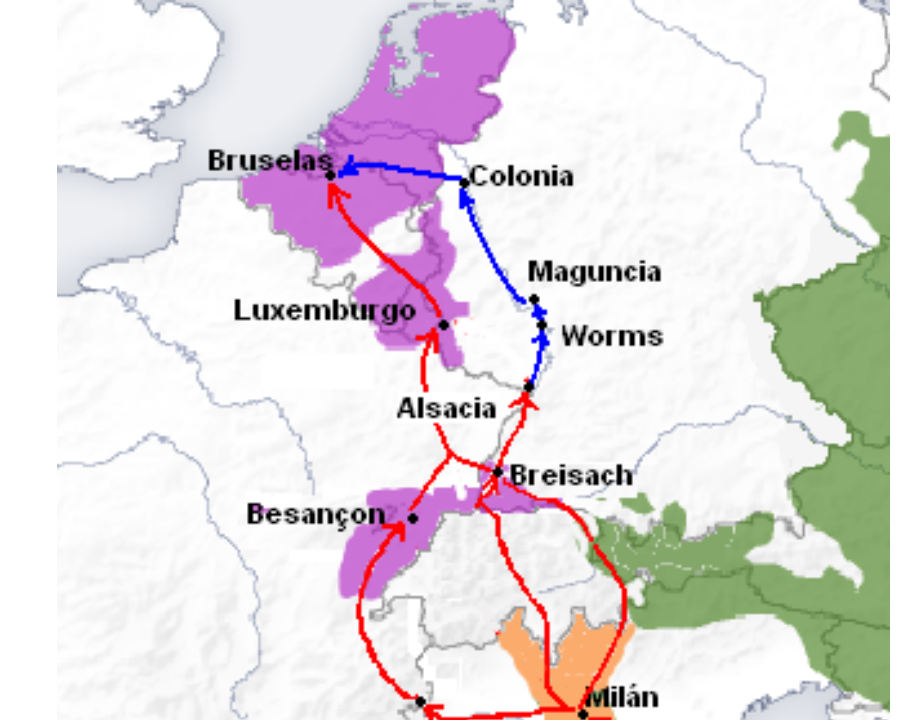
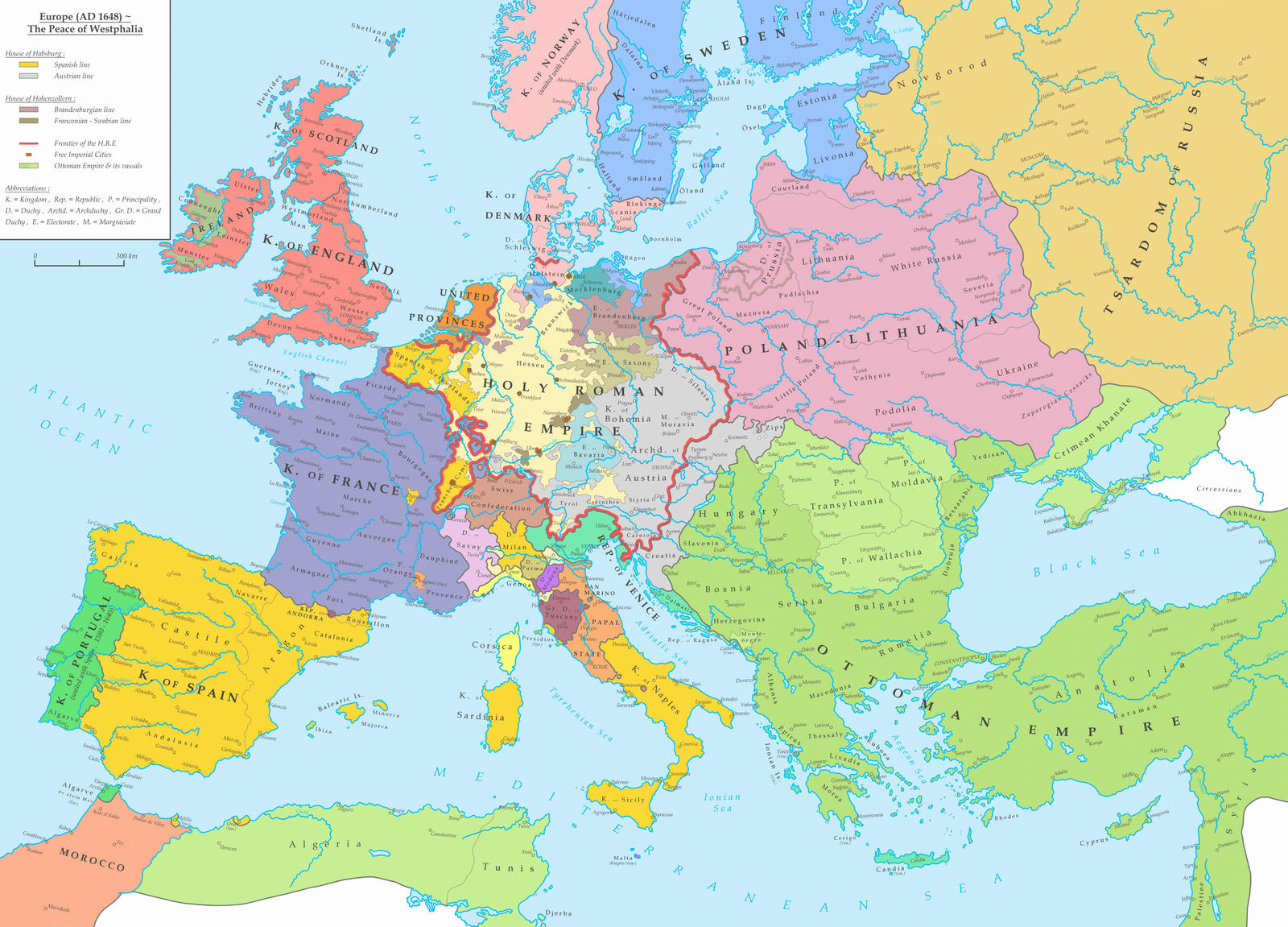
One of the main ways to solve the issue was the famous Spanish Road, which led from the Spanish possessions in Italy, northward over the Alps, through Franche-Comte and the HRE, before arriving in the Spanish Netherlands. Do note that France's eastern border is much further to the west during this period. Map. So, while they were not marching through France per se, they were marching through what was--mostly--Habsburg controlled or friendly. However, the Electoral Palatinate stood across a key portion of the Spanish Road, and was hostile to the Habsburgs, creating a major issue for the Spanish if they wished to resume the Dutch war after the Twelve Years Truce.
This strategic position of the Palatinate, along with the Elector Palatine's vote in the Imperial electoral college made the Electoral Palatine a vital territory in the pre-Thirty Years War politics of Europe. Importantly, it created a link between the internal politics of the Empire, and the wider politics of Europe. When Frederick V, Elector Palatine accepted the Crown of Bohemia, and was subsequently placed under the Imperial Ban, the Spanish forced attacked the Palatinate, both to clear their own way, and to enforce the Emperor's ban on Frederick. In this way, the issue of sending troops from their Mediterranean territories to the Low Countries played a key role in the opening stages of the Thirty Years War.
The Army of Flanders that fought for the King of Spain in the Low Countries consisted of Spanish, Italian, German, and local troops. Of these, the Spanish and Italian troops mostly came through the Spanish Road, from Milan through Switzerland to Franche-Comte and finally to Luxembourg and Brussels. The Spanish contingent was always in the minority. During active campaigning seasons, they can be as low as 10% of total numbers up to 30% of total numbers. However, both Spanish and Italian soldiers tended to use the same battle cry: "Santiago, España!"
The first commander of the Army of Flanders, Fernando Alvarez de Toledo the third Duke of Alba, recommended this route to Philip II as he had traveled that way with Charles V before. It was consistent with Cardinal Granvelle's recommendation to avoid Germany due to the looming religious wars there that may destabilize the region. Alba was called from retirement, despite his gout, to lead a body of about 10,000 soldiers from parts of Spain to Italy, then up the Spanish road. It was an arduous undertaking with clearly difficult logistical challenges, but he made it with negligible loss. Such was the level of preparation and execution. They sent cartographers and engineers ahead to prepare the roads, negotiated with local rulers (even with Calvinist Geneva!), arranged for bread to be delivered reliably.
Several routes are used, sometimes simultaneously, depending on conditions (political or otherwise). Here's a handy chart.
A few units of troops and leaders and money used to be sent by sea through the English Channel. Elizabeth loathed the French much more than she did the Spanish, so she turned a blind eye. That is, until the situation in the Low Countries worsened for the rebels, risking permanent Spanish rule. She then confiscated vessels carrying payment from Spain to the Low Countries, leading Don Luis de Requesens' troops to mutiny and thus leading to the Spanish Fury in The Sack of Antwerp. That ended the availability of the sea route.
The Army of Flanders maintained an Armada of Flanders, nicknamed the Dunkirkers, based off Dunkirk. They were privateers that preyed on Dutch shipping, and was quite successful. However, when England became an enemy, they were largely cut off from Spanish fleets elsewhere in the Atlantic and Mediterranean.
The expeditionary army in Italy became very established as a training ground for Spanish and Italian troops. Green units from Spain were sent into guard duty in Italy, and experienced units were sent up the Spanish road. In this way, there was a natural training and rotation system in place to train both soldiers and aspiring officers.
The Spanish road was extremely important, and the agreement between Spain and Austria to transfer control of key forts along the way had led to escalation of hostilities that led to outbreak of the worst periods of the Thirty Years' War. Similarly, it dragged further Spanish intervention in the region, including Ambrogio Spinola's campaign around 1600 and the Cardinal-Infante's army afterwards.
The most fantastic read of all this is Parker's Army of Flanders and the Spanish Road, one of my favorite books.