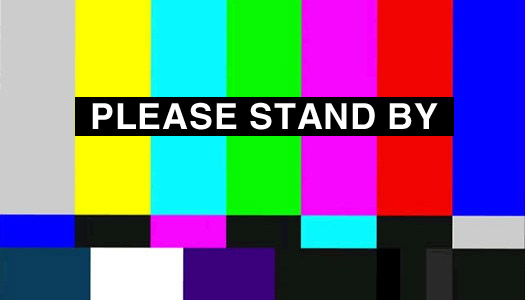
The Image: http://i.imgur.com/ItcIhaa.jpg
I have seen that images more times then I can count and yet I have no idea where its from or why there is a native american on it.
It's called a test pattern.
There was a time when television stations did not broadcast around the clock, and in the first few years they only broadcast in the evenings. This pattern let you know that the channel was working. Old televisions had knobs to adjust vertical and horizontal beam synchronization, so you could tell if you had a problem. Sometimes it was necessary to move the antenna around. The pattern is meant to make various distortions, ghosting, and echoes easy to spot.
There are many more technical details at the wiki page https://en.wikipedia.org/wiki/Indian-head_test_pattern
Starting in the early 70s, stations switched over to the color test pattern. https://en.wikipedia.org/wiki/Test_card
I'm not so sure about the "PLEASE STANDBY" part of the image. It seems like something that they would only show if the network feed were interrupted.
One of the cultural aspects is that if you fell asleep in front of the TV, you would wake up in front of the test pattern, especially because it usually came with a test tone.
It is called The Indian-Head Test Pattern and it dates back to post WWII through the 1970's and was used in many countries and for many things. It basically preceded the color bars test many of us know today which would sometimes (but most often not) also be accopanied by either "Technical difficulties, please stand by" or simply "please stand by" text overlaid.
Anyway the Origin of the Indian-Head test pattern is largely grounded in how TV networks didn't use to run 24/7. They were only broadcasting content from say 6am to 11pm. They'd just be "dead air" the rest of the time. As a result the please stand by test pattern was thrown up between broadcast times.
Alternatively before they got as good at broadcast switching it'd be placed between shows or television programs while the moved to air one broadcast slot after another. At least in the very early days of television.
Finally (and I don't know this for sure) if something went wrong with the broadcast and it unexpectedly or had to be cut, this screen would often times probably be thrown up.
Over the years networks got their own splash screens for off air time. Many networks now run things 24/7 so they don't have off air, stand by, or test screens. In the event they do they use things like this with their own mark on it.
Plus with the color era moving in we went to the color bars test instead of the Indian-head test. Also as televisions and diagnostic tools got better there was less need for a consistently seen visualizer like this to let you know your TV was both functioning; and configured properly. As a result this stand-by image went by the wayside.
As for why there is an Indian on it? I could not tell you. I've taken a number of classes on the history of broadcasting, media, and film both in high school and college. This test screen has been brought up many times for being iconic to many cultures in one way or another if you go back far enough. As to why an Indian was used never was brought up. Personal reading could never shine a while lot of light on it either.
Best thing I could really find is RCA has a set of guidelines for what the color/grey scale content of the image must be on the test screen. It is assumed some graphic artist had a picture of an Indian that matched the criteria so they rolled with it.