I'm particularly curious about fiefs such as duchies, counties, baronies and more, as well as the sizes of whatever a viscount or marquess may hold.
What I do know is that duchies are more often than not a bundle of counties, be it two or three, and counties(for earls and counts) are what we know today the size of a province.
So, what are the sizes of fiefs, most commonly?
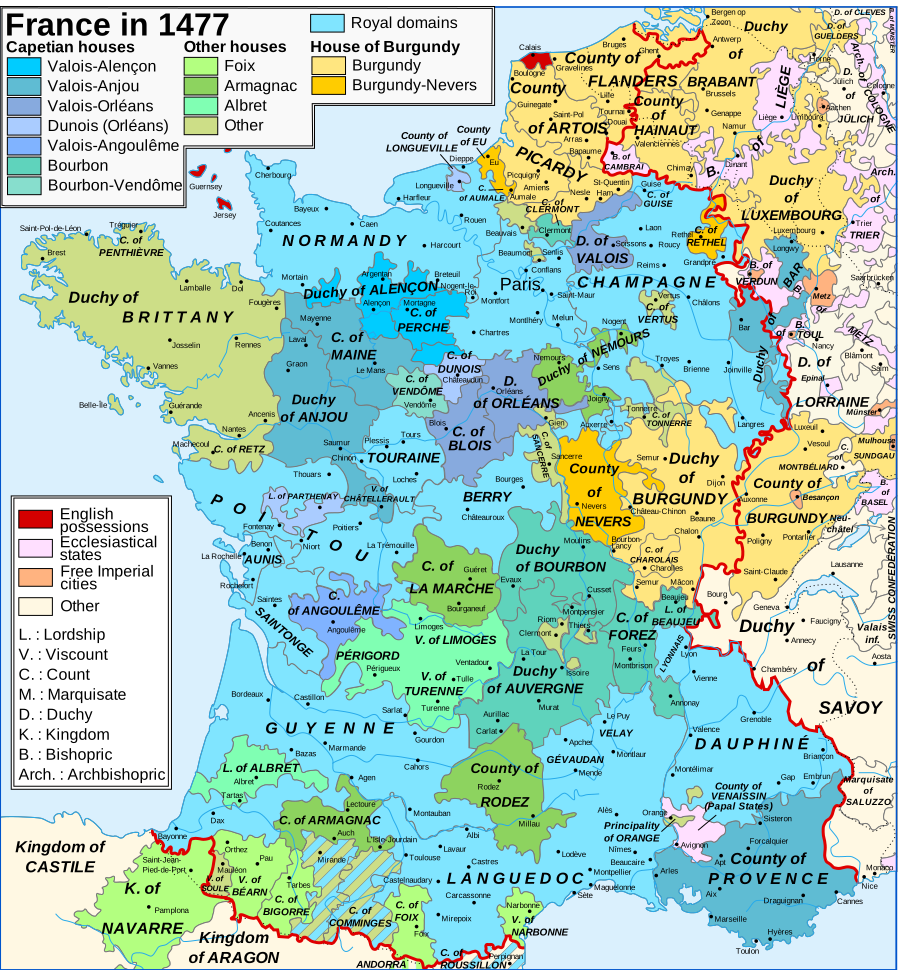
Depends on the kind of fief and the time period. In the early days of the French Monarchy, duchies were large and powerful but over time their size would be significantly reduced
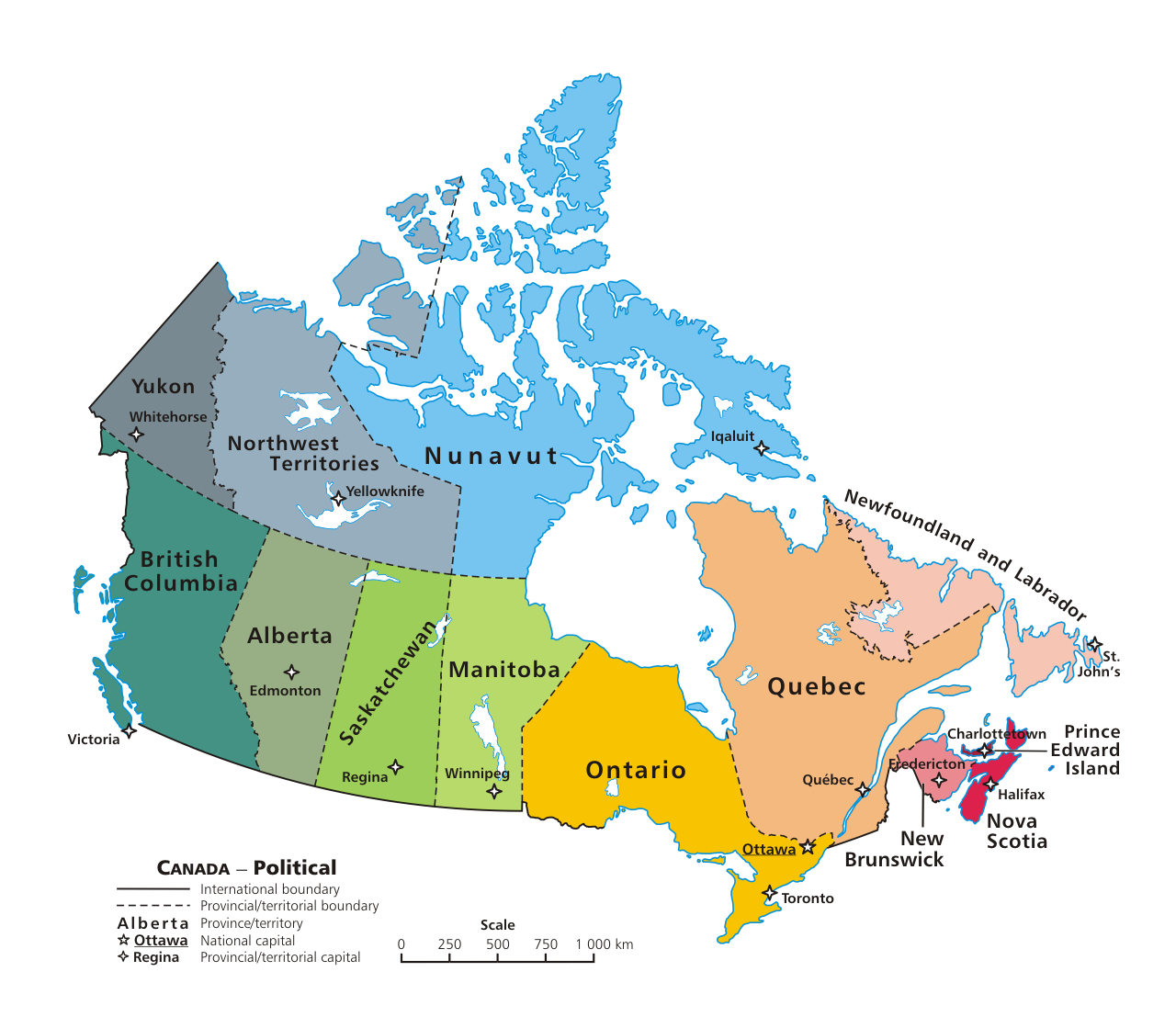
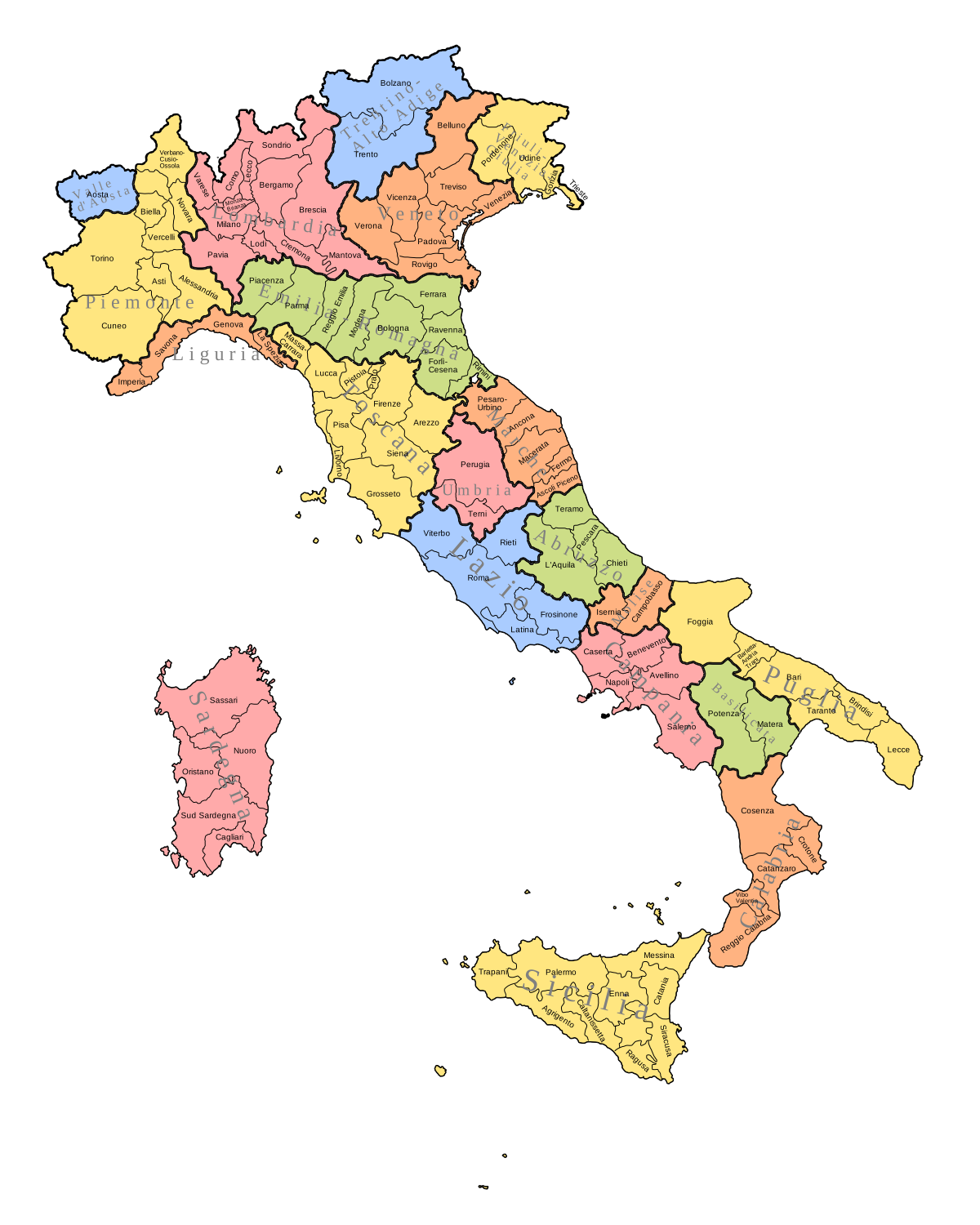
Counties tended to be slightly smaller than what we'd call a "Province," but different places use that name differently; so I'd stay away from modern comparisons alltogether (provinces in Canada are much larger than provinces in Italy). If you'd like to get into the details of how feudal subdivisions were structured, this is a painstakingly assembled summary of feudal landholdings in Normandy. If you don't mind clicking around, the nutters behind that list at the Foundation for Medieval Genealogy have assembled detailed summaries of many feudal landholders in Medieval Europe (navigation is on the toolbar on the right) going so far as to source them (at the bottom of the page).
I'm not surprised you ask about Viscounts, they're weird creatures depending on where and when you happen to be. In the resources I linked above, you'll notice that in France you get Viscounts ranking between counts and dukes (usually Counts with particularly large demesnes) but more commonly the title referred to an administrative position, literally the Vice-Comes, or "Vice Companion" (sometimes they had particularly large demesnes because of their additional responsibilities, while other times they were granted additional responsibilities and privileges precisely because of their amassed holdings).
The Visconti Family are the Ur-Example of viscounts. They Pop-up in the twelfth century under the name Cattaneo as landholders of the fief of Mariano and were later granted the fief of Massino on the shores of Lake Maggiore in the 12th century. The Bishop of Milan Landulf appointed them as his Vicars in the tenth century for unclear reasons (and good relations with Otto I meant that an Archbishopric Vicar was also an Imperial Vicar). The Visconti were small landholders, but so were their rivals; and their modest wealth originating from the tolls on the boats docking in Massino (as well as abundant tithes from the fertile lakefront) allowed them to impose themselves as one of the most prominent Famiglie Capitanee of Milan (families that provided for the defense of the city). They soon turned the title of Viscount hereditary, and it became a nickname which they would later adopt as their their surname. The Visconti had many rivals in the local politics of the city of Milan, notably the other Famiglie Capitanee, but over three hundred years they managed to become rulers of the city. Over the course of aggressive expansion in the 14th century, while still technically Viscounts, the Visconti came to rule an area much larger than a Duchy.
A Marquis, on the other hand, historically was ennobled with holdings comparable to those of a Duke. However, a Marquis has more military responsibilities. Understandably, the title was normally given to Vassals in border areas. The Equivalent German title Margrave, for example, was granted in eastern territories bordering Slavic peoples. You can see more here, a wonderful website run by a retired history professor who set it up in 1996 and left it that way (doesn't take away from its value as a resource).
I'd like to warn you against looking for too many neat little boxes: the land-title relationship varied greatly depending on the case. Sometimes when a noble title was created the overlord gave land and/or a house with it, sometimes they did not. Sometimes the family sold or lost the land, but kept the title.