Thanks to /u/cordis_melum for suggesting this topic.
Periodically, AskHistorians will get a question like "Were the ancient Egyptians Black?" or "Did ancient greeks really have permissive attitudes about homosexuality?"
Often what follows are explanations and discussions about how "blackness" and racial theory are comparatively recent concepts, and ancient Egyptians would not understand these concepts in the way we do. Ditto, how the sexual orientation as a durable identity is a recent concept, and ancient Greeks would not understand the concept of "homosexuality" in the way we understand it.
With those examples in mind:
Are there cases where applying modern terms to historical societies can be useful/illustrative?
Or, does applying concepts (like racial theory, or homosexual identity, or modern medical diagnoses) anachronistically lead to presentism, giving the false impression that modern categorization is "normal"?
Can modern medical diagnoses be applied to the past? And can these diagnoses ever be certain?
I have one: canoes! When you think of a canoe, you probably picture something a bit like this: a small, pleasant little boat useful for puttering around in and perhaps voyages in fairly controlled environments (eg, rivers). Certainly not something to cross an ocean in, but then how exactly did the Polynesians manage to cross the Pacific? It must have been harrowing, occasional voyages, and the new lands discovered by accident then, yes?
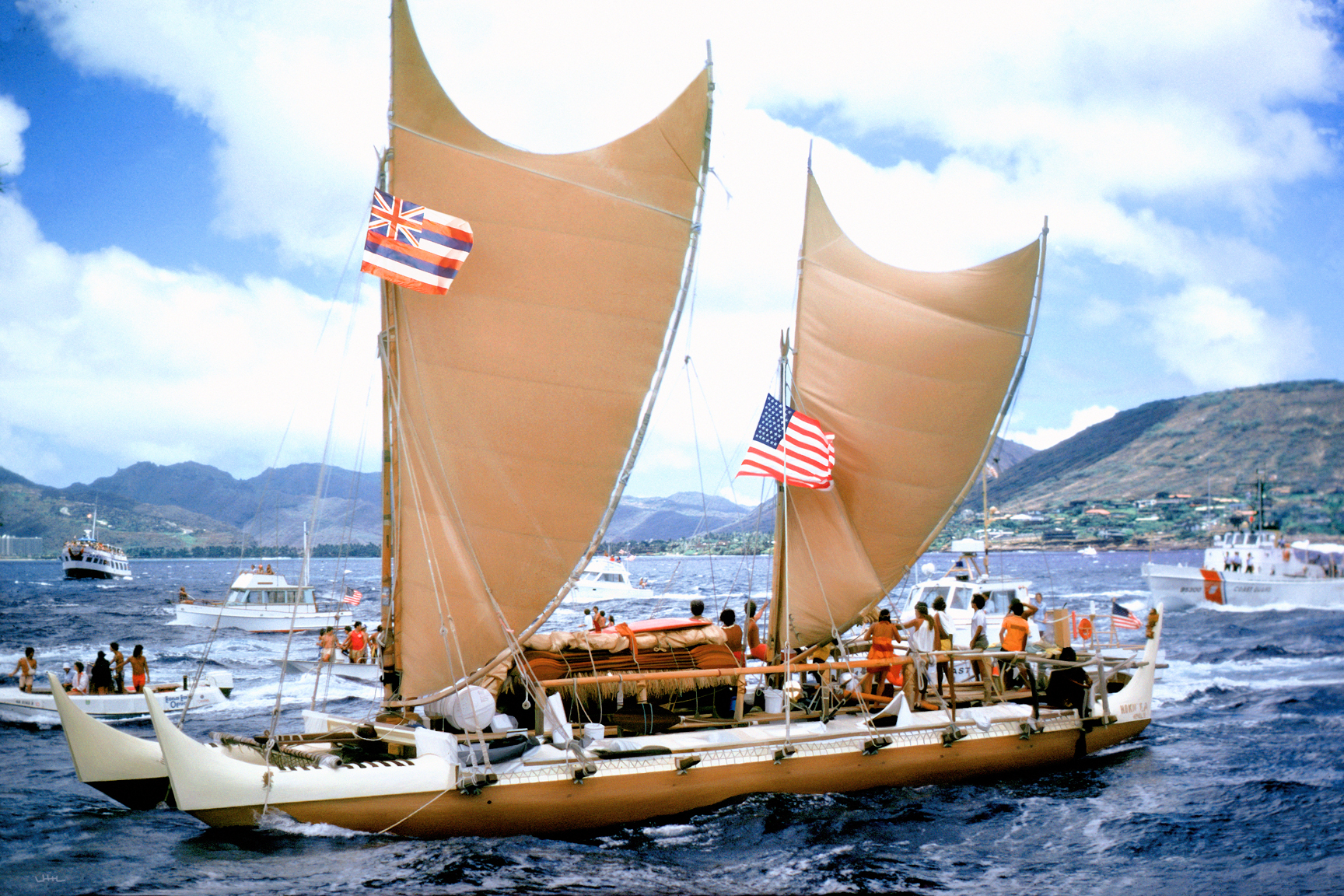
Well, no, it is because their "canoes" looked like this (a "war canoe" from Samoa) or this (wa from the Caroliine Islands, arguable the most sophisticated shipbuilders of the Pacific Islanders) or this (the Hokule'a). Now, technically these are all canoes, or meet some definition of canoe in that they were dugouts, but due to the shifting of the modern term "canoe" to basically mean the two person, oar powered boats one putters around a pond in people tend to get the wrong idea.
And that is how terminological confusion doesn't need to be a historiographical quagmire!
As an ancient military historian, I am constantly annoyed by people applying modern terminology to ancient warfare. I ran into a classic example in this thread, where someone casually translated the Greek taxis as "battalion".
You cannot do this. You cannot ever do this. Think of everything a modern military unit is - a central staff, a chain of command, a detailed subdivision into specialist roles, a collection of units meant to form a flexible tactical symbiosis, a permanently established community of highly trained combat experts. A Classical Greek infantry unit is none of those things. What you are doing is looking at a dog cart and calling it a Porsche, "because it's easier". We will never understand the true nature of Greek warfare if we don't approach it on its own terms.
My favourite example of the explanatory power of not using modern terminology is the Greek word polemarchos. In many city-states, this was the highest level of military leadership; in Athens, while the office still existed, the polemarchos outranked the strategoi, and in Sparta they stood directly below the kings. In a Spartan context, modern scholars therefore like to translate it as "colonel".
Now, as a thought experiment, I want you to keep a picture in your head of everything you associate with the word "colonel". Do you have it?
The literal meaning of the word polemarchos is "war-leader". War-leader. Think of everything you associate with that word, and compare the two pictures.
"The state." Lets just accept that for the modern western word that it is, and not try to project it backward.
Also "Empire."
I recall reading a post a while ago that intimated the opinion that the term "civil war" should not be applied to the war at the close of the Roman Republic between Caesar and Pompey because our modern conception of a civil war involves all these things with nations and nation-states and post-westphalian political theory and such and such.
Saying that Caesar wrote (or had ghost-written) a book about a "bellum civile" is admittedly not a great argument in itself, but I feel like if we have reached a point where an infamous "civil war" wasn't actually a civil war because our conceptions of what constitutes "civile" in that construction have changed means we have lost some fundamental aspect of what we are trying to discuss and have lost ourselves in semantics and needless othering.
Great question, I love it! The second point you make holds some merit, but it really depends on how familiar someone is with proper methodology. There really is some danger to stray towards presentism or teleological thinking, but I'd say that this really only a danger for readers who are unfamiliar with the pitfalls of historiography. Gender and sex theories are a perfect example here. When you read the terms "men" or "women" while reading or writing about gender or sex through history, it's perfectly normal to envision them as a dichotomy. We have our own frame of mind as historians and we can only work from that. The important part is to simply be aware of this frame of mind. To acknowledge and discuss that this dichotomy wasn't always as clear as it is today, nor that this is natural order of things. That's the only way we could ever envision the "one-sex-theory" for example. I'd say that this is one of the most important mindsets that all historians have to learn through their education. The realization that their own frame of mind is set in time and is not an infinite or absolute state. We have to communicate through this frame of mind because it's what our knowledge and society is based upon. So simply being aware of its existence and its dynamic character already goes a long way and is, in my opinion, sufficient.
In relation to the last point "Can modern medical diagnoses be applied to the past? and can these diagnoses ever be certain?" is briefly touched upon by Dr Evans and Dr Read in the AskHistorians Podcast episode 32: https://www.reddit.com/r/AskHistorians/comments/2ywtdj/the_askhistorians_podcast_episode_32_discussion/
The answer pretty much came down to; No, it's not possible to be accurate due to the way, and which symptoms were reported. But really, listen to the episode since its quite an interesting subject.