Sorry for x-posting: https://www.reddit.com/r/AskNYC/comments/49f45o/which_is_the_oldest_street_for_each_borough/
I have read that Bowery is the oldest street in Manhattan (http://www.redeemercitytocity.com/blog/2014/5/1/oldest-street-in-manhattan). This one does not contain sources but I couldn't find anything else.
You are right that Bowery is the oldest street in Manhattan. And so is Broadway. And so is Fourth Avenue, and Park Row, and a few other streets.
As one comment in your x-post mentioned, Broadway started out as the Wickquasgeck trail, before European settlers had arrived. The trail ran most of the length of the island, but it is not entirely conterminous with Broadway. Take a look at this map prepared by the East Village Historical Society. As you can see, the original trail was nearly identical with today's Broadway from Bowling Green north to about City Hall. The portion below Wall Street controlled by the Dutch can be seen on the Castello Plan from 1660, and was already incorporated into the European street grid by then. It was initially called "Heerestraat" by the Dutch and then the "High Street" or "the High Way" in its earliest English days before it got the name it has today.
From City Hall, the original trail abandoned today's Broadway and roughly followed Park Row by veering to the northeast, until it joined up with today's Bowery. It then followed the length of Bowery, which turns into 4th Ave, where it dead ends into Union Square. It then continued on from the northwest end of Union Square, where it once again became today's Broadway, and followed Broadway more or less for its length from 17th Street to the north end of the island.
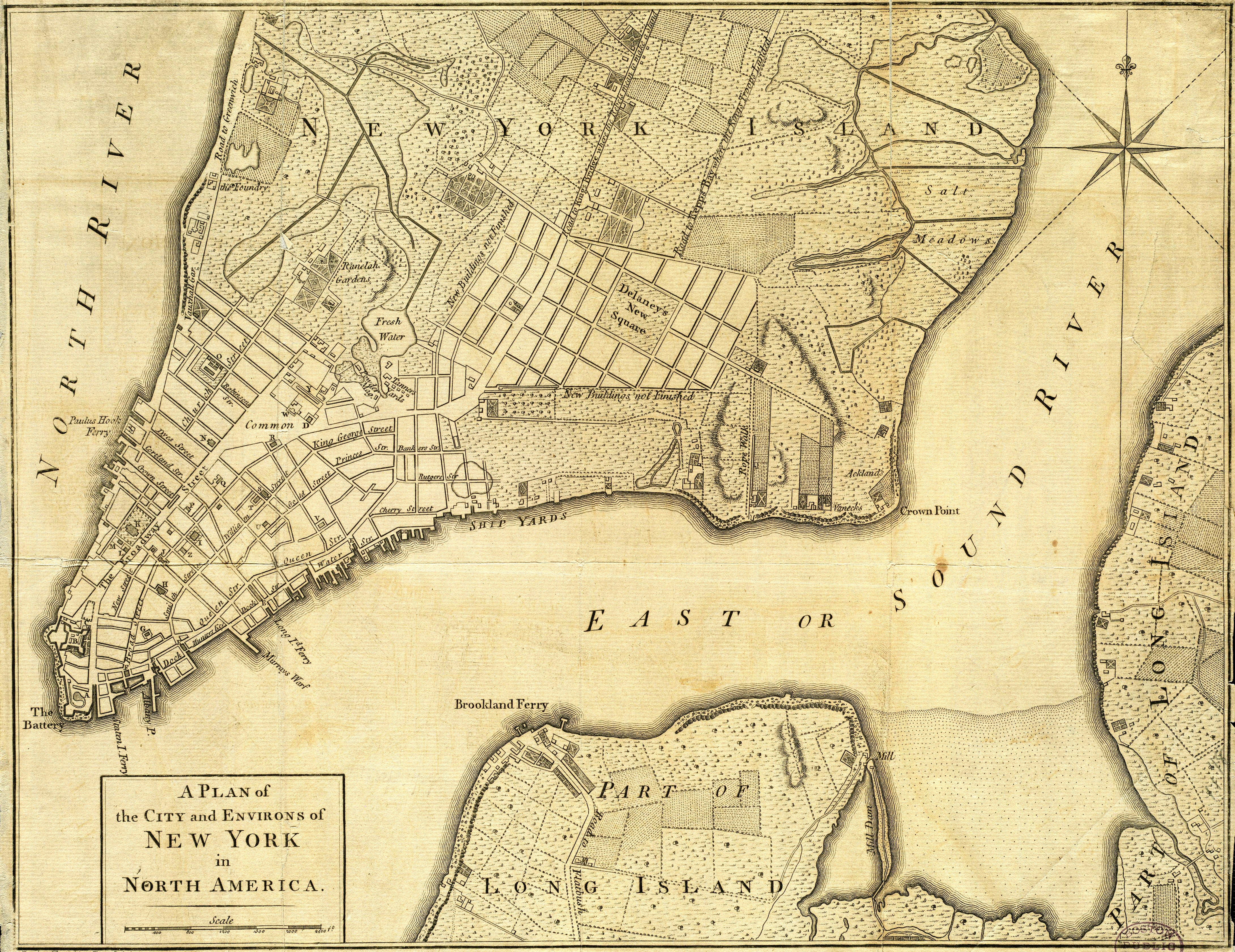
So, it's probably most accurate to say that both the Bowery and Broadway are among Manhattan's oldest streets, although the portion of Broadway between City Hall and Union Square wasn't built until after the end of the American Revolution as this 1776 map illustrates. Before that, it was still farmland.
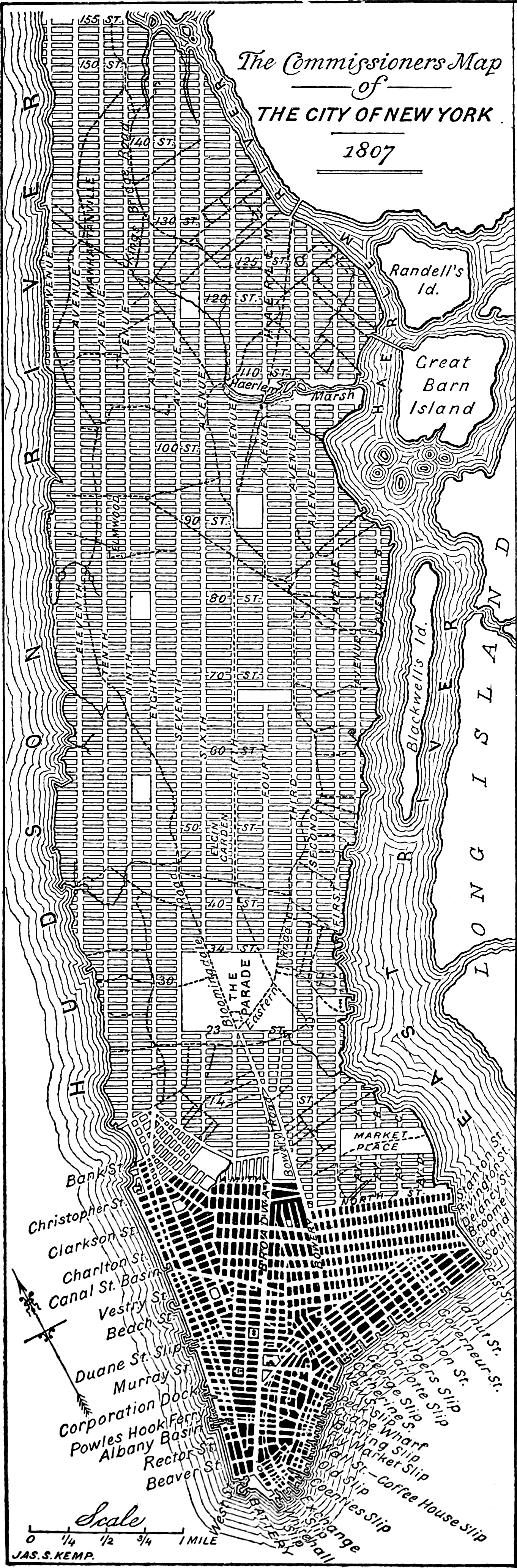
However, that's not the whole story because that wasn't the only Indian trail on Manhattan when the Europeans arrived. Most notably, as the first map linked above shows, there were other trails on Manhattan that are somewhat conterminous with East Broadway near Brooklyn Bridge, as well as Greenwich Avenue in the West Village. There were several more Indian paths uptown, as this low-resolution 1807 map illustrates. With the adoption of the Commissioner's Plan of 1811 that laid out the city grid, all of these trails were eventually wiped out, aside from Broadway which was allowed to remain.
Is that why Broadway is the longest road?
Sort of. Broadway is the longest road because it was the only old Indian trail north of Greenwich Village that was incorporated into the grid system, while the rest were eradicated with the nice long east/west and north/south numbered streets we have today. By contrast, as mentioned, Bowery, East Broadway, and Greenwich Avenue are also very old but are not in the running for longest street in Manhattan.
Also, do you know if first settlements happened around the road?
Well, the first settlement was actually on Governor's Island but that only lasted a few years before the colonists decided Manhattan was better. Yes, Broadway was used by the colonists right from the beginning, but they quickly built their own roads, some of which still exist today. As you can see on the Castello Plan, basically all the streets between Broadway and Water Street south of Wall Street were laid out in the first few decades of European settlement and still exist in one configuration or another.
As complicated as that is, the story of "oldest street" in the other boroughs is even more complicated. There were Indian trails in all the boroughs and these were immediately adopted by colonists as soon as they arrived in these locations. Over the years as the city grew, these old Indian trails were incorporated into the street layouts, re-routed and reconfigured over time, so that bits and pieces of some of today's existing streets are very old while other parts of those same streets weren't created until the 19th Century, or after.
Take the case of Woodpoint Road, for instance. Today, it's a street in Williamsburg that's just a few blocks long. But originally, as this illustration demonstrates, it was an Indian trail that, in the 1660s, became the main thoroughfare connecting Greenpoint to Williamsburg to Bushwick and then down to the original village (not borough) of Brooklyn.
Flatbush Avenue is another of these Brooklyn streets part of which dates to Indian times. As page 140 of Indian Paths in the Great Metropolis says:
The main Indian path that extended through the Borough of Brooklyn commenced at the shore of the East river at the foot of the present Fulton street, and followed the line of that thoroughfare and Flatbush avenue as far as Flatlands village, and thence extended as the present King's highway, to Gravesend and New Utrecht. Flint says, "The early settlers widened this trail into a wagon road which retained for many years this rural character." It was not until 1704 that the route was ordered to be laid out as a King's highway, "all along to Brooklyn towne afforesaid through the lane that now is."
That book is a treasure trove of information that should answer your questions more thoroughly. It gives similar explanations for the original Indian paths in Queens, where parts of streets such as Newtown Road and Jamaica Avenue started out before Dutch times. And in the Bronx, Broadway is a continuation of the aforementioned path that exists in Manhattan, though parts of the original path may actually have followed Post Road.
Again, the answer isn't straightforward since the roads date from Indian times and then were re-routed many times over the course of industrial development, but bits and pieces of still existing streets in each borough can claim to have very old roots.
TL;DR: In Manhattan, the oldest roads are pieces of Broadway, Bowery, East Broadway, Park Row, and Greenwich Avenue. Broadway continues into the Bronx as well, making it one of the oldest roads in both boroughs.
In Brooklyn, Woodpoint Road, Flatbush Avenue, and King's Highway are among the streets that can claim the borough's oldest.
In Queens, the list includes Jamaica Avenue and Newtown Road.
Further reading:
Indian Paths In The Great Metropolis