According to Herodotus (ii. 154), king Psammetichus I (664–610 BC) established a garrison of foreign mercenaries at Daphnae, mostly Carians and Ionian Greeks.
Athens was established in 630BC Greeks suddenly had technology to build large temples, human sized statues(as opposed to figurines), first mentioning of philosophy at around the same time
https://en.wikipedia.org/wiki/Timeline_of_Athens
And also this http://i.imgur.com/lwd1XDf.jpg and http://i.imgur.com/9SWlfYJ.jpg along with the fact that many of greek thought founders either visited or studied in Egypt at one point or many
During the Archaic period, connections between mainland Greece and the rest of the Mediterranean intensified, and the Greeks learned a lot from the more advanced civilisations they encountered in the East - not just Egypt, but also Assyria and the cities of Phoenicia. The Greek alphabet, most famously, is an adapted form of the one in use among the Phoenicians. In other cases it's not always easy to tell exactly who taught them what, but it's clear from their art (as your picture shows) and their thought that they were very enthusiastic about the things they encountered as mercenaries, settlers and traders travelling abroad.
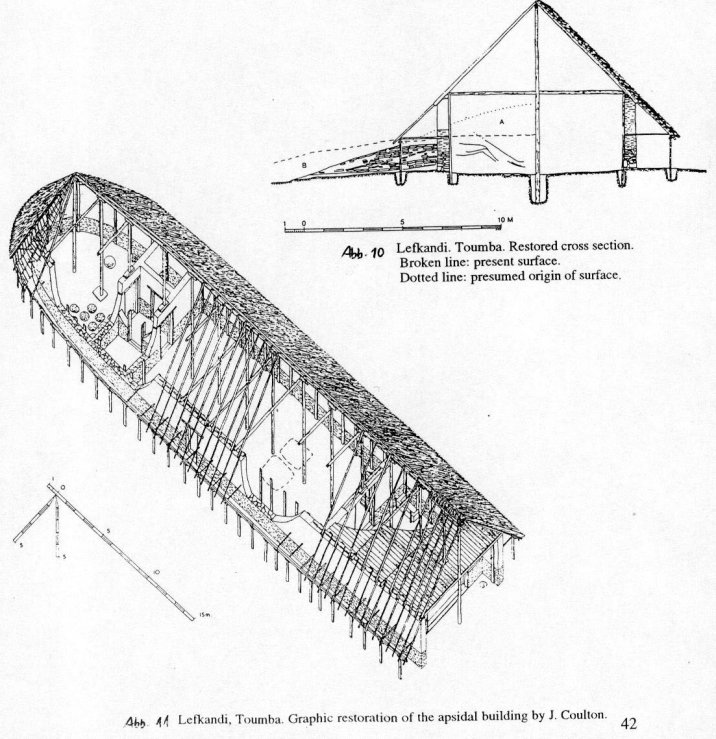
However, it's not like the Egyptians got to write on a blank slate. Archaeological remains of Dark Age Greek settlements show that they were already capable of building large structures. At Lefkandi on Euboea, excavations revealed a hall/tomb 45 meters long, supported by a post-and-lintel structure of wooden columns similar to that of later Greek temples. Athens was already established as a settlement long before it made contact with the Egyptians; its lack of monumental temples may have had more to do with a lack of means than a lack of know-how.
The "foreign civilization" referred to in the book screenshot, by the way, is probably that of the Persians, who dominated Egypt for much of the Classical period.