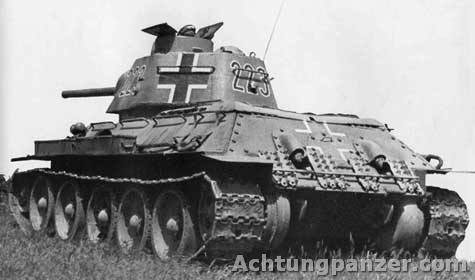
My question, which has been playing on my mind all week, refers to two eras in particular. Medieval times: who cleared the battlefields, i assume it was slaves/servants/women? And 20th century: more precisely "tank battles" such as kursk... who cleaned the thousands of derelict and destroyed tanks from the fields?
Thankyou kindly.
In the Medieval period?
Anyone important would have been carted home if it could be managed for a proper burial, or perhaps to be burned in effigy- literally or proverbially. Otherwise it was largely just local commoners- and the trail of people who would commonly follow a standing army in this period- and anyone else for whom acts like looting corpses and handling the dead- in many parts of the world it wasn't uncommon for the handling of dead animals and humans to be dictated either to a low caste or to the lower classes- wasn't seen as beneath them. Short answer's really anyone who stood to gain from it. At the bottom of the list you'd have crows, scavenging animals, and anyone who'd want to try and grow something in the area, or live in the area.
If you wanted a more specific answer a specific time period and a specific group or region- 12th century Scandinavians, Moorish invasion of Europe, or Kievan-Rus, for example- would make things easier. Unfortunately a general question really only gets a general answer.
And 20th century: more precisely "tank battles" such as kursk... who cleaned the thousands of derelict and destroyed tanks from the fields?
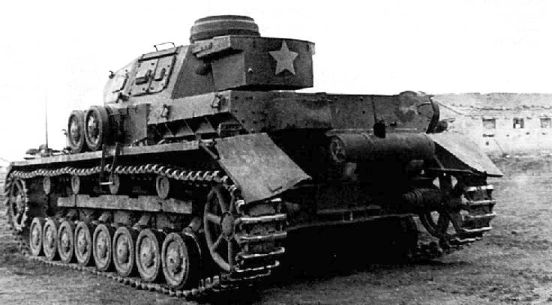
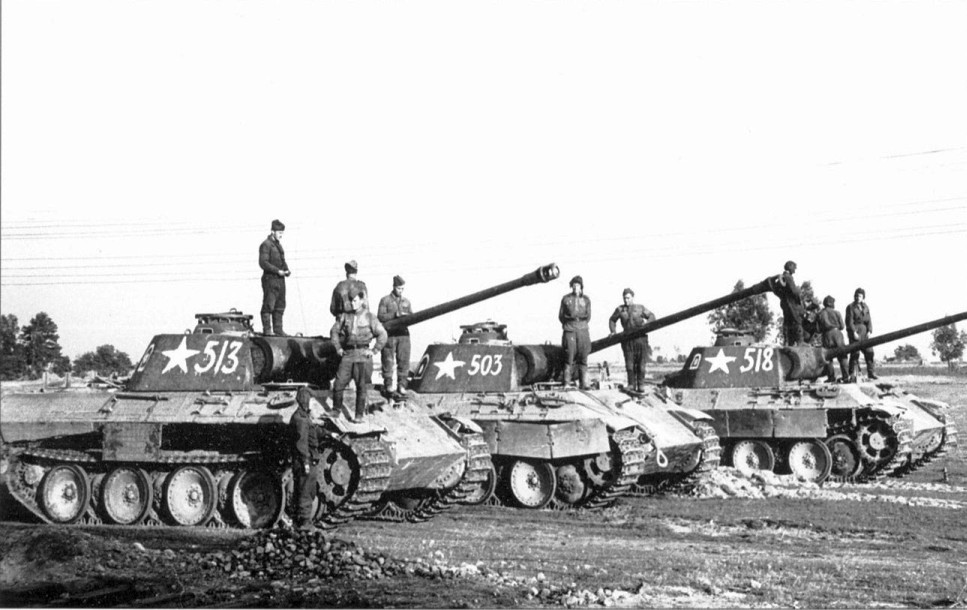
This one is a bit easier to answer: the army. Any number of units not immediately pressed on the front line- most of the army at any given time in WW2 did not constitute to 'front line.' That was a lot of spare man power that may not even be destined for direct combat. Most immediately, any tank that was a new design and was reasonably intact was often carted home either for penetration tests, performance testing, or other evaluation. If it were one of your own tanks, any number of things could potentially be salvaged unless the tank had a catastrophic failure when, say, the munitions rack cooked off. Engines could be saved, munitions could be saved, fuel could be siphoned out of the tank, and expensive, complicated electrical, such as the radio could be salvaged. Many tanks really did just need the blood washed out, a new coat of paint, and any holes patched up and it'd be ready to go back at it.
Even if the tank wasn't immediately salvageable there was often critical war materials that could be stripped from it. The Soviets were using aluminium block engines in most of their modern tanks- the T-34 in particular- and other material- copper wiring for example- was often still highly valuable. Allegedly Soviet soldiers were prone to stripping the upholstery from Lend / Lease tanks because it often made for good boots.
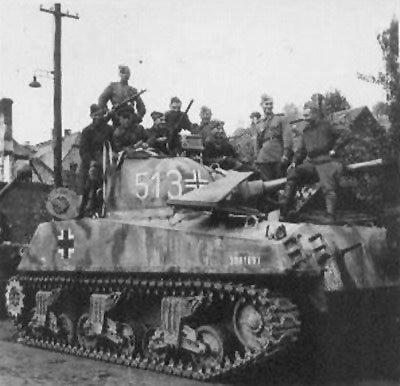
It also wasn't uncommon for tanks that had been abandoned to be commandeered. There are plenty of examples of this. The practice was only more common when you happened to be dealing with the fact that your tanks couldn't run on the fuel stores you were seizing from your enemy.
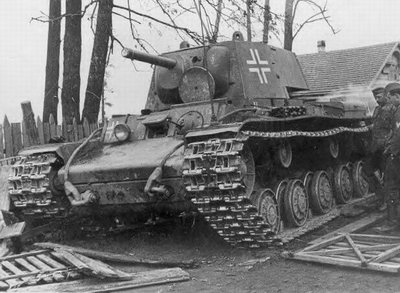
At the tail end of the list you'd have tanks that were still an issue- maybe they were blocking a road or presented another hazard. Wrecked tanks that couldn't move under their own power typically required some form of heavy machinery. When Tiger 1's first hit the field for the Germans- as an example- the German army had no way of dealing with them if they couldn't move under their own power- it's closest cousin by weight was a Panzer 4 which weighed about 2/3rds of what the Tiger weighed. In short, the only thing moving a disabled Tiger, was another Tiger until the Germans could devise logistical elements that could move it, or at least allow a mechanic to service it.
It's worth noting that tanks were often not worth their value in scrap. Aside from the war materials- aluminum, copper, etc- the steel had fairly limited value. The US was dumping unneeded tanks in the the ocean since that was the easiest way of dealing with them.
Follow up question: I remember hearing about a popular press book I wanted to read that dealt with this exact topic. I remember it being about cleaning up in the aftermath of 20th century battles like Verdun or Stalingrad.
Anybody have any idea what the title is so I can track it down and finally read it?