I can't speak for German immigrants, but I can speak for the Danish immigrants, as I've studied the Danish emigration quite a bit, as I've got ancestors that moved to the States around this period - however, it might be useful for other potential answers if you specified a timeframe, as my timeframe deals with 1840 and onwards.
First some background - For Danish farmers in the early to mid 1800s, life wasn't exactly easy, but it was better than what it had been. Danish farmers had been dealing with what was called 'Stavnsbåndet', essentially a bond that bound men from ages 14 to 36 (Although in 1764 it was changed to include anyone aged 4-40) in what was more or less a form of serfdom. They were forced to live and work on the farm that they were born on, although you could buy your way out, but as a poor farmer, that wasn't exactly such an easy option, but for the landowner and any sons he might have, it was quite an easy task. The bond was initially introduced in the 1730s by King Christian the 6th in the response to a serious agricultural crisis that was caused by failing import.
Anyway, in 1788, on the 20th of June, the Danish government introduced the 'Agricultural Reforms', that would basically do away with the bond, and taper off slowly leading in to the 1800s, starting off with freeing the kids aged 14 and below from the bond - it all had a leading cause and effect, meaning that the idea was to do away with the whole bond slowly, but surely, and when the kids were freed initially in 1788, the full range of people affected by the bond wouldn't be freed until 1800. There was also a movement at the time to oppose the disbandment of the bond, where the main argument was that society would dissolve completely if it were to be done away with, and king Frederik the 6th had to step in to ensure that the bond was done away with for good. This gets important later on.
Anyway, on to what you're looking for - in the period from 1850 to 1920, 300,000 Danish citizens emigrated to America, 'God's own country', 'the land of opportunity', where 'Life, Liberty and the pursuit of Happiness' is in the declaration of independence itself. The primary reason that a lot of Danish citizens emigrated was the homestead act of 1862, settlers would receive 160 acres of land if they fulfilled certain requirements. The fertile and cheap land was a very enticing offer to many, and the promise that they would be able to make their own life and their own destiny in America was enough to persuade a lot of people. Although, not everyone had a dream story to tell of emigrating to America. A lot of Danish people died practically penniless, with their whole lives thrown in to this venture, and no way to get out of it. Aside from all this, successful Danes who had emigrated were writing letters home that were printed in newspapers boasting of their success, this further encouraged emigration. Not only this, there was also a spree of unemployment, as the population had tripled since 1850.
To answer your question in short form, it was the promise of being your own man, your own master, and to quote my favorite poem, the captain of your own soul. Landowners back home would sometimes be brutal and unforgiving, and you weren't given a lot either for your hard work. To have an opportunity to move to America, to own your own land, and to be your very own man - many people simply couldn't pass that up, and they didn't. They went with the idea of rivers flowing with milk and honey, free land, and an opportunity to become a rich and prosperous farmer, and for a lot of people, they succeeded. Some famous Danish immigrants are Jacob Riis, the photographer, and Jean Hersholt, the actor.
Another reason is the 2nd Schleswig war in 1864 that cost Denmark Schleswig, Holstein, and Saxe-Lauenburg, 1/4th of the land at the time. Many of the Danish people living in those territories were now living under Prussian rule, meaning they had to serve in the German military, which also caused a major uproot of citizens.
A third reason is the fact that Danish men would only inherit their father's farm if they were the first born, or the most capable child. Under the Danish constitution in 1849, we had the 5 F's. Fjolser (Idiots), Fruentimmer (Housewife), Forbryder (Criminal), Fattiglemmer (A person who received financial support from the government), and Folkhold (People working under a landowner). All that this meant, was that you had to have a certain social status, have a clean criminal record, a certain amount of money, and to have never been receiving social benefits, and you had to be 30 years of age, and not be a woman - all of this has been done away with since then. This meant only around 15% of the population could vote, and more or less suppressed the 'lower class' of people, and left them without a voice. This was also one of the reasons for emigration. If you were a landowners son, but not the son slated to take over the farm, you were looking at a pretty sad future, unfortunately. A lot of the immigrants were young men in military age, looking for the opportunity to own land, and shape their own future, and not be stuck in the landless lower class, unable to influence your own country by even voting.
If you're Danish, there are 2 great books for you to read here - if not, I've included an English book that focuses on Iowa, a state that was influenced heavily by the Danish immigrants, and a review from the Iowa Department of Cultural Affairs that deals with the social background of the emigrants.
'Danske i USA 1850-2000' (Danes in America 1850-2000)
'Rejsen til Amerika. Drømmen om et nyt liv' (The journey to America. The dream of a new life)
'A History of the Danes in Iowa'
'Flight to America: The Social Background of 300,000 Danish Emigrants...'
I am descended of the Russlanddeutschen (Germans from Russia) of North Dakota and South Dakota. For the Germans from Russia it was incredibly simple why we homesteaded where we did in the United States. First of all I just want to say that there are multiple pockets of us across the Midwest and Great Plains regions of the US. The most notable are in North Dakota, South Dakota, Minnesota, Kansas, Nebraska, Ohio, and Wisconsin. The reason we ended up in these regions is because that was the areas being homesteaded at the time when we came over from Russia. Then, as people had mentioned in other comments, after the first few groups of immigrants had homesteaded in these areas they wrote back to their friends and family in the "old country" and telling of their life in America. As these letters kept coming back to the "old country"word spread of the opportunities the Homestead Act afforded to these immigrants. This enticed more people of the same ethnicity to follow suit and settle in the same area as their friends/family members who came before them.
In regards to what region we settled in, the Russlanddeutschen who came to America earlier on in the 19th century went to Kansas and Wisconsin and those who came to America in the later part of the 19th century and early 20th century ended up in South Dakota and North Dakota. Simply that is because these were the areas where fertile land was being homesteaded when they arrived in America.
Sources:
Miller, Michael M. "A Brief History of the Germans from Russia." NDSU Library Germans from Russia Heritage Collection. http://library.ndsu.edu/grhc/history_culture/history/history2.html
Height, Joseph F. Paradise on the Steppe. Tubingen, Germany: Christian Gulde, 1972.
Height, Joseph F. Homesteaders on the Steppe. Tubingen, Germany: Gulde-Druck, 1975.
Hundley, Elaine Helbling. "The Germans in Russia." German-American Journal 54, no. 4: (2005): 13. https://library.ndsu.edu/grhc/history_culture/history/german_american_journal1.html
I'm descended from West German immigrants (Rhineland area) to the Missouri River Valley west of St. Louis. That section of Missouri is overwhelmingly German, and is populated by towns with names such as Hermann, Starkenburg, Rhineland, etc.
I cannot speak to danish immigration, or specifically to German immigration outside the Missouri River Valley.
Inside, the Valley, however, there are two different reasons (or, I should say "people") that Germans began relocating to the area around the Missouri River.
The first reason/person is a 19th century German traveler and travelogue writer by the name of Gottfried Duden. Duden toured around the Missouri River between St. Louis and what is now Hermann, Missouri, quite extensively, and became involved in several farming ventures in that area. He wrote a book on his journies entitled Report of a journey to the western states of North America, which also presented a rather idealized depiction of the Missouri River Valley, and compared it favorably to the Rhine River Valley in western Germany. Duden spoke to the pleasantness of the local climate, the rich soil, and the widespread availability of cheap land. Duden's book became extremely popular, and created something of a mini-land rush among western germans. It's difficult to estimate exactly how many immigrants came to the area from germany, but I've seen figures reported between 125K and 250K from 1830-1838 alone. The concept of relocating to this area became so popular that a german political society was even founded in the city of Giessen (the giessen auswanderungsgesellschaft, or the giessen emigration society) with the sole aim of creating through immigration a federally recognized State comprised exclusively of German immigrants. The original seed population of 500 immigrants was relocated to the area around Duden's farm in Dutzow, MO.
The concept was a failure, but the 500 who came were mostly skilled middle class craftsman and upper class land owners. They were able to help create a sound infrastructure in the area that would help absorb the second great influx of immigrants.
That brings me to the second reason, Otto von Bismarck. While the first waves of immigrants from germany had been a mixture of Catholics and Lutherans, the second wave that began in the 1870's was primarily Catholic and the result of Bismarck's Kulturkampf initiatives. By this point, there had been several German towns founded along the Missouri River for at least 40 years, and due to rich farming and river trade, many were quite successful. While land was not as freely available as it originally was during the first wave, the burgeoning population in the area and the primarily agricultural economy meant there was ample opportunity for tradesman and craftsman, and many of these types began to immigrate to this area as well.
As a personal anecdote, my direct ancestor moved to the Missouri River Valley around this time as well. The youngest of 13 children and a trained carpenter, he relocated to the outskirts of St. Louis with his 2 sons and their families. We still have his business ledgers, and as the only carpenter in his area with a large lathe, he made a killing.
Works used in this post:
Gerlach, Russel L., Immigrants in the Ozarks & Settlement Patterns in Missouri (Columbia: University of Missouri Press, 1976 & 1986 respectively)
Marshall, Howard W. and Goodrich, James W., eds., The German-American Experience in Missouri
Meyer, Duane G The Heritage of Missouri
Hodes, Frederick, Rising on the river : St. Louis 1822 to 1850, explosive growth from town to city
This is not so much a claim as a question. My father's family came from Germany and emigrated to southern Wisconsin. I've always been told that Germans moved to Wisconsin because it looks and feels just like Germany. How true is that? Because while I've been to both Wisconsin and Germany it's not a bad assessment... but it doesn't make a whole lot of logical sense.
I come from a Mennonite family, and the simple answer is they were looking for farm land and the homestead act of 1862 provided that.
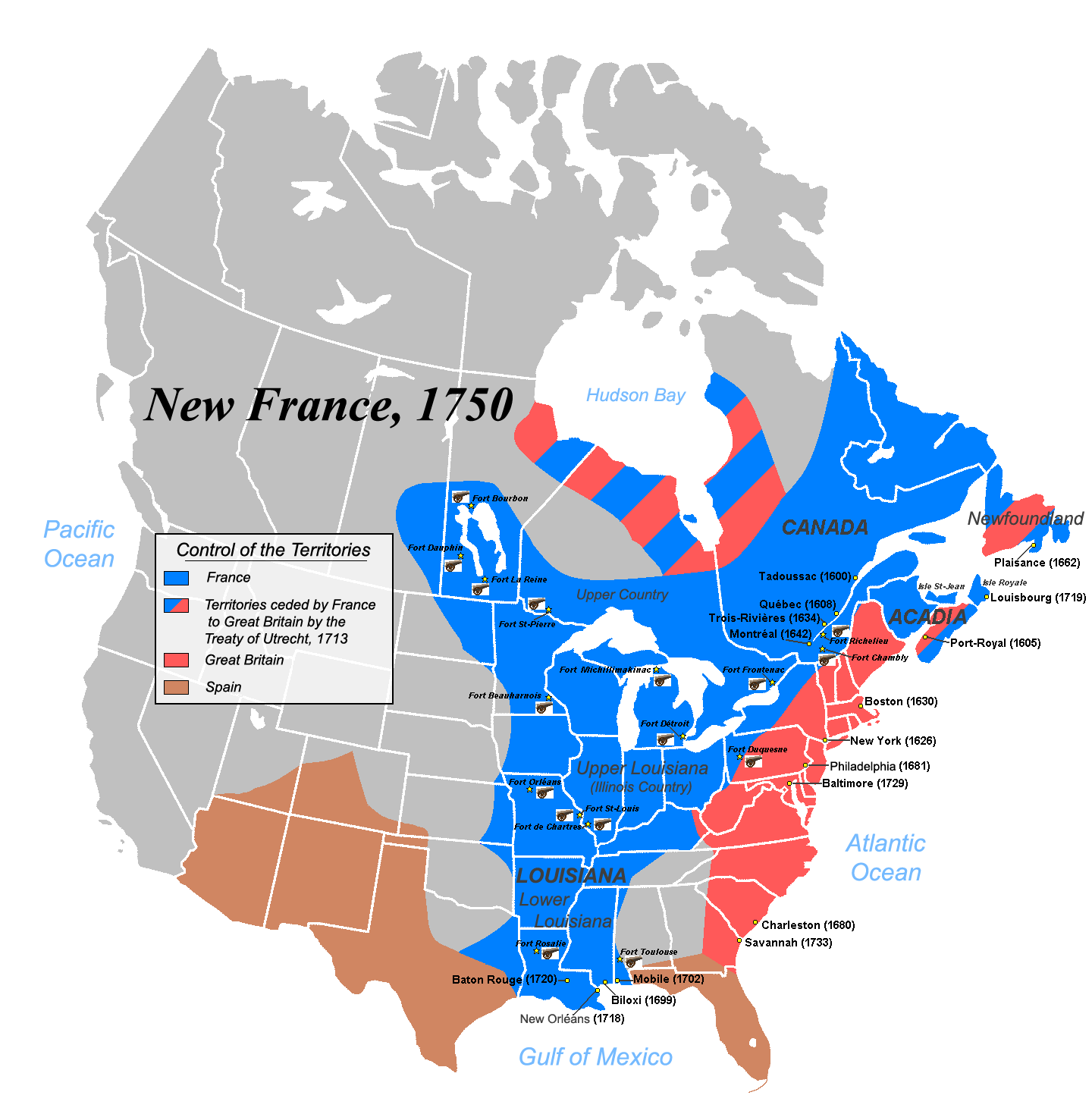
The long answer is very specific to Anabaptist groups, but you might find it interesting. Anabaptist history is full of persecution and migration. The Amish came to America much earlier than other Anabaptist groups. They left Switzerland/Alsace/SW Germany in the early-mid 1700s and settled in Pennsylvania. I don't know much about Amish history so I can't explain why they settled there, but the future states west of Pennsylvania were still a part of New France at the time.
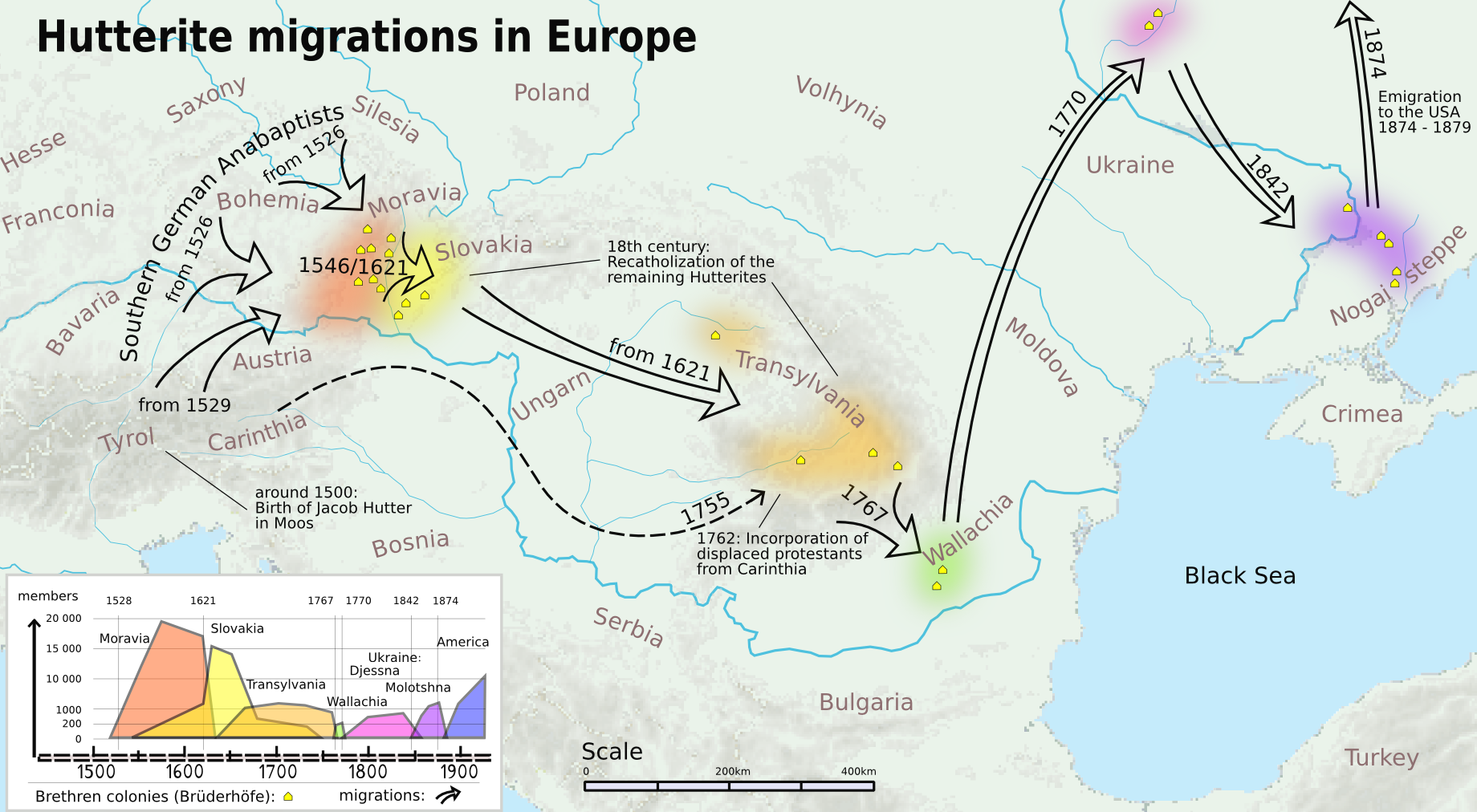
Mennonites and Hutterites continued to live in Europe, but they regularly had to relocate. Here's a map of Hutterite migration within Europe. Mennonites originated in the Netherlands and in the mid 1500s began moving to Danzig. From there they spread through the Vistula delta where they lived until the late 1700s when the partition of Poland gave that land to the military focused Prussia. During those 250 years they adopted Plautdietsch as their language and started considering themselves German as opposed to Dutch.
One of the core tenets of Anabaptism is vehement nonviolence, and they were heavily taxed by Prussia in order to be exempt from military service. Luckily for them, Russia had recently acquired a lot of land and Catherine II wanted immigrants. They lived mostly in western and southern Ukraine until the 1870s when Alexander II removed most of their privileges due to rising Russian nationalism. Not only did the Anabaptists migrate, but so did many Lutheran and Catholic Germans. The recent homestead act and the ceding of Sioux land through the Yankton Treaty contributed to make the upper plains a good location for those looking for farm land.
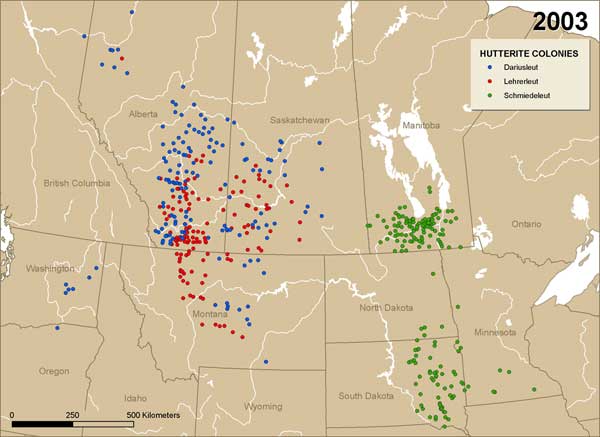
This article explains the scouting of North America in more detail. Here's a map showing Mennonites and Hutterites today. I know the Mennonite clusters in Kansas, South Dakota and Montana are Russian Mennonites, and I believe a lot of the others are Amish Mennonite.
I'd like to ask a supplementary question to this too. Why did so many Finns end up in Michigan? Specifically in the Upper Peninsula?
While not exactly the Midwest, I can speak to some degree on the extent of German Immigration to Texas.
I can not speak of the earliest German settlers to the area (pre-Republic of Texas), however I will talk about The Verein zum Schutze Deutscher Einwanderer in Texas (Society for the Protection of German Immigrants in Texas, or simply shortened to Adelsverein), which was a society established by various members of German nobility in 1842 to increase German colonization efforts to Texas, including the purchasing of large tracts of land.
(Side note: It's worth noting that Texas was still an independent nation at this time, and annexation was not a given at this moment in history).
Prince Carl of Solms-Braunfels was the only noble to personally make the trip to Texas, traveling in 1844 to assist in establishing colonies and reporting on his efforts (Those reports can be found in one of the sources below). The city of New Braunfels, Texas was named by him.
The Adelsverein officially went defunct in 1853 due to lack of funding. However other Germans would travel to Texas after the closure of the group.
It's worth noting many of these settlement towns are now ghost towns or have very small population to this day, with the notable exceptions of Fredericksburg and New Braunfels, both of which very much have sizable communities.
Sources:
A New Land Beckoned: German Immigration to Texas, 1844-1847
Voyage to North America, 1844-45: Prince Carl of Solms' Texas Diary of People, Places, and Events
New Homes in a New Land German Immigration to Texas, 1847-1861
Others are giving excellent answers about the minute details of life for central and northern European farmers, but no one has really talked about how much religion mattered into the mid-late 19th century. The appeal of Germanic peoples for the American governments was at least partly that they were Protestant. While, as Christopher Hill writes in National History and the World of Nations, there was a great deal of anxiety over whether non-Anglo Saxons could be assimilated as Americans during this period, they were seen as preferable in every way to Catholic (/Orthodox/Jewish) immigrants. Moreover, it was the late 19th century that saw the major push to settle the western frontiers, and this was a period of intense rivalry between the United states, the British, the Spanish, and the Russians for indigenous territories and the demand for settlers encouraged colonial planners to consider people who might have previously been thought of as less than ideal.