It seems to me (as a Canadian living in the USA) that Walt Disney and its theme parks hold a special place in American hearts and minds. "Have you been to Disneyland yet?" is a reasonable question, almost like a cultural icon that plays the role of a Mecca here ("you should go at least once in your lifetime").
Was there ever a time when Disney or Disneyland were controversial, seen as fake, or despised?
Was Disney given its status through any particular events? Presidential endorsements? Refuge from war? Powerful marketing and/or lobbying? Why has America's positive affect toward the company lasted so long?
Disney has been a commercial success, since its founding. See here, Disney distributed 11 of the top 200 box office draws in America (10 in the top 100) and produced more for other distributors/subsidiaries. Disney lost its footing in the late 70s/early 80s but a regime change turned it around. (There's an excellent book, "DisneyWar," about this.)
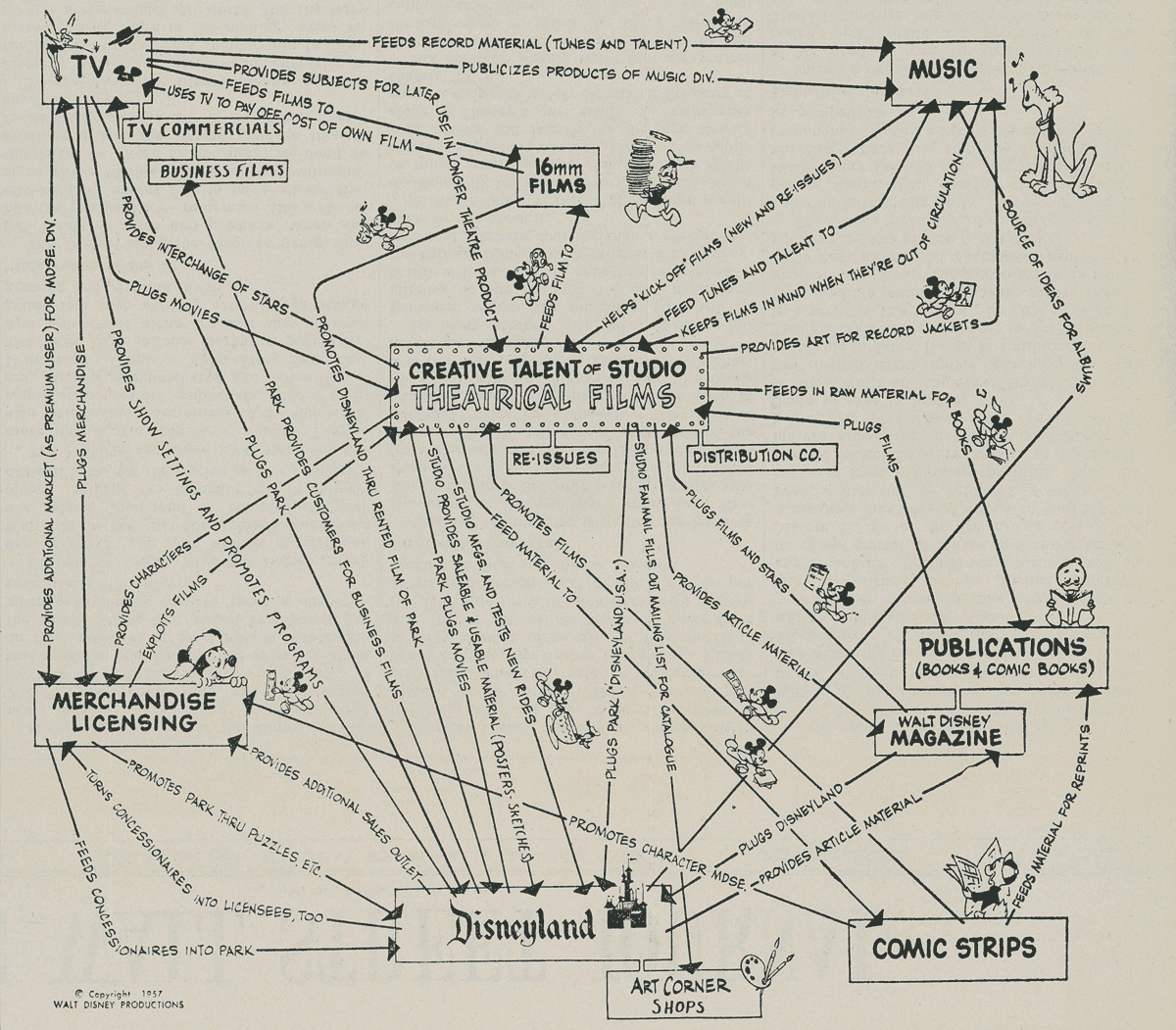
I'm not knowledgeable enough on Disney to attribute its success squarely to one thing or another but I can note that Disney likes to go the extra mile, shooting "Sleeping Beauty" in a larger film format (being animated, there's no gain in resolution; they just did it for reduced grain), shooting television in color (for reruns - the original broadcast was in black and white), and building Disney World above ground, not on top of ground, so that "cast members" could travel in tunnels, preserving the illusion that the different areas of the park are separate from one another. Disney also likes complicated flowcharts: How to make an animated film, how different products support one another.
Out of curiosity - what makes you think it was? Is there an incident/etc that you have in mind? Just to narrow things down a bit.
Late to this, but i'll answer.
The biggest thing that I think was negative was "Song of the South". It's where that song "Zip-a-Dee-Doo-Dah" came from. It was a story about slaves basically. Many critics rightfully criticized Walt.
As far as Disneyland (the place), it was predicted to be Walt's falling. Disneyland (the TV show) was created just to finance Disneyland the place and investments from multiple companies. Walt had basically put his studio on the line for it. He even took out a second mortgage on his house. The opening day was kind of a disaster. My dad was there and said he remembered the train conductor saying "This is where this is gonna be, and this is where this is gonna be". Nothing was finished. The cement as we all know was not finished either. Tomorrowland was basically unfinished too. There's footage online that shows Tomorrowland not even being worked on 2 months before the opening date. It obviously worked out. Disneyland became a huge destination for people west of the Mississippi. It was a theme park. Not just an amusement park. It was themed. And well.
Walt was a very pro-American person. I frankly never understood the claims that he went to pro-Nazi rallies. He spoke in front of the house once to protest unions. He felt betrayed by many people who were striking at his studio at the time. So he went in front of the house and called some people communists, etc. From time to time he had many world leaders at Disneyland. Nikita Khrushchev was in LA and wanted to go to Disneyland. Walt was fully prepared to show him around and show him his new Submarine fleet (The Submarine Voyage was the 8th biggest fleet of subs in the world at that point). But at last second they wouldn't allow him to because it was too dangerous. They feared he might get attacked and he exploded with anger saying "Then what must I do? Commit suicide? What is it? Is there an epidemic of cholera there or something? Or have gangsters taken hold of the place that can destroy me?" That's coming from a USSR leader. But everyone from USA leaders to Queens to dictators have visited Disneyland. So there's a little political power there. Not much, but some.
As far as why has it America's affect toward the company lasted so long... probably because Walt Disney pioneered many things. Sound with animations in combination with music. Mary Poppins was huge for Disney. The first time animations were used in a full length film. Snow white was the first full length animated movie. They did a lot of firsts.
Of course after Walt passed, they began to construct Walt Disney World. I think if Disney had gone through with the plans to create a experimental prototype community of tomorrow (EPCOT. But not like the EPCOT we think of at Disney World. It was a prototype city that had mass transit and was extremely efficient), there would be untold success. But the company understandably didn't want to take the gamble.
My copy of the Merriam-Webster Collegiate Dictionary (the 1994 edition) has a definition for Mickey Mouse that it dates to 1936, meaning either (1) being or performing insipid popular music, (2) lacking importance; INSIGNIFICANT, or (3) annoyingly petty.
So there's that sense of a Disney product - and kind of the figurehead for the whole enterprise - being something less than great.
I have no idea why it's dated to 1936, though - Merriam doesn't give the original citation they're drawing the usage from, while Mickey's first appearance in Steamboat Willie was a couple years earlier, in 1928.